
100 Dollartricksmsn

Pricing Tricks That Make $100 Feel Cheaper Than It Really Is


October 7, 2026 | Marlon Wright

Pricing Tricks That Make $100 Feel Cheaper Than It Really Is


A hundred dollars is a hundred dollars—until a retailer starts messing with how your brain sees it. Suddenly $99.99 seems noticeably friendlier, four payments of $25 barely feel like spending at all, and a $100 sweater looks reasonable because there's a $250 one hanging beside it. None of these techniques actually puts more money in your wallet, but they can make spending it surprisingly easy.

$99.99 Instead Of $100

There is a reason prices so often end in 9. Researchers call one explanation the left-digit effect: because people process numbers from left to right, dropping a price from $100 to $99.99 changes that first digit from a 1 to a 9. The penny difference is meaningless financially, but the psychological difference can be much larger.
100 DollartricksmsnFactinate Ltd

Advertisement

Showing You The Expensive One First

Suppose you're shopping for a coffee maker and the first one you see costs $300. Suddenly the $100 model beside it doesn't seem terribly extravagant. That's anchoring at work. The first meaningful number you encounter can become a reference point against which later prices are judged. Instead of asking whether $100 is reasonable, you start thinking about the $200 you're “saving.”

Inventing A Comparison Price

Retailers can strengthen that anchor by showing an original, regular, suggested, or former price beside today's price. A $100 jacket may seem ordinary on its own; put “Was $175” beside it and it suddenly resembles a bargain. The FTC has long maintained guidance concerning deceptive former-price comparisons, particularly when the supposed higher price wasn't genuinely offered for a substantial period.
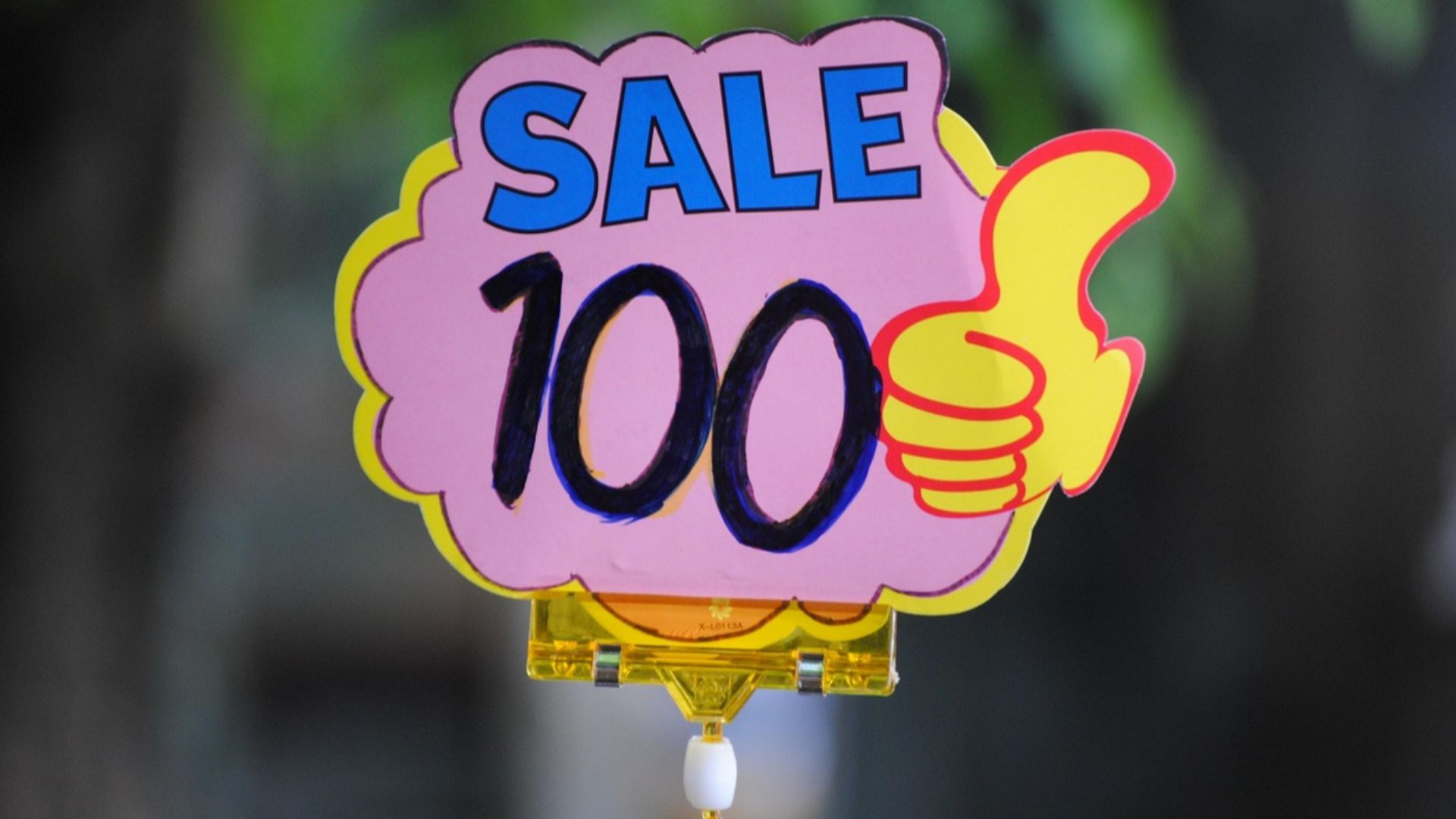
DowDow, Pixabay

Advertisement

Breaking The Price Apart

A $100 total can hurt more than an $80 price followed by a $20 charge. That's the logic behind partitioned pricing, in which the total is divided into components. FTC economists have noted research showing that consumers can underestimate total prices when prices are partitioned—even when the components are disclosed. Drip pricing takes this further by revealing charges progressively during the purchase process.

Making It Four Payments Of $25

Buy now, pay later services provide genuine financing flexibility, but they also transform one large number into several smaller ones. The Consumer Financial Protection Bureau says a common BNPL arrangement splits a purchase into four installments. Seeing “$25 today” beside a $100 product doesn't reduce its price; it changes which number gets your attention. Late fees may also apply with many plans.

A man sitting on a leather sofa using a smartphone and credit card for online shopping.RDNE Stock project, Pexels

Advertisement

Making The Middle Choice Look Sensible

Imagine three versions of something costing $60, $100, and $180. The $100 option can suddenly look like the prudent compromise—not cheap, but certainly not extravagant. Businesses can use carefully constructed product tiers to influence comparisons. The important question isn't whether the middle option looks reasonable beside the premium one. It's whether you would have spent $100 without that comparison.

Turning Spending Into “Savings”

“Save $40” feels like gaining something, even though you're still handing over $100. Percentage-off promotions, coupons, loyalty discounts, and limited-time offers can shift your attention away from money spent and toward money supposedly saved. A useful defense is brutally simple: ignore the discount for a moment and ask whether the final price is worth paying.

Stylish women shopping and choosing outfits in a modern boutique setting.Ron Lach, Pexels

Advertisement

Hiding The Total Until Later

Few tactics make an initially attractive price deteriorate faster than mandatory fees appearing as you move toward checkout. The FTC calls this drip pricing. Research reviewed by the agency found that separating mandatory hotel fees from advertised room rates could increase the effort required to comparison shop and lead to less-informed choices. Federal rules now require upfront total-price disclosure for live-event tickets and short-term lodging, with specified exceptions such as taxes and shipping.

Changing The Number You Focus On

All of these tactics exploit essentially the same vulnerability: shoppers don't evaluate prices in isolation. We compare them with other prices, previous prices, monthly payments, discounts and whatever number happens to be most prominent. The best countermeasure is to reduce everything back to one boring figure: How many actual dollars will leave your pocket? If the answer is $100, no amount of clever formatting makes it $80.

You May Also Like:

Shrinkflation Isn’t Just At The Grocery Store—These Household Essentials Got Smaller While Prices Stayed The Same

The Restaurant Fees That Make The Final Bill Look Nothing Like The Menu Price

Sneaky Ways Companies Make Prices Look Lower Than What You Actually Pay

Sources: 1, 2, 3, 4, 5, 6, 7


READ MORE

Saving money

Are Canadians Saving More Than Americans? Latest Studies Reveal A Surprising Gap

Curious how your savings stack up? This article compares average savings in the U.S. and Canada, revealing surprising gaps, reasons behind them, and shocking stats about American savings.
January 27, 2026 Allison Robertson
concerned woman holding phone

I just found out about the $600 rule and I’ve been using Venmo and PayPal all year—am I about to owe a huge tax bill?

A growing number of people are suddenly hearing about a $600 rule connected to Venmo and other cash apps, usually in the form of warnings, screenshots, or half-explained posts. There’s rarely context—just the implication that a normal year of payments may have crossed an invisible line with real consequences.
January 28, 2026 Jesse Singer
Adidas X Kanye West Yeezy 750 Boost Light Grey

Who Knew Sneakers Could Cost As Much As Your Mortgage? Here Are The World's Most Expensive Kicks.

Do your sneakers cost more than your dinner payment? That's cute. Some of these kicks could pay your whole house’s mortgage.
April 15, 2025 Miles Brucker
Inheritance

My grandpa just died and my cousins all got a big inheritance, but my mom is keeping my portion. I’m 40 years old. Can she do that?

Your cousins got their inheritance, but your mom is keeping yours—at age 40. Learn what rights you have and how to challenge unfair inheritance issues when a parent blocks your share.
January 16, 2026 Allison Robertson
Ceaseanddesistinternal

I anonymously posted a bad online review. The company posted my name and address and sent a cease-and-desist letter. What can I do?

When you posted a negative online review of a company's service, they published your contact information online and sent a cease-and-desist letter. We look at how you can protect yourself.
January 13, 2026 Jane O'Shea
Insurance Int

Here’s How To Figure Out If You’re Paying Too Much For Car Insurance

Car insurance has a funny way of becoming invisible. You sign up, set the payment to auto-draft, and then forget about it—until your bank account reminds you every month. The problem is that many drivers end up overpaying not because they’re reckless or unlucky, but because their policy hasn’t kept up with their life. If you’ve ever wondered whether your premium feels a little too spicy for what you’re getting, these signs will help you figure it out.
January 9, 2026 J. Clarke


Disclaimer

The information on MoneyMade.com is intended to support financial literacy and should not be considered tax or legal advice. It is not meant to serve as a forecast, research report, or investment recommendation, nor should it be taken as an offer or solicitation to buy or sell any securities or adopt any particular investment strategy. All financial, tax, and legal decisions should be made with the help of a qualified professional. We do not guarantee the accuracy, timeliness, or outcomes associated with the use of this content.


Dear reader,


It’s true what they say: money makes the world go round. In order to succeed in this life, you need to have a good grasp of key financial concepts. That’s where Moneymade comes in. Our mission is to provide you with the best financial advice and information to help you navigate this ever-changing world. Sometimes, generating wealth just requires common sense. Don’t max out your credit card if you can’t afford the interest payments. Don’t overspend on Christmas shopping. When ordering gifts on Amazon, make sure you factor in taxes and shipping costs. If you need a new car, consider a model that’s easy to repair instead of an expensive BMW or Mercedes. Sometimes you dream vacation to Hawaii or the Bahamas just isn’t in the budget, but there may be more affordable all-inclusive hotels if you know where to look.


Looking for a new home? Make sure you get a mortgage rate that works for you. That means understanding the difference between fixed and variable interest rates. Whether you’re looking to learn how to make money, save money, or invest your money, our well-researched and insightful content will set you on the path to financial success. Passionate about mortgage rates, real estate, investing, saving, or anything money-related? Looking to learn how to generate wealth? Improve your life today with Moneymade. If you have any feedback for the MoneyMade team, please reach out to [email protected]. Thanks for your help!


Warmest regards,

The Moneymade team


✕