
The Old Money Math Is Starting To Crack
For years, personal finance advice came packaged in tidy percentages that were easy to remember and reassuringly simple to follow. Then housing, groceries, cars, insurance, child care, and other essentials became much more expensive, while many of those famous rules stayed frozen in place. Prices have continued rising even after the enormous increases households absorbed earlier in the decade. The result is uncomfortable but useful: some classic money rules don’t work these days, and our rules may need to change.
The 50/30/20 Budget Is Not A Commandment
The familiar "50-30-20 rule" assigns 50% of take-home pay to Needs, 30% to Wants, and 20% to Saving and debt repayment. This worked for many years. However, The Consumer Financial Protection Bureau notes that not everyone can follow it and that people should create guidelines suited to their own finances. That warning matters much more when unavoidable bills absorb a larger share of the paycheck. Treat 50/30/20 as a starting point, not proof that your spending is somehow wrong.

Needs Are Taking Up More Of The Pie
Housing and transportation alone now eat up about half of the average household's spending. Add food, and those three basic expenses account for nearly two-thirds. That helps explain why squeezing every necessity into a neat 50% target can feel increasingly unrealistic.
 https://kaboompics.com/, Pexels
The 30% Housing Rule Has Become A Stress Test
The famous guideline that housing should consume no more than 30% of income has deep roots in federal housing policy. The government still uses spending above 30% as a measure of housing affordability problems. But that doesn't mean everyone can actually find appropriate housing below the line. In many markets, 30% now describes an ideal more effectively than an available option.

Nearly Half Of Renters Already Break It
Nearly half of renter households already spend more than 30% of their income on housing. When millions of households miss the same benchmark, simply telling people to “get under 30%” isn't much of a strategy. The more practical question is how much money remains after rent for food, transportation, health care, savings, and debt.

Replace The Housing Ratio With What Is Left Over
A household paying 35% of income for housing but carrying little debt may be in a stronger position than one paying 25% while juggling large car, medical, or child-care bills. The CFPB recommends building an actual monthly budget from bank statements and including expenses that don't arrive every month, such as repairs, medical costs, insurance, and family obligations. Looking at what's actually left over tells you more than a single percentage can. Keep the 30% benchmark in sight, but judge affordability by what remains afterward.

Twenty Percent Down Is Not Always The Smartest Target
Putting 20% down on a home can reduce borrowing and often avoids mortgage insurance, which explains why the figure became such a powerful goal. Yet buyers also need to leave room for emergency savings, moving costs, renovations, furnishings, and other upcoming expenses. Emptying your savings account to reach exactly 20% can leave you financially exposed immediately after closing. A smaller down payment paired with healthy savings can sometimes be the safer balance.

Closing Costs Need Their Own Pile Of Cash
The down payment is only one large check involved in buying a home. Closing costs typically run about 2% to 5% of the purchase price, although actual costs vary. That means a household saving toward “20% down” may still be thousands of dollars short of the cash it wants available at closing. Home-buying math should account separately for the down payment, closing costs, immediate repairs, moving expenses, and emergency savings.
Mortgage Rates Changed The Meaning Of Affordable
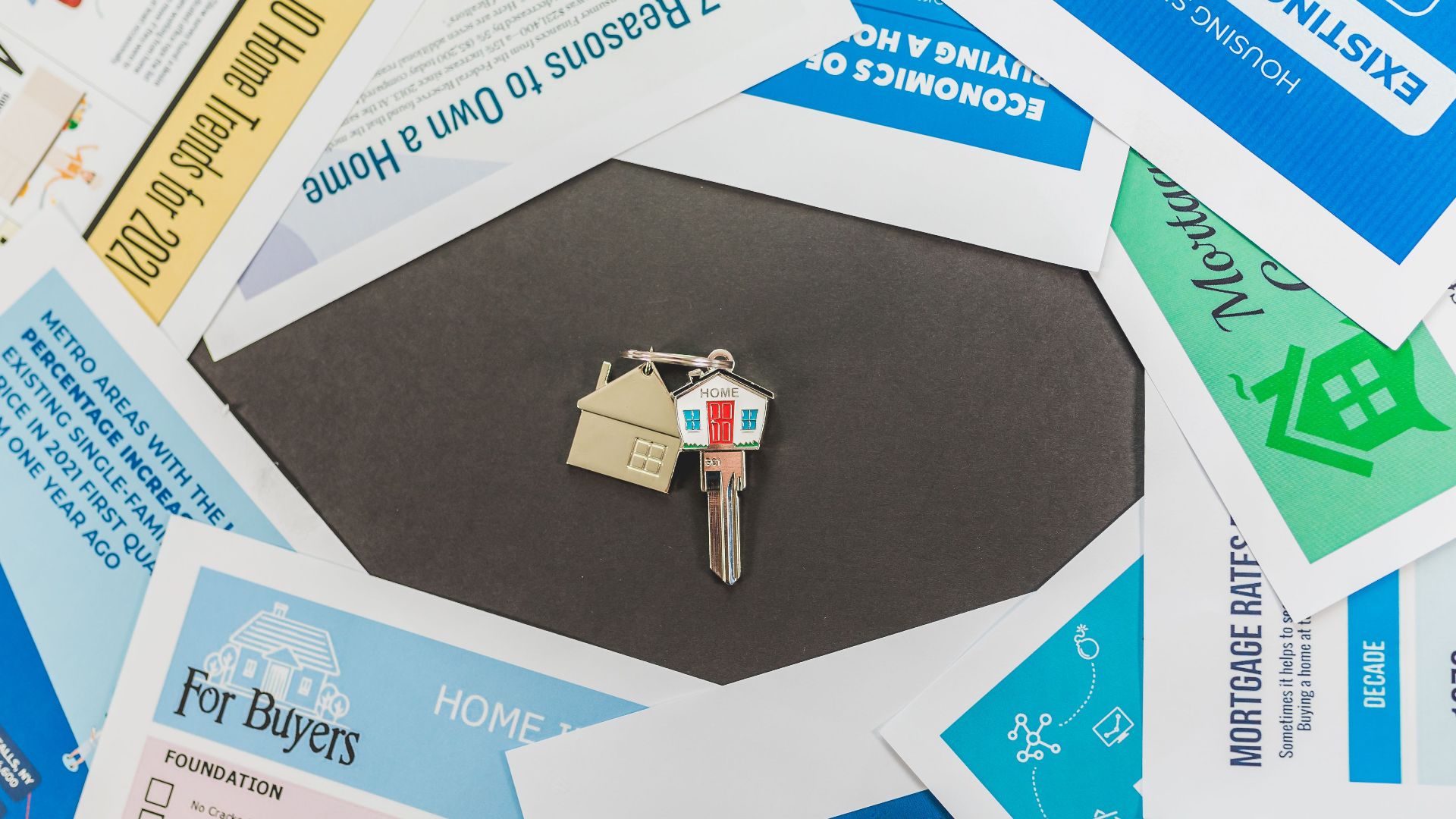
Home prices alone no longer tell buyers what their monthly housing cost will look like. Mortgage rates have shifted substantially in recent years, changing the cost of buying a home even when the purchase price stays the same. Rates fell below 3% during parts of 2021 before climbing considerably in the years that followed. The same house can come with a dramatically different monthly payment depending on mortgage rates. That's why the payment you can actually afford matters more than an old rule about how much a house “should” cost.

Three Months Of Emergency Savings Can Feel Thin
Three to six months of living expenses remains a widely used emergency-savings guideline. The important word is “expenses.” As rent, insurance, food, utilities, and transportation become more expensive, the dollar value behind three months rises automatically. Someone who last calculated an emergency target several years ago may have far less protection than the account balance suggests.
 https://kaboompics.com/, Pexels
Recalculate The Emergency Fund Every Year
Instead of treating an emergency fund as a permanent dollar target, multiply today's essential monthly expenses by the number of months you want covered. Households with one income, unpredictable earnings, expensive insurance, or unusually large regular bills may reasonably prefer the upper end of the three-to-six-month range. Automatic contributions can then keep the target moving as costs change. The account should grow with your life, not remain anchored to what groceries and rent cost when you first opened it.

Saving Ten Percent For Retirement Is A Weak Default
“Save 10%” is still commonly repeated because it is simple, but major retirement providers now use higher planning targets. Fidelity, for example, suggests aiming for at least 15% of pretax income annually for retirement, including employer contributions. It also stresses that the appropriate number varies with when you start saving, when you retire, how much you already have, and the lifestyle you want. Ten percent may be a good improvement from zero, but it should not automatically be treated as the finish line.

Salary Multiples Are Milestones, Not Report Cards
You've probably also seen age-based targets suggesting how many years of salary you should have saved by 30, 40, 50, and retirement. Those milestones can be useful, but they're based on assumptions that won't fit everyone's life. High housing costs, graduate school, caregiving, or a later career start can make one person's path look completely different from another's. Use the targets to spot a gap worth investigating, not to declare financial success or failure.

The Four Percent Rule Needs Room To Move
Retirees have long heard some version of the 4% withdrawal rule, but even current retirement guidance treats it as a starting point rather than an iron law. How much you can safely withdraw depends on how long you live, how your investments perform, when you retire, and how much you spend. Inflation matters too, because retirement expenses don't stay fixed. A flexible plan is stronger than mechanically withdrawing the same percentage regardless of what is happening in your life.

Transportation Is Not A Minor Budget Category
Americans spent an average of more than $13,000 on transportation in 2024, making it one of the biggest household expenses after housing. Transportation includes far more than the loan payment, which is why shoppers who focus only on the number displayed by the dealership can underestimate what a vehicle actually does to their budget. Insurance, fuel, repairs, registration, depreciation, and financing all matter.

The 20/4/10 Car Rule Is Getting Harder To Hit
The classic 20/4/10 rule says to put 20% down, finance a vehicle for no more than four years, and keep total transportation costs within 10% of monthly income. That formula can still be a useful conservative target, but today's auto market can make it difficult to follow. The problem is not that shorter loans or larger down payments suddenly became bad ideas. It's that a rule can tell you a car is unaffordable without helping you solve the reality that you may still need transportation to work.

Total Ownership Cost Beats The Monthly Payment
The real cost of a car goes well beyond the payment. Depreciation, financing, fuel, insurance, registration, taxes, maintenance, repairs, and tires all add to the bill. That's a much more revealing way to think about affordability than focusing on the monthly loan payment alone. When shopping, consider what the vehicle will cost you overall and then fit that figure into your actual household budget.

Grocery Budgets Need A New Baseline
A grocery budget that worked comfortably five years ago can fail even when the shopping list barely changes. Grocery prices have risen substantially since 2021, so an old food budget may simply be unrealistic today. Instead of demanding that today's food bill match an old dollar target, rebuild the target using several recent months of actual receipts.

Cutting Coffee Cannot Fix Every Budget
Personal finance advice often begins with small purchases because they are easy to see and easy to change. Coffee is the classic example. But when the real deficit comes from rent, insurance, child care, or transportation, eliminating a few small treats may improve cash flow without solving the underlying problem. Start with the largest recurring expenses before turning budgeting into a hunt for tiny indulgences.

The Seven Percent Child-Care Benchmark Was Declared Outdated
Even the federal government has reconsidered old child-care affordability benchmarks. In 2026, HHS said the data behind a longstanding 7% benchmark were outdated and declined to use them to set a new national recommendation. It's a good example of why an old percentage shouldn't automatically be treated as timeless.

Child Care Needs Its Own Major Budget Line
Depending on the type and location of care, annual prices in Labor Department data ranged from roughly $6,500 to $15,600 for one child. For parents, that expense can rival other major household bills rather than behave like a small miscellaneous cost. Building a household budget around actual local child-care prices is more useful than trying to force the expense into an old national percentage.

Health Insurance Premiums Are Not The Whole Health Budget
Having employer health insurance does not make health spending predictable. Workers with family coverage contributed an average of $6,850 toward their premiums in 2025—and that doesn't include the additional bills that can arrive when someone actually needs care. Budgeting only for the amount taken out of each paycheck can therefore underestimate what health care may actually cost a family.

Medical Bills Belong In Your Emergency Math
When deciding how much emergency cash to keep, look at what your health plan could actually require you to pay out of pocket. A generic three-month savings target may not be enough if one medical bill could take a large bite out of it. Your emergency savings should reflect the financial risks your household actually faces, alongside rent, food, transportation, and other essentials.

Percentages Should Be Guardrails, Not Grades
Financial rules of thumb survive because they make complicated decisions easier, and that remains valuable. But even widely used budgeting rules can be difficult to apply to every household. The strongest way to use a benchmark today is to ask what it reveals, then check the answer against your actual bills and financial goals. Missing an arbitrary percentage is information, not a moral failing.

Build A Budget For Today's Prices
The replacement for outdated money rules is not another perfect collection of percentages. Start with the money you actually bring home, list the bills you have to pay, account for expenses that pop up throughout the year, and leave some savings for the unexpected. Then decide how much of what's left can go toward saving, paying down debt, and the things you enjoy. Revisit those numbers whenever rent, insurance, groceries, child care, transportation, or income changes significantly. The best rule of thumb now may be the simplest one: your budget should describe the life you are actually paying for.

You May Also Like:
Middle-Class Mistakes That Keep You Broke
Americans Should Know That These “Normal” Money Rules In The U.S. Are Illegal In Canada
Sources: 1, 2, 3, 4, 5, 6, 7, 8, 9, 10, 11, 12, 13, 14, 15, 16, 17, 18, 19