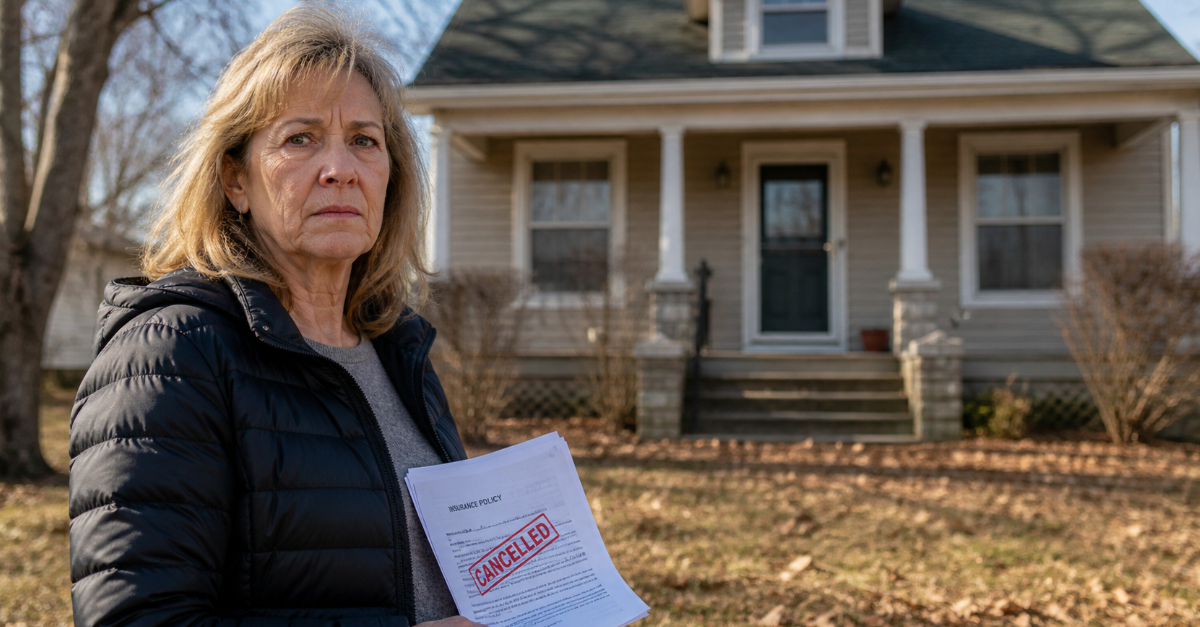
When my dad died, I insured the house as a secondary home and paid in full. Now the insurer doesn’t want to cover it and is canceling—what can I do?

When my dad died, I insured the house as a secondary home and paid in full. Now the insurer doesn’t want to cover it and is canceling—what can I do?


May 8, 2026 | Jesse Singer

When my dad died, I insured the house as a secondary home and paid in full. Now the insurer doesn’t want to cover it and is canceling—what can I do?


You Did Everything Right…So Why Is This Happening?

You handled things responsibly after your father passed. You insured the house, were upfront that it was a secondary home, and even paid the full year in advance. Now months later, the insurer is backing out anyway—and it feels like the rules changed after the fact.

Older woman in front of houseFactinate

Advertisement

What This Situation Usually Means

This feels like a broken promise, but insurance policies aren’t always as locked in as they seem. Even after payment and signing, insurers often include cancellation clauses that allow them to end coverage under certain conditions.

A Woman Sitting at the Tablecottonbro studio, Pexels

Advertisement

Insurance Policies Aren’t Truly “Guaranteed”

Most home insurance policies are written with terms that allow the company to cancel mid-policy. This can happen for underwriting reasons, risk changes, or internal policy updates, even if everything seemed approved at the start.

Elderly woman working on a laptop in a stylish indoor setting with wooden shelves.Mikhail Nilov, Pexels

Advertisement

There’s Usually a Cancellation Clause

If you look closely at the policy documents, there’s almost always a section explaining when and how the insurer can cancel coverage. This is standard across most providers and is part of the contract you agreed to.

A confident Asian woman enjoys coffee while browsing a tablet indoors, conveying focus and relaxationSam Lion, Pexels

Advertisement

Secondary Homes Are Higher Risk

Insurance companies often view secondary or vacant homes as higher risk. These properties may be unoccupied for long periods, increasing the chances of unnoticed damage, theft, frozen pipes, or maintenance issues that lead to costly claims.

A Woman Standing on Porch of the Housecottonbro studio, Pexels

Advertisement

Why They Approved It Initially

Sometimes policies are issued quickly based on initial information, then reviewed more deeply afterward. This is called underwriting review, and it can happen weeks or even months after the policy starts.

Elderly Woman in Cardigan Sitting at TableCentre for Ageing Better, Pexels

Advertisement

Post-Issue Underwriting Happens More Than You Think

It’s not uncommon for insurers to revisit a policy after it’s already active. If they later decide the risk doesn’t meet their guidelines, they can choose to cancel—even if they knew some details upfront.

person using black Surface deviceSurface, Unsplash

Advertisement

“They Knew” Doesn’t Always Lock It In

Even if you told them it was a secondary home, that doesn’t always prevent cancellation. If the policy was issued before a full underwriting review, the company may still reverse course later.

Woman in a red sweater sitting and using a tablet with a cup of coffee in a cozy cafeGustavo Fring, Pexels

Advertisement

They May Have Changed Internal Rules

Insurance companies sometimes update their underwriting guidelines. If they decide to stop covering certain types of properties, like secondary homes, they may cancel existing policies that no longer fit their criteria.

an old woman using a laptopCentre for Ageing Better, Unsplash

Advertisement

Timing Matters

Most cancellations like this happen within the first 30 to 90 days, when insurers have the most flexibility. After that, rules often become stricter depending on the state or province. At five months, whether this is allowed depends heavily on local law and the reason given.

a person looking at a laptopBirk Enwald, Unsplash

Advertisement

No Federal Rule

In the U.S., there’s no single federal law governing home insurance cancellations. Rules are set at the state level. In Canada, it’s similar—each province sets its own regulations, notice periods, and acceptable reasons.

Woman Working with Laptop and Looking at Electric ThermometerMikael Blomkvist, Pexels

Advertisement

Some Areas Are Stricter Than Others

States like California and New York often restrict cancellations after about 60 days unless there’s nonpayment, fraud, or major risk changes. Other states may allow more flexibility early in a policy, but become stricter later. Canadian provinces also vary.

A Woman Looking a LaptopYan Krukau, Pexels

Advertisement

Provincial Differences In Canada

Provinces like Ontario, Alberta, and British Columbia require written notice and valid reasons for cancellation. Typical notice periods range from 5 to 30 days depending on the situation and policy terms.

Young woman using laptop at homeAnna Shvets, Pexels

Advertisement

Notice Is Required

Insurance companies are generally required to give written notice before canceling a policy. The notice period is often 10 to 30 days, depending on the reason and local regulations, though some areas require longer notice.

Woman sitting and checking lettersRon Lach, Pexels

Advertisement

The Reason Must Be Stated

They can’t just cancel without explanation. The insurer must provide a reason for the cancellation, such as underwriting issues, property risk, or policy eligibility problems like secondary home status.

Focused young woman with curly hair working on her laptop in a cozy home office settingPavel Danilyuk, Pexels

Advertisement

They Can’t Just Keep Your Money

If an insurer cancels your policy mid-term, they are typically required to refund the unused portion of your premium. You shouldn’t be paying for coverage you’re no longer receiving, especially after paying the year upfront.

A professional therapist in a modern office setting engaged in a discussion with a clientVitaly Gariev, Pexels

Advertisement

Refunds Are Usually Prorated

In most cases, you’ll get a prorated refund based on how much time was left on the policy. If you paid for a full year and they cancel after five months, you should receive the remaining balance back.

A woman in a red sweater and sneakers sits on wooden stairs, enjoying sunset lightAlex Urezkov, Pexels

Advertisement

This Doesn’t Mean You Did Anything Wrong

Situations like this are frustrating, but they don’t mean you made a mistake. You disclosed the information—you just ran into the insurer’s internal rules or changing risk tolerance.

Back view of a woman with gray hair and cap, observing a rustic wooden house facade.Asya Aydogdu, Pexels

Advertisement

You May Have Other Coverage Options

Not all insurers treat secondary homes the same way. Some specialize in them or are more flexible, especially if the property is maintained, monitored, or occasionally occupied.

A woman working on a laptop outdoors on a terrace, enjoying a peaceful momentTatiana Syrikova, Pexels

Advertisement

Vacant vs Secondary Home Matters

There’s a difference between a secondary home and a vacant one. If the home is completely unoccupied, fewer insurers will cover it, and the requirements can be stricter.

An old abandoned house surrounded by an overgrown grassy field, showcasing rustic charmKerolos Safwat, Pexels

You Might Need a Specialty Policy

In some cases, you may need a specific type of coverage designed for seasonal, rental, inherited, or unoccupied homes. These policies often cost more but are built for this exact situation.

A Woman Sitting at the Table while Using LaptopMikhail Nilov, Pexels

Advertisement

What You Should Do Next

Start by reviewing the cancellation notice and your original policy. Confirm the reason, check the refund amount, and look at the timeline. Then begin shopping for a new policy as soon as possible.

An Elderly Woman in Pink Long Sleeves Looking at Documents while SittingSHVETS production, Pexels

Advertisement

Consider Calling the Insurer Directly

Sometimes you can clarify or even reverse a cancellation by speaking with the company. If the issue is documentation or misunderstanding, there may still be a chance to resolve it.

A woman in a white shirt making a phone call inside a modern home or office settingwww.kaboompics.com, Pexels

Advertisement

Document Everything

Keep records of your communications, policy documents, and payment receipts. If there’s ever a dispute over the cancellation or refund, having a clear paper trail can make a big difference.

Close-up of hands organizing papers in a blue folder, ideal for business and office conceptsAnete Lusina, Pexels

Advertisement

So…How Is This Allowed?

It comes down to the fine print and local laws. Insurance contracts and regional regulations give companies flexibility, especially early in a policy. It feels unfair—but in many cases, it’s legally built into how these policies work.

Portrait of a senior woman in blue, exuding thoughtful reflection and eleganceKindel Media, Pexels

Advertisement

You Might Also Like:

My mom left me everything in her will, but she was co-signor on my uncle’s mortgage. Am I now on the hook for his debt too?

My pension was supposed to be automatically deposited into my bank account this week. There was an error and I can't make rent. What can I do?

Sources:  123


READ MORE

airlinescovidinternal

(How) Will Airlines Survive COVID-19?

As the crisis continues, airlines are hemhorraging money. Will airlines survive this crisis? And if so, how?
January 7, 2021 Eul Basa
creditcardinternal

The 5 Best Credit Cards For 2020

If you're looking to expand your buying power, you need to check out the best credit cards of 2020. You won't believe some of these extras!
January 7, 2021 Eul Basa
lawyers_feature

These Legal Plot Twists Had Us Screaming For Order In The Court

Whether it's an incompetent client or an unhinged attorney, these lawyers' stories of their most outrageous plot twists had us banging the gavel.
February 10, 2021 Eul Basa
hospital_internal

Drama Is The Best Medicine: Doctors And Patients Reveal Their Craziest Cases

There is a reason why shows like Gray's Anatomy and ER are so addictive: Hospital drama is insane, and not just on TV—that stuff happens in real life, too.
February 10, 2021 Eul Basa
cases_internal

Move To Strike: These Lawyers' Cases Unraveled In An Instant

Courtroom cases can take months or even years to go in front of a judge. Then, in the blink of an eye, it can all unravel spectacularly.
February 10, 2021 Eul Basa
lawyers_internal

Lawyers Share Their Most Shocking Cases

On TV, courtrooms seem like well-oiled machines. In real life, though? Not so much. These court cases are wild rides from start to finish.
March 1, 2021 Eul Basa


Disclaimer

The information on MoneyMade.com is intended to support financial literacy and should not be considered tax or legal advice. It is not meant to serve as a forecast, research report, or investment recommendation, nor should it be taken as an offer or solicitation to buy or sell any securities or adopt any particular investment strategy. All financial, tax, and legal decisions should be made with the help of a qualified professional. We do not guarantee the accuracy, timeliness, or outcomes associated with the use of this content.


Dear reader,


It’s true what they say: money makes the world go round. In order to succeed in this life, you need to have a good grasp of key financial concepts. That’s where Moneymade comes in. Our mission is to provide you with the best financial advice and information to help you navigate this ever-changing world. Sometimes, generating wealth just requires common sense. Don’t max out your credit card if you can’t afford the interest payments. Don’t overspend on Christmas shopping. When ordering gifts on Amazon, make sure you factor in taxes and shipping costs. If you need a new car, consider a model that’s easy to repair instead of an expensive BMW or Mercedes. Sometimes you dream vacation to Hawaii or the Bahamas just isn’t in the budget, but there may be more affordable all-inclusive hotels if you know where to look.


Looking for a new home? Make sure you get a mortgage rate that works for you. That means understanding the difference between fixed and variable interest rates. Whether you’re looking to learn how to make money, save money, or invest your money, our well-researched and insightful content will set you on the path to financial success. Passionate about mortgage rates, real estate, investing, saving, or anything money-related? Looking to learn how to generate wealth? Improve your life today with Moneymade. If you have any feedback for the MoneyMade team, please reach out to [email protected]. Thanks for your help!


Warmest regards,

The Moneymade team