Has Tipping Culture Gone Too Far?

Has Tipping Culture Gone Too Far?


July 5, 2023 | Eul Basa

Has Tipping Culture Gone Too Far?


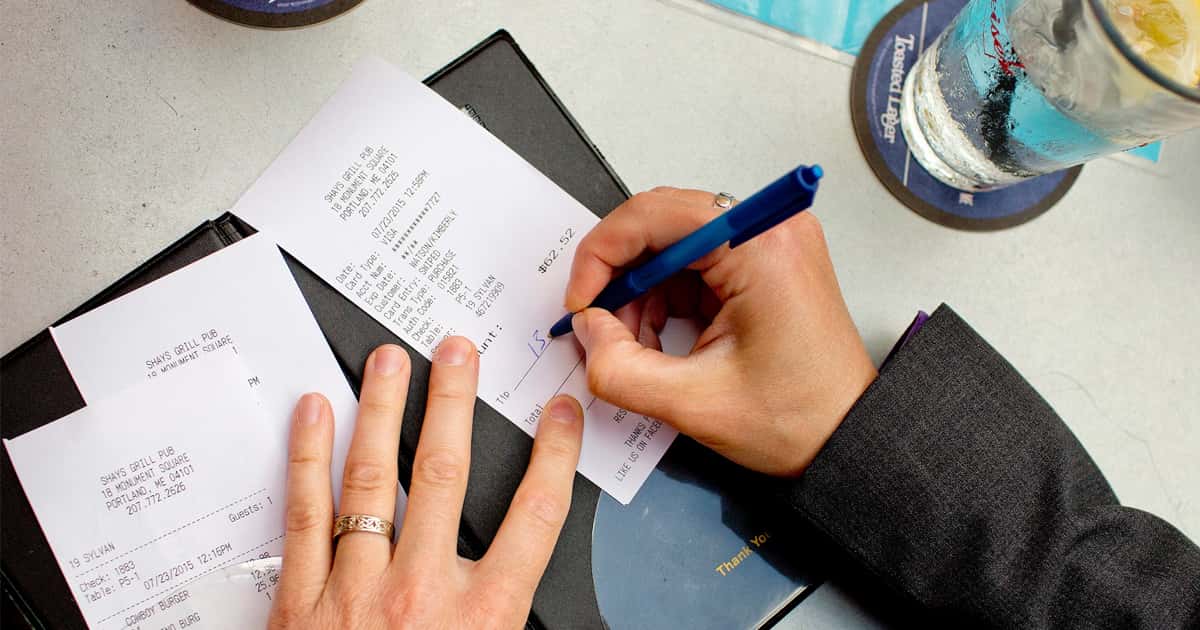
To tip or not to tip: that is the question. Customers are voicing their concerns about today’s tipping culture on social media, claiming that some businesses are taking it too far.

The outrage is specifically directed toward places that are automatically prompting customers to leave a tip for services that traditionally don’t warrant one. This includes businesses outside of the hospitality sector, such as fast-food drive-thrus, retail stores, and even dentist offices. With inflation already making the prices of common goods skyrocket, customers are not appreciating the nudge to drop even more dollars.

Thomas Farley, an etiquette expert, shared his thoughts on the issue. “Suddenly, these screens are at every establishment we encounter. They're popping up online as well for online orders, and I fear that there is no end,” he said.

The shift to digital seems to have ushered in this growing trend of automatic gratuity prompts. While customers can choose to ignore such prompts in the same way that they can choose to ignore a tip jar, some argue that the practice still adds unnecessary social pressure which, at times, can be hard to circumvent.

Tipping culture has always produced a spectrum of opinions. On one end, there are people who believe it should be mandatory for customers to tip service workers regardless of how satisfied they are with the service they’ve received. On the other end, there are people who believe they have the right to decide how much to tip (or if they should tip at all) based on the quality of service they received from service workers. In both perspectives, there is, at the very least, a substantial service being provided to the customer that justifies a decision to tip or not.

With automatic gratuity prompts, customers are urged to leave a tip for small tasks such as being handed over a bagel through a drive-thru window or picking up an online delivery, which arguably do not justify a tip.

“People do not like unsolicited advice,” said professor Ismail Karabas, who studied tipping culture at Murray State University. “They don’t like to be asked for things, especially at the wrong time.”

Source: 1


READ MORE

Woman concerned about pay app

I was tricked into sending money through an app, but my bank won’t dispute the charge because I “authorized” it. Is there any way to get my money back? (Copy)

You didn’t get hacked. You didn’t have your card stolen. You sent the money yourself, because someone convinced you to. Now the bank says the charge was authorized, so there’s nothing they can do. Unfortunately, this is one of the hardest types of fraud to reverse, but “hard” doesn’t mean “impossible”.
February 25, 2026 Peter Kinney
Woman worried about renovations

I want to renovate our kitchen before selling to increase the home’s value, but my husband says we won’t recoup the cost. Is he right?

You’re about to sell, and your instinct is clear: update the kitchen, boost the value, sell for more. Your partner, on the other hand, says you’ll spend a fortune and never get it back. So, who’s right?
February 25, 2026 Quinn Mercer
Woman concerned about pay app

I was tricked into sending money through an app, but my bank won’t dispute the charge because I “authorized” it. Is there any way to get my money back?

You didn’t get hacked. You didn’t have your card stolen. You sent the money yourself, because someone convinced you to. Now the bank says the charge was authorized, so there’s nothing they can do. Unfortunately, this is one of the hardest types of fraud to reverse, but “hard” doesn’t mean “impossible”.
February 25, 2026 Peter Kinney
Nfts - Fb

I took out a $20,000 loan to buy NFTs. They’re now worthless. Can I claim that as a loss?

Taking out a $20,000 loan to buy NFTs once seemed like a calculated risk in a booming digital market. Now those tokens are effectively worthless, leaving the borrower with debt and few options. The central question becomes whether this financial loss can be realized and claimed as a capital loss, typically requiring a sale or proof of worthlessness/abandonment under IRS rules. NFTs sit at the intersection of emerging technology and established financial law, creating uncertainty about how losses are treated. Traditional lending rules still apply to the loan, yet digital assets operate in volatile markets with evolving regulations. The tension between innovation and established legal frameworks makes recovery complicated.
February 25, 2026 Marlon Wright
Woman using mobile phone

I transferred $15,000 between my accounts, and the bank placed a hold on the money to "review" it. It's my own money, why are they doing this to me?

Moving money between accounts feels simple until a hold appears on funds already yours. Federal banking regulations require financial institutions to monitor large transactions regardless of ownership. Anti-money laundering laws created this reality for everyone.
February 25, 2026 Miles Brucker
Woman holding credit card

Don’t Close That Old Credit Card—Even If You Never Use It

Cleaning up your finances feels productive. You pay off a credit card, stop using it, and decide it’s time to close it. Logical, right? Not always. That old card you never touch could quietly be helping you more than you realize.
February 25, 2026 Jesse Singer


Disclaimer

The information on MoneyMade.com is intended to support financial literacy and should not be considered tax or legal advice. It is not meant to serve as a forecast, research report, or investment recommendation, nor should it be taken as an offer or solicitation to buy or sell any securities or adopt any particular investment strategy. All financial, tax, and legal decisions should be made with the help of a qualified professional. We do not guarantee the accuracy, timeliness, or outcomes associated with the use of this content.


Dear reader,


It’s true what they say: money makes the world go round. In order to succeed in this life, you need to have a good grasp of key financial concepts. That’s where Moneymade comes in. Our mission is to provide you with the best financial advice and information to help you navigate this ever-changing world. Sometimes, generating wealth just requires common sense. Don’t max out your credit card if you can’t afford the interest payments. Don’t overspend on Christmas shopping. When ordering gifts on Amazon, make sure you factor in taxes and shipping costs. If you need a new car, consider a model that’s easy to repair instead of an expensive BMW or Mercedes. Sometimes you dream vacation to Hawaii or the Bahamas just isn’t in the budget, but there may be more affordable all-inclusive hotels if you know where to look.


Looking for a new home? Make sure you get a mortgage rate that works for you. That means understanding the difference between fixed and variable interest rates. Whether you’re looking to learn how to make money, save money, or invest your money, our well-researched and insightful content will set you on the path to financial success. Passionate about mortgage rates, real estate, investing, saving, or anything money-related? Looking to learn how to generate wealth? Improve your life today with Moneymade. If you have any feedback for the MoneyMade team, please reach out to [email protected]. Thanks for your help!


Warmest regards,

The Moneymade team