
cuban_internal

Mark Cuban Shares His Worst Shark Tank Investment Ever


June 14, 2023 | Eul Basa

Mark Cuban Shares His Worst Shark Tank Investment Ever


Mark Cuban, the billionaire investor on ABC's "Shark Tank," doesn't always strike gold. Speaking on the "Full Send" podcast, the 64-year-old tech mogul admitted that despite investing in a total of 85 startups so far, he has yet to reap the benefits.

"I haven’t gotten out more than I have put in, but that doesn’t account for all the ongoing, operating businesses and their valuations," he explained.

According to him, the worst investment deal he ever made on the show was with the Breathometer. Charles Michael Yim, the entrepreneur behind the Breathometer, claimed that his plastic smartphone attachment could produce accurate BAC level readings, which would therefore help its users make safer decisions. Marketed as "the world's first smartphone breathalyzer," the concept impressed all five of the Sharks, who ultimately agreed on a joint investment: $1 million for a 30% stake (valuing Yim's company at 3.3. million).

Unfortunately, Yim proved difficult to work with. Cuban revealed that despite the potential of the product, Yim failed to keep his focus on the company, resulting in its own downfall.

"It was a great product; but, the guy, Charles – I’d look at his Instagram and he’d be in Bora Bora. Two weeks later, he’d been in Vegas partying, and then he’d be on Necker Island with Richard Branson."
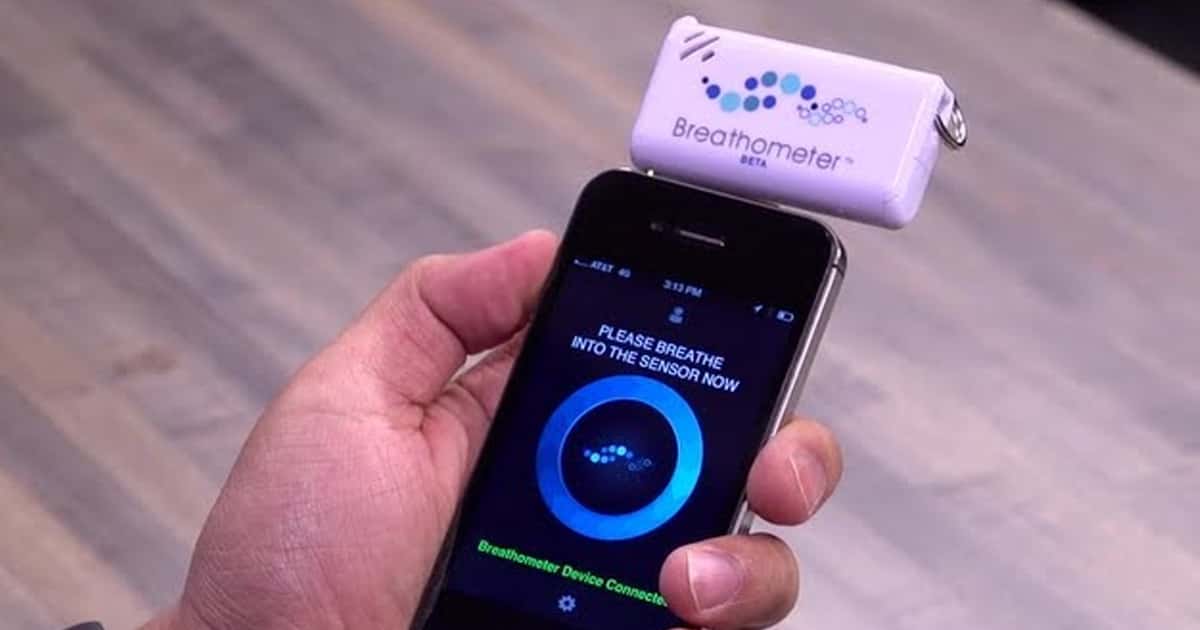
BreathometerYouTube

"I’d text him, like "What the f— are you doing? You’re supposed to be working,'" Cuban said. Yim would simply reply that he was "networking" for the company, but over time, his habits caught up to him. Eventually, all of the money was gone.

But that's not all — in 2017, the Federal Trade Commission filed a complaint against Yim, saying he had misled customers about the Breathometer's ability to produce accurate BAC level readings. According to the FTC, Breathometer never conducted appropriate testing on the device, despite claiming that it had been tested under "government lab" standards.

Yim later responded to Cuban's comments, telling CNBC Make It that Cuban's comments were "completely off" and that he never used the company's money to party. He defended his trip to Necker Island, in particular, saying he was there to pitch the Breathometer to Richard Branson. In fact, Branson was reportedly impressed by the product, and Yim became a finalist in Branson's Extreme Tech Challenge in 2015.

"You can’t look at someone’s social media and take it for face value. That’s not how social media works," Yim said.

Today, the Breathometer is no longer available for purchase on Yim's website, and the company is reportedly soon to be acquired.

Source


READ MORE

Worried woman at the grocery store, holding a water bottle.

The Everyday Household Staples People Are Quietly Cutting From Their Budgets—Has Your Grocery List Changed Yet?

Now, more shoppers are pausing in the aisle, comparing prices, switching to store brands, or quietly deciding they can live without something for another week.
August 18, 2026 Sammy Tran
Tired mother with her son in the grocery store, and she's saying "no" to buying a package of blueberries.

Foods Middle-Class Families Bought Without Thinking That Now Feel Too Expensive

For a long time, certain foods carried a quiet middle-class promise of affordability—but these days, many items have become just too expensive.
August 18, 2026 Sammy Tran
Attractive woman in 1970s grocery store looking at camera

Grocery Store Items Everyone Was Buying In The 70s—But By The 80s Had Disappeared From Store Shelves

Walk into a grocery store in the 70s and some of the stuff staring back at you would look completely made up today. Some of the decade’s grocery-store regulars vanished so completely that younger shoppers would probably swear they never existed. And honestly—how many do you actually remember?
August 18, 2026 Jesse Singer
woman comparing grocery items in a big store

My family is arguing over whether Costco, Walmart, or the local grocery store is actually cheapest. How should we compare fairly?

Costco, Walmart, and your neighborhood grocery store can all offer great value, but figuring out which one actually saves your family the most money is harder than comparing receipt totals. Package sizes, promotions, membership costs, and even how you shop can completely change the math. The good news is that you do not need a complicated spreadsheet to settle the debate. A few simple comparisons can reveal where your grocery dollars go furthest and help you build a shopping strategy that could save you money week after week.
August 18, 2026 Sammy Tran
man at laptop worried about credit card charges

Payment Methods That Can Cost Shoppers More Than They Realize

A $100 purchase can cost more than $100 depending on how you choose to pay for it. Credit card interest, checkout surcharges, overdrafts, installment-plan fees, currency conversion, and instant-transfer charges can all increase the final cost after the shopper has mentally committed to buying. Some appear in small print at checkout, while others do not show up until a statement or account notification arrives days later. Knowing where those extra costs hide can make choosing a payment method almost as important as choosing the product itself.
August 18, 2026 Sammy Tran
Person looking at the price of food.

I Switched To Store Brands To Save Money, But My Grocery Bill Barely Changed. Are Private Labels Still A Good Deal?

Switching to private labels can lower the price of individual items without producing a dramatic change at checkout. Your total bill also reflects how much you buy, which categories you choose, and whether food prices are still rising. Store brands remain useful, but they work best as one part of a broader shopping strategy.
August 18, 2026 Peter Kinney


Disclaimer

The information on MoneyMade.com is intended to support financial literacy and should not be considered tax or legal advice. It is not meant to serve as a forecast, research report, or investment recommendation, nor should it be taken as an offer or solicitation to buy or sell any securities or adopt any particular investment strategy. All financial, tax, and legal decisions should be made with the help of a qualified professional. We do not guarantee the accuracy, timeliness, or outcomes associated with the use of this content.


Dear reader,


It’s true what they say: money makes the world go round. In order to succeed in this life, you need to have a good grasp of key financial concepts. That’s where Moneymade comes in. Our mission is to provide you with the best financial advice and information to help you navigate this ever-changing world. Sometimes, generating wealth just requires common sense. Don’t max out your credit card if you can’t afford the interest payments. Don’t overspend on Christmas shopping. When ordering gifts on Amazon, make sure you factor in taxes and shipping costs. If you need a new car, consider a model that’s easy to repair instead of an expensive BMW or Mercedes. Sometimes you dream vacation to Hawaii or the Bahamas just isn’t in the budget, but there may be more affordable all-inclusive hotels if you know where to look.


Looking for a new home? Make sure you get a mortgage rate that works for you. That means understanding the difference between fixed and variable interest rates. Whether you’re looking to learn how to make money, save money, or invest your money, our well-researched and insightful content will set you on the path to financial success. Passionate about mortgage rates, real estate, investing, saving, or anything money-related? Looking to learn how to generate wealth? Improve your life today with Moneymade. If you have any feedback for the MoneyMade team, please reach out to [email protected]. Thanks for your help!


Warmest regards,

The Moneymade team