
The Facts About Severance Pay
Getting laid off is never fun, but one detail always seems to grab people's attention: the severance package. We hear stories about executives walking away with golden parachutes and longtime employees collecting hefty payouts. But how much of that is actually required by law? If your employer shows you the door, what are they legally obligated to give you—and what, if anything, can they withhold?
Have you ever received severance pay after losing a job? Tell us what happened. Did your employer offer what you expected, or did you have to fight for every dollar? We'd love to hear your experience.

What Is Severance?
Besides being an awesome television series on Apple+, severance (AKA, for our purposes, "severance pay") is defined as: "an amount paid to an employee upon dismissal or discharge from employment".
 Photo By: Kaboompics.com, Pexels
How Much Severance Pay Are You Owed?
Well, the truth is, depending on your contract....it could be NONE.

Is Severance The Law?
In the United States, severance pay isn't a legal requirement. According the the US Department of Labor, "there is no requirement in the Fair Labor Standards Act (FLSA) for severance pay".
So, does this mean you are out of luck? Maybe not.
 Tingey Injury Law Firm, Unsplash
Check Your Contract
You may not have paid attention to it when you got the job and signed your contract, but there might be something in there about severance pay. If there is, then that is a legal agreement you can use to get what you are owed.

Need Help?
If there is some kind of employee-sponsored plan for severance pay and you are having trouble getting what you are owed, then it might behoove you to contact the Employee Benefits Security Administration (EBSA). They can help with the process.
 U.S. Department of Labor, Wikimedia Commons
Separation Agreement
Depending on your position in the company and the reason you are being let go, there might be an opportunity to negotiate a separation agreement—in which you can make some severance pay demands.

What Are You Owed?
So, it turns out severance pay isn't automatically guaranteed by law. But before you start updating your résumé in a panic, there's an important catch: just because a company doesn't have to hand out severance in every situation doesn't mean they can send you packing empty-handed. Depending on where you live, how long you've worked there, and the circumstances of your departure, your employer may still owe you compensation—and sometimes a lot more than you'd expect.So, it turns out severance pay isn't a legal requirement. But that doesn't mean you aren't owed anything...

What Are You Owed?
One of the most important things a company owes you when they let you go is...your final paycheck. You have a right to all unpaid wages you've earned up to the date of termination, as well as the payout of any vacation days you have left.

Variances By State
While you have a legal right to that final paycheck, when you get it might vary depending on the state you are working in...
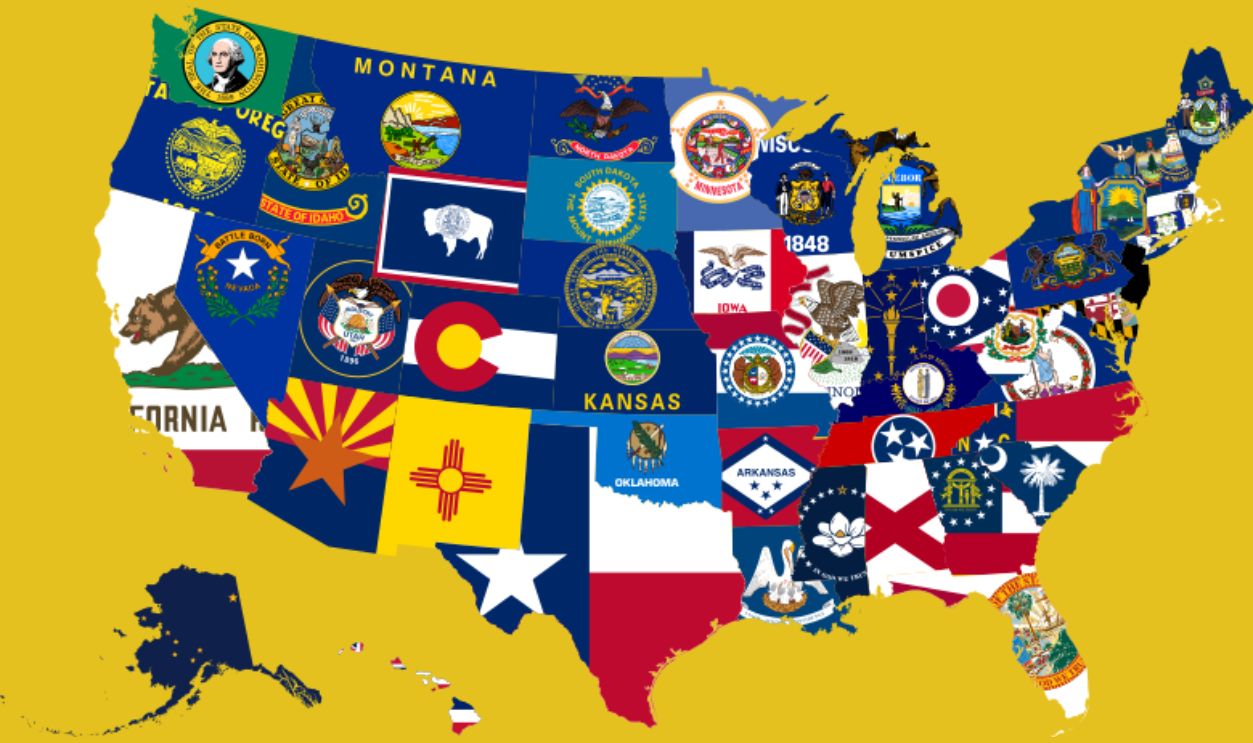 Flagvisioner, Wikimedia Commons
Variances By State
For example: In California, if you are fired, then that final pay check must be paid out immediately. Whereas in Arizona, the law is: within seven working days or the next regularly scheduled payday, whichever comes first.
What about the "two weeks' notice"?

Two Weeks' Notice
Two Weeks Notice might be a mediocre rom-com from 2002 starring Sandra Bullock and Hugh Grant, but it isn't a legal requirement of employers.

Two Weeks' Notice
While not a legal requirement, many employees will provide a two-week notice when leaving a job and many employers will do the same when terminating an employee.
And what about getting paid for those two weeks?

PILON
Notice period pay, AKA "Payment in lieu of notice" (PILON), is basically a company paying out an employee for the period they would have worked had they not been immediately terminated.
And just like a notice period isn't a legal requirement—neither is PILON.

Health Insurance
Like severance pay, employers generally aren't required to keep providing health insurance after terminating an employee. That said, many workers have the option to stay on their employer-sponsored health plan for a limited period through the Consolidated Omnibus Budget Reconciliation Act, better known as COBRA. The catch? You're usually responsible for paying the full premium yourself, which can come as quite a shock after getting used to your employer covering part of the bill. Still, for many people, COBRA can provide a crucial bridge while they search for a new job or secure alternative coverage.

Back To Severance Pay
While it might not be a legal requirement, many companies do offer a severance package when they let someone go (sometimes up to a full year's salary or more). Why would they do that, you ask?

Benefits Of Severance Pay (Employers)
While it does cost a company money, the benefits of doing so can definitely outweigh the cost.
And while it is a kind thing to do and does help a recently unemployed person with some sort of financial stability for a little while—that probably isn't the main reason a company would do this.
 Photo By: Kaboompics.com, Pexels
Benefits Of Severance Pay (Employers)
By offering a nice severance package to employees, a company can stand out from the crowd and use it as another tool for getting the best people to come work for them. Also, by keeping ex-employees happy, it can eliminate post-firing issues like lawsuits and complaints that could taint the company with current and future workers.

Something To Look Into Next Time
If you've been let go and your employer is set firm on not providing any kind of severance pay, then I guess you just have to get your final paycheck, your vacation pay, and move on—unless, of course, you feel you were illegally terminated (discrimination, retaliation, etc). But...

Something To Look Into Next Time
Now that you know that severance is not a federally mandated thing, you should make sure to look into what the policies are in regards to such things when interviewing for your next job.

Around The World
Remember, this is only dealing with the laws in the United States. Other countries might have different severance pay laws. Let us know about your experiences in other countries as well.
 Krakenimages.com, Shutterstock
You Might Also Like:
What If Everything You Know About Productivity Is Wrong?