McDonald's Has Another Lawsuit Over A Hot Coffee Spill Decades After The First
McDonald's Has Another Lawsuit Over A Hot Coffee Spill Decades After The First
The first time McDonald’s was sued over a hot coffee spill was back in the ‘90s when a customer ordered a cup of coffee from a drive-thru in Albuquerque, New Mexico. Stella Liebeck was with her grandson at the time, and after being handed her cup of coffee, they pulled into the parking lot so she could add her cream and sugar.
For whatever reason, their vehicle did not have any cupholders, so she held the cup between her knees to keep it steady. The coffee then spilled onto her legs, causing third-degree burns that would end up requiring extensive surgery to treat. To many people’s surprise, when she sued McDonald’s, she ended up being awarded almost US $3 million in damages. The incident has since sparked many debates on whether such a lawsuit (and similar ones to follow) actually justified or trivial.
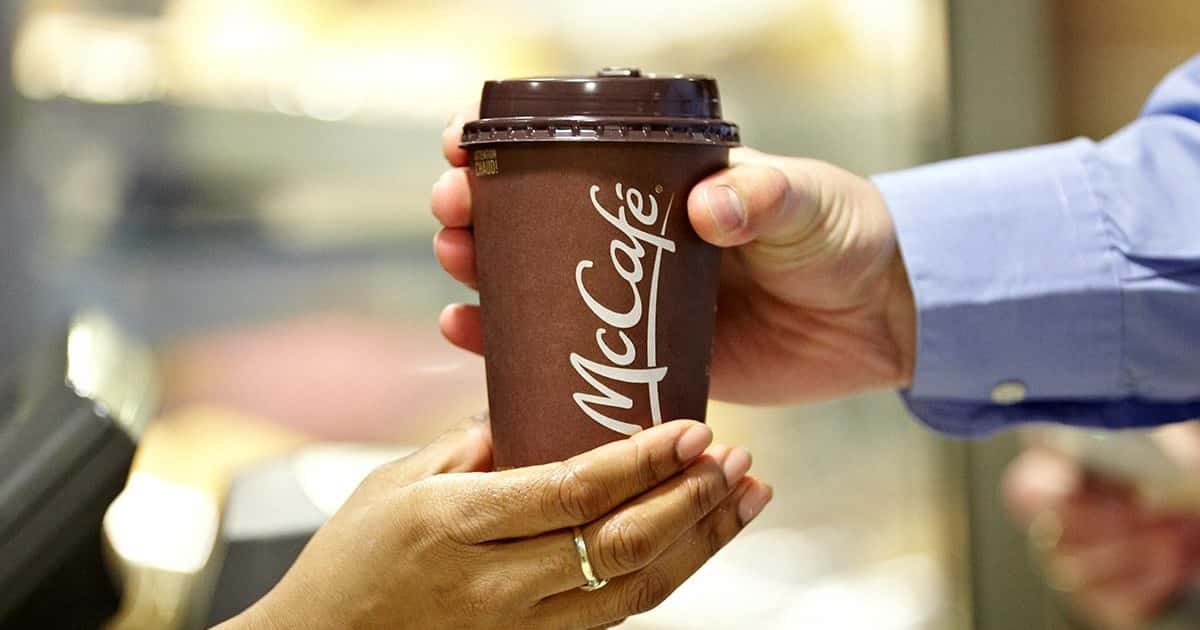
Now, almost thirty years after Liebeck’s case, McDonald’s faces another lawsuit regarding a hot coffee spill. Lok Fung, a mental health support worker, is suing a franchise in Burnaby, B.C. after being burned by hot coffee. Fung alleges that on Jan 21, 2021, the worker passed the coffee cup to her from the drive-thru window without securing the lid properly. The hot coffee then spilled onto her, leaving significant burns on her left wrist and left thigh.
 Wikimedia
The lawsuit argues that McDonald’s was negligent in this incident on multiple fronts. It accuses the restaurant of 1) serving the coffee at a temperature that was too high to drink safely, 2) not warning Fung that the drink was “extremely hot,” and 3) not training its employees well enough to ensure the customer’s safety. At this time, the Burnaby restaurant has not yet responded to Fung’s claim in court.
Fung’s case differs slightly from Liebeck’s case in that the worker’s actions resulted in injuries in the former, whereas the customer’s actions resulted in injuries in the latter. Still, in Liebeck’s case, the courts still found that McDonald’s was liable for serving coffee at an unsafe temperature and ultimately ruled in favor of the plaintiff. It should also be noted that Liebeck’s injuries were reportedly extensive—she needed to undergo skin graft surgeries to treat burns that covered 16 percent of her body.
Nevertheless, it’s clear that hot coffee spills could pose a problem for fast-food chains if they are not careful. Starbucks and Tim Hortons have also faced lawsuits regarding hot coffee spills before, but the courts did not always rule in favor of the customers.
Source: 1
READ MORE
The housing market is competitive, to say the least. If you want your home to stand out on the market, here are some things you can do to make it seem brand new.
Think your will is complete? Even the most carefully crafted ones often miss necessary elements that could leave your family in limbo. If you want it to be a peaceful ride, continue reading.
If you're looking to change tracks in 2025 and jump into a new career but aren't looking to go back to school or spend time and money retraining in an entirely new profession, here are some career changes you can make to make more money next year.
It can be devastating to discover hidden debt if you're in your 50s, but there are steps you can take to protect your future and your retirement.
Losing your job is bad enough, but being laid off in your 50s hits especially hard. We look at strategies for getting back on track.
You’re cruising toward the end of your lease, feeling pretty good… until you check the odometer and your contract. You’re thousands of miles over the limit, and those little extra miles are about to cost real money. Do you pay the mileage fees and turn it in, or buy out the car and keep it? The good news is that you actually have more control here than it feels like.
Disclaimer
The information on MoneyMade.com is intended to support financial literacy and should not be considered tax or legal advice. It is not meant to serve as a forecast, research report, or investment recommendation, nor should it be taken as an offer or solicitation to buy or sell any securities or adopt any particular investment strategy. All financial, tax, and legal decisions should be made with the help of a qualified professional. We do not guarantee the accuracy, timeliness, or outcomes associated with the use of this content.
Dear reader,
It’s true what they say: money makes the world go round. In order to succeed in this life, you need to have a good grasp of key financial concepts. That’s where Moneymade comes in. Our mission is to provide you with the best financial advice and information to help you navigate this ever-changing world. Sometimes, generating wealth just requires common sense. Don’t max out your credit card if you can’t afford the interest payments. Don’t overspend on Christmas shopping. When ordering gifts on Amazon, make sure you factor in taxes and shipping costs. If you need a new car, consider a model that’s easy to repair instead of an expensive BMW or Mercedes. Sometimes you dream vacation to Hawaii or the Bahamas just isn’t in the budget, but there may be more affordable all-inclusive hotels if you know where to look.
Looking for a new home? Make sure you get a mortgage rate that works for you. That means understanding the difference between fixed and variable interest rates. Whether you’re looking to learn how to make money, save money, or invest your money, our well-researched and insightful content will set you on the path to financial success. Passionate about mortgage rates, real estate, investing, saving, or anything money-related? Looking to learn how to generate wealth? Improve your life today with Moneymade. If you have any feedback for the MoneyMade team, please reach out to [email protected]. Thanks for your help!
Warmest regards,
The Moneymade team