
Wait, Everyone Else Gets In For Free Now?
You planned ahead and bought Christmas market tickets six months early, figuring admission might sell out or become more expensive. Now the same market's website says general admission is completely free. You still have the tickets you paid for, but apparently everyone else can walk through the gates without spending a dime. Can you get your money back?

First, Check What You Actually Bought
Before demanding a refund, pull up your original confirmation. Did you buy basic admission, timed entry, VIP access, reserved parking, drink vouchers, entertainment, or another package? A ticket that once provided only admission creates a different situation from one that still includes extras.

The Difference Could Be Significant
Suppose you paid $25 each for four tickets. That's $100 spent on something the organizer now appears to be giving away. Add service fees and taxes, and your original purchase may have cost considerably more. It's understandable to want that money back.

But Free Admission Doesn't Automatically Mean A Refund
This is the frustrating part. There isn't a general federal rule saying an event must refund every early buyer whenever it later lowers its admission price to $0. Refund rights can depend on the original ticket terms, organizer policy, ticketing platform, what you purchased, and whether the event itself materially changed.

Think About It Like A Later Price Drop
Consumers encounter this problem with plenty of purchases. You buy something for $100 and it goes on sale for $70 two months later. Unless a price-protection policy or applicable law says otherwise, the seller generally isn't automatically required to refund the difference simply because the price later dropped.
Your Christmas market may make a similar argument.

Except Going From $25 To $0 Feels Different
A normal sale is one thing. Charging early customers for admission and later eliminating admission altogether can feel much harder to swallow. That doesn't automatically create a refund right, but it gives you a very reasonable basis for asking what happens to previously purchased tickets.

Find The Original Refund Policy
Check the confirmation email, archived event page, receipt, and ticket itself. Look for phrases such as "all sales final," "nonrefundable," "refunds available until," or "subject to change." The policy that applied when you purchased can be extremely important.
 https://kaboompics.com/, Pexels
Don't Rely Only On Today's Website
The current page might say admission is free without explaining what happens to early ticket buyers. That doesn't tell you what the organizer promised six months ago. Save your original confirmation and any old screenshots or emails showing what your money purchased.

Eventbrite Lets Organizers Set Refund Policies
If your tickets were sold through Eventbrite, the organizer generally sets the event's refund policy. Eventbrite says organizers can also choose to issue refunds outside their stated policy, meaning a "no refunds" policy doesn't necessarily prevent the organizer from voluntarily returning your money.

Eventbrite Also Limits Retroactive Changes
Eventbrite's organizer requirements say refund policies generally can't be changed retroactively unless the change leaves affected customers in an equal or better position. Its policies also require refunds in certain situations, including canceled events and some failures to provide the advertised goods or services.

But Your Event Wasn't Necessarily Canceled
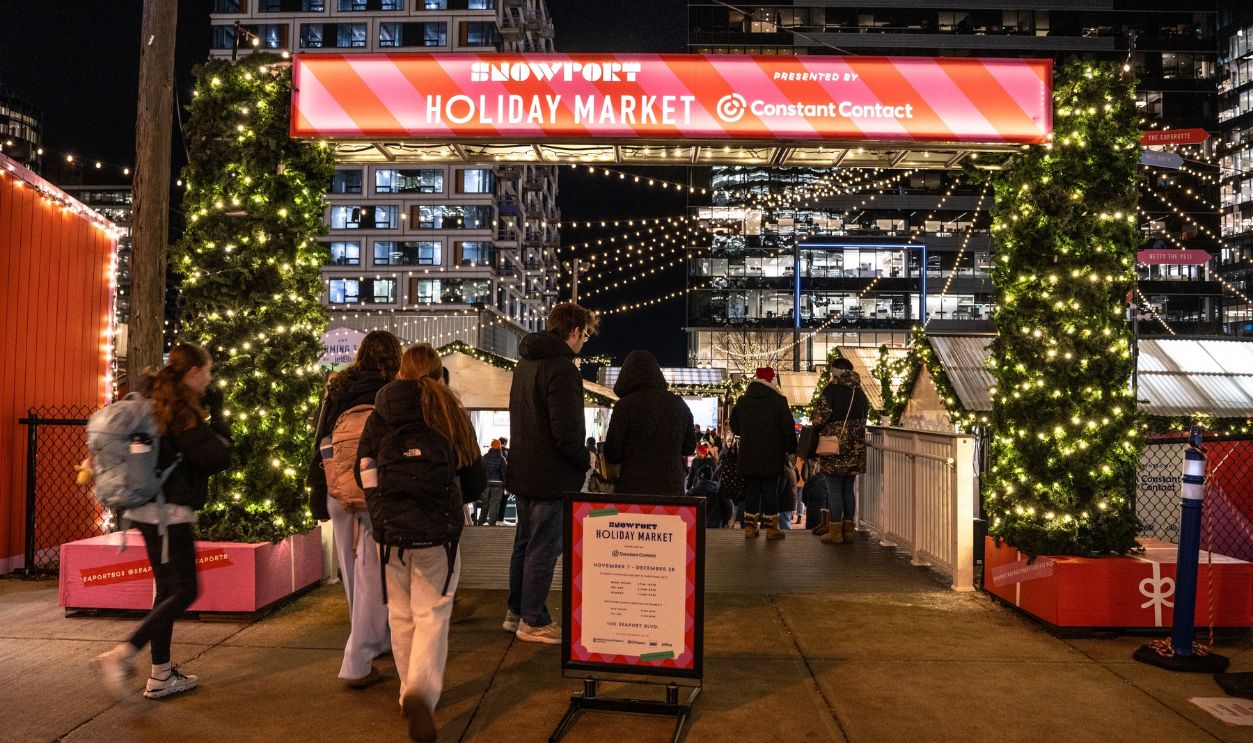
That's an important distinction. The Christmas market may still happen on the same date, at the same location, with the same vendors, lights, food, entertainment, and attractions. The organizer has simply stopped charging people to enter.
That makes the refund question less straightforward than a canceled event.
 Little Vignettes Photo, Shutterstock
Ticketmaster Also Defers To Event Organizers
Ticketmaster says refund eligibility generally depends on the event organizer's policies, requirements, and refund window. If an organizer authorizes refunds, eligible customers can see a refund option in their accounts. Ticketmaster also says it can't simply override an organizer's no-refund policy.

Check Your Ticket Account Before Doing Anything Else
Log into whichever service sold you the tickets. Look for a "Request Refund" button, event update, email, account notification, or explanation of what happens to previously purchased admission.
The organizer may already have created a solution for early buyers.

Maybe Your Ticket Was Automatically Upgraded
Don't assume your $25 ticket is now worthless. The organizer might convert paid admission into priority entry, reserved admission, drink vouchers, ride credits, parking, merchandise, or another perk.
If you're getting something free visitors aren't receiving, you're no longer comparing identical products.

Put A Dollar Value On Those Extras
Suppose you paid $30 for admission, but the organizer now gives original ticket holders a $20 food voucher and $15 parking credit. That's $35 in remaining value.
You might actually be financially better off keeping the ticket, even though the entrance gate itself is now free.

But What If You Get Absolutely Nothing Extra?
Now your argument becomes stronger from a customer-service perspective. You paid $100 for four people to enter, and the organizer is now letting four new visitors enter for $0 while providing you no additional benefit.
At minimum, ask the organizer directly how previously purchased admission is being handled.

Ask For A Refund Before Asking For A Credit
Be specific. State your order number, purchase date, amount paid, and the fact that the website now advertises free general admission for the same event. Ask whether your original admission charge can be refunded to your payment method.
Don't make the organizer guess what resolution you want.

Save A Screenshot Of The Free Admission Offer
Do this before contacting anyone. Capture the page showing that admission is now free, along with the event name, dates, and any conditions.
You want proof that you're comparing your paid ticket with the same event rather than a different date or admission category.
 LinkedIn Sales Navigator, Pexels
Make Sure "Free" Really Means Free
Read the fine print. Maybe weekday admission became free while weekends remain ticketed. Perhaps entry is free before 4 p.m. but your evening session still requires a ticket. The free offer might also apply only to children, local residents, or particular dates.
Compare the offers carefully.

Christmas Markets Often Have Multiple Ticket Types
A market may have free general admission while charging for special experiences. Ice skating, Santa visits, workshops, tastings, concerts, rides, reserved seating, or premium areas can still require tickets.
Make sure the website hasn't simply changed how the event packages its attractions.
Timing Could Explain The Change
Perhaps advance ticket sales were weaker than expected. Maybe a sponsor stepped in. The organizer might have received additional funding or decided that free admission would increase spending at vendor booths.
The reason doesn't necessarily determine your refund rights, but it's worth knowing why the policy changed.

Service Fees Could Complicate The Refund
Even when an organizer agrees to refund the ticket price, ticketing fees may be treated differently. Eventbrite says its ticketing fees are generally nonrefundable when an ordinary refund is processed, with exceptions including canceled events and certain duplicate charges.
That means a $100 ticket refund doesn't always mean every dollar of the original order returns.

Ask About The Fees Too
If you paid $100 for tickets plus $18 in service fees, don't simply ask, "Can I get my tickets refunded?" Ask whether the refund would be $100 or the full $118.
Knowing the exact amount can influence whether you prefer a refund, credit, or upgraded package.

The FTC's Ticket Pricing Rule Is Relevant, But Limited
Since May 12, 2025, the FTC's Rule on Unfair or Deceptive Fees requires businesses selling live-event tickets to display the total price upfront, including mandatory fees that can be calculated in advance. The rule targets deceptive pricing and hidden mandatory fees.
It doesn't create a blanket refund guarantee every time an event later lowers its ticket price.

Misleading Advertising Could Be A Different Issue
The situation becomes more concerning if the organizer specifically encouraged people to buy early by claiming paid admission was required, limited, or becoming more expensive, while already planning to make admission free.
That raises a different consumer-protection question from an organizer simply changing its business plan months later.

What If They Refuse Your Refund?
Ask for an explanation in writing. Find out whether your original ticket now includes any additional benefits and whether the organizer is offering credits, upgrades, vouchers, or admission to another paid attraction.
A refusal is easier to evaluate when you know exactly what you're still receiving.

A Credit Could Still Be Worth Considering
Suppose you spent $80 and the organizer won't return it but offers an $80 credit toward food, drinks, parking, or paid attractions you planned to purchase anyway. Financially, that could leave you close to where you started.
Just check for expiration dates and restrictions before accepting.

Don't Immediately File A Chargeback
A credit-card dispute isn't automatically justified because something you purchased later became free. If the event is still taking place and your tickets remain valid, the merchant can argue that the service you bought is still being provided.
Start by requesting a refund from the organizer or ticket seller.

Credit-Card Protections Are More Useful When Something Wasn't Delivered
The Consumer Financial Protection Bureau says consumers should first contact the seller when seeking a refund. Federal billing-error protections can apply in certain situations involving goods or services that weren't accepted or weren't delivered as agreed, but a later price reduction isn't automatically the same thing.

And There's A Timing Problem
For certain credit-card billing-error protections, the CFPB says written notice generally needs to reach the card issuer within 60 days after the statement containing the disputed charge was sent. If you bought your Christmas tickets six months ago, that federal billing-error window may already be an issue.
Your card issuer may have other dispute procedures, but don't assume a six-month-old charge can simply be reversed.

So... Can You Request A Refund?
Absolutely. Nothing prevents you from asking the organizer to refund admission that it now provides free to everyone. If your original paid ticket no longer provides anything additional, you have a particularly reasonable argument for a refund or equivalent compensation.
But requesting a refund and being legally entitled to one aren't necessarily the same thing.

Are They Required To Give You One?
Not automatically just because the current admission price dropped to $0. If the same event is still being delivered and your original ticket remains valid, the answer may depend heavily on the original refund policy, ticket terms, platform rules, applicable state law, and whether the paid ticket still carries additional value.
A canceled or materially altered event can create a much stronger refund case than a simple price change.

Your Best Move Is To Ask Early
Contact the organizer before attending or using the ticket. Include your order number, receipt, purchase date, amount paid, and screenshot showing free admission. Ask first for a refund, then ask about an equivalent credit or upgrade if a refund is refused.
Once you've attended and used the ticket, your argument may become considerably less persuasive.

The Bottom Line
If you paid $20, $30, or $50 per person six months ago and the exact same Christmas market is now letting everyone enter for free, you should absolutely request a refund. Just don't assume that the later price change automatically guarantees one.
Check what your ticket still includes, preserve the original terms, document the new free-admission offer, and contact the organizer before the event. If they won't return your money, ask what early buyers are receiving instead.
Because planning Christmas six months early is supposed to save you money, not leave you as the only person at the market who paid to walk through the gate.

You May Also Like: Common New Restaurant Fees That Make Your Final Bill Look Nothing Like The Menu Price