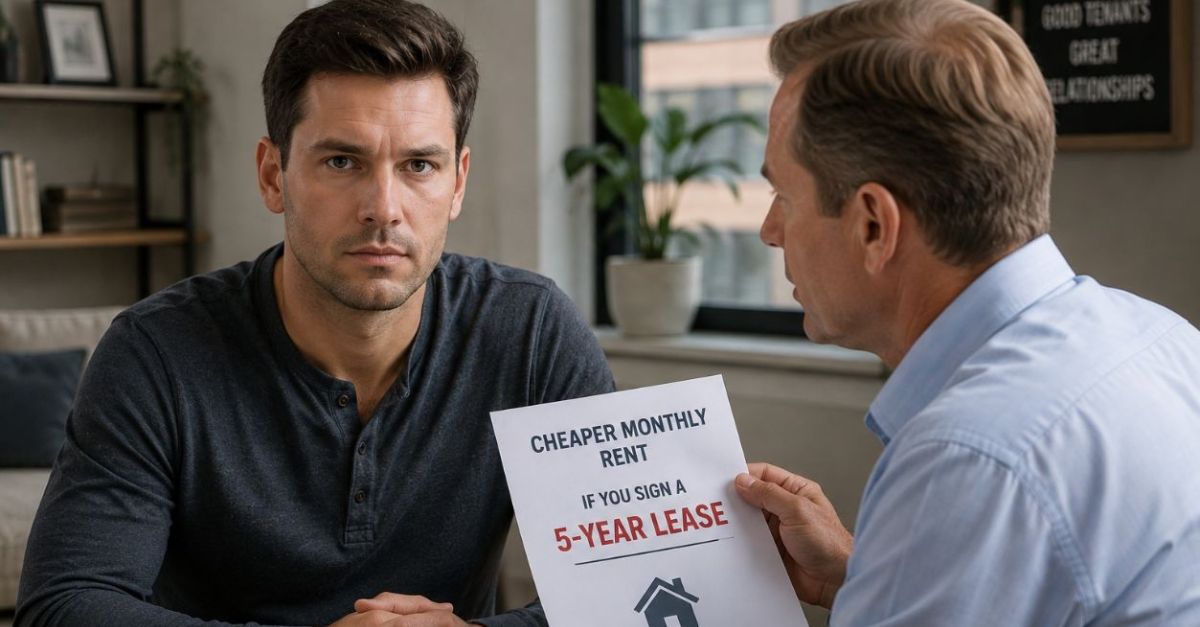
A Tempting Deal With A Long Tail
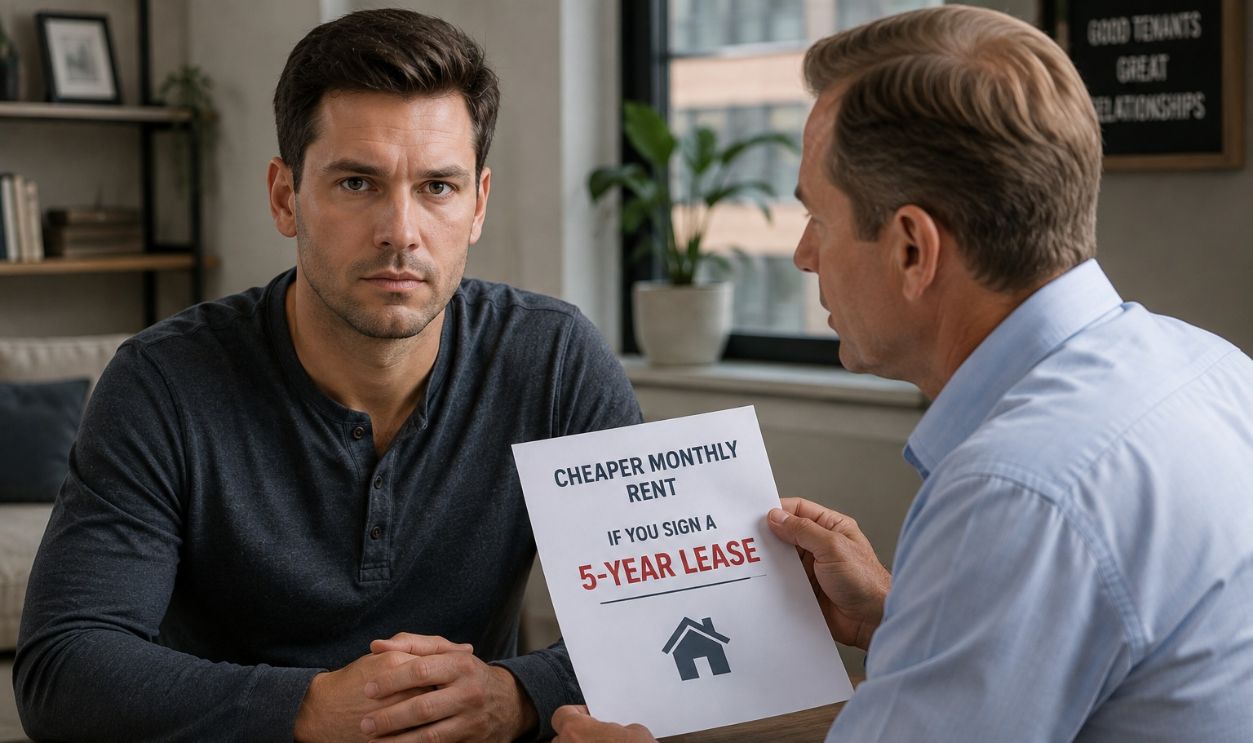
Your landlord offers a lower monthly rent if you commit for five years. At first glance, that can sound like a rare break in an expensive rental market. A longer lease can save real money, but it can also tie you to a home, a neighborhood, and a payment obligation long after your life changes. The right choice comes down to the math, the lease terms, and how sure you are about the next few years.
Why This Question Matters Right Now
Rents jumped in many parts of the country in the years after the pandemic, which made any discount look appealing. Zillow reported that U.S. rents surged during that stretch before cooling more recently, and many renters are still dealing with high housing costs. That is why a five-year lease can feel like both relief and a trap.

What A Five-Year Lease Really Means
A five-year lease is not just a promise to pay rent for a long time. It is a contract that can shift risk from the landlord to the renter, especially if leaving early is expensive. Before you focus on the lower monthly number, make sure you understand what rights you may be giving up and what penalties could kick in.

The First Question Is Simple
How much cheaper is the rent, really. If the discount is $50 a month, that is $600 a year and $3,000 over five years before inflation and other costs. If the apartment is not a great fit or your situation changes, those savings can vanish fast.

Run The Total Cost, Not Just The Monthly Number
Look at the full cost of the lease over the whole term. A drop from $2,000 to $1,850 a month sounds meaningful, but over 60 months you are still committing to $111,000 in rent. Seeing the total in one number can make the decision feel a lot more real.

Inflation Can Make A Flat Rent More Valuable
If your lease truly locks in one rent for five full years, inflation can work in your favor. The Bureau of Labor Statistics tracks shelter costs through the Consumer Price Index, and housing costs have generally gone up over time, even if the pace changes. In plain English, a fixed rent can look better and better in later years if market rents keep rising.

But Market Rents Do Not Always Rise Forever
Rent spikes cool off, and some cities even see rents fall after a period of fast growth. Zillow's rental market data has shown that rent trends can flatten or reverse depending on local supply, migration, and demand. A five-year lock is not automatically a winning bet.

Your Biggest Risk May Be Your Own Life
The biggest unknown is often not the housing market but your own timeline. A new job, breakup, marriage, baby, caregiving duty, or health issue can make your current apartment the wrong one in a hurry. A long lease works best when your life is unusually steady and your housing needs are not likely to change much.

Job Mobility Changes The Equation
If your career could require a move, a five-year lease gets much riskier. The U.S. Bureau of Labor Statistics has long shown that Americans change jobs many times over their working lives, and remote work policies can shift without much warning. Cheap rent can still cost you if it cuts into your flexibility.

Read The Early Termination Clause Like It Is The Main Event
This part may matter more than the rent itself. Some leases make you pay several months of rent to break the agreement, while others hold you responsible until a replacement tenant is found. The Consumer Financial Protection Bureau advises renters to review lease terms closely, especially fees and penalties tied to ending the lease early.
 Andrii Iemelianenko, Shutterstock
State Law Matters More Than Many Renters Realize
Landlord-tenant rules are not the same everywhere. Nolo's legal guides note that in many states landlords must make reasonable efforts to rerent a unit if a tenant leaves early, which can limit the renter's exposure, but the exact rule depends on where you live. Do not assume your state gives you the same protections as a friend in another city.

Some Cities Offer Stronger Tenant Protections
Local law can matter even more than state law. In some cities with rent stabilization or stronger tenant protections, the value of a long lease may look different because annual increases may already be capped or regulated in certain cases. If you already have legal protection against steep rent hikes, a five-year commitment may be less appealing.

Maintenance Promises Need To Be In Writing
If the landlord is pushing a long lease, that is your chance to negotiate more than price. Ask for written promises on repairs, appliance replacement, painting, pest treatment, parking, or storage if those things matter to you. Lower rent loses some of its shine if you are stuck for years with constant maintenance problems.

Find Out Whether The Rent Really Stays Flat
Not every so-called five-year deal keeps the rent unchanged for the full term. Some leases raise the rent after year one or tie future increases to taxes, insurance, utilities, or other building costs. If there is any formula for future rent increases, get it in writing and run the numbers before you sign.

Watch For Fees That Eat The Discount
Application fees, amenity charges, pet rent, parking, storage, and utility pass-throughs can quietly wipe out part of your savings. The advertised rent is only one piece of your monthly housing cost. Compare the full all-in payment under the long lease to what you would likely pay if you stayed with shorter terms.

Do The Break-Even Math
Here is the practical test. If the discount saves you $150 a month, that is $1,800 a year. If breaking the lease later would cost you three months of rent plus moving expenses, ask how long you would need to stay for the discount to make up for that risk. If the answer is years, you need to be very confident you are staying.

Consider The Quality Of The Landlord Too
A five-year lease ties you not just to a unit but to a relationship. If the landlord is responsive, clear, and financially stable, a long-term arrangement can feel safe. If communication is bad before you sign, take that as a warning because you may be dealing with the same problems for a long time.

Building Sale Risk Is Worth Asking About
Landlords can sell properties, and a change in ownership can alter your day-to-day experience even when your lease stays in force. Ask whether the owner has plans to refinance, renovate, or market the property. A valid lease generally survives a sale, but a new owner can still affect maintenance quality, house rules, and renewal options.

Roommates Make Long Leases Trickier
If you share the apartment, a five-year commitment gets more complicated fast. One roommate may move out, lose income, or stop paying, leaving the remaining tenants exposed if the lease makes everyone jointly responsible. Long terms and shared liability can be a rough mix unless everyone is financially solid and the exit rules are clear.
 Rapeepat Pornsipak, Shutterstock
Family Plans Can Change Faster Than You Think
A studio that works today may feel impossible with a partner, child, or relative moving in later. Five years is plenty of time for major life changes, even if you are not planning for them right now. Space needs change, and a good rent does not create extra bedrooms.

The Economy Can Turn In Unexpected Ways
A recession, layoff, or drop in income can make any fixed obligation feel much heavier. On the other hand, if your income is stable and rents in your area keep climbing, a locked rate could look brilliant in hindsight. The problem is that no renter can predict five years with much confidence, which is why flexibility has real value.

Negotiate More Than Just Monthly Rent
If the landlord wants a five-year commitment, you have leverage. You can ask for a smaller security deposit where legal, a clear early termination option, free parking, capped annual fees, repair deadlines, or even a one-time right to transfer to another unit in the building. A long lease should come with more protection, not just a slightly lower payment.
 TommyStockProject, Shutterstock
Try For A Shorter Commitment First
If you like the apartment but hate the idea of five years, propose a two-year or three-year lease instead. You can also ask for renewal options at preset increases, which gives you some rent protection without locking you in for half a decade. This middle-ground option often gives you the best mix of savings and flexibility.

Ask For An Escape Hatch In Writing
A relocation clause, job-loss clause, or fixed lease-break fee can turn a risky deal into something more manageable. Verbal promises are not enough, because only the written lease will matter if there is a dispute later. If the landlord truly wants a long-term tenant, they may agree to terms that lower your downside.

When Locking In Can Be Smart
A five-year lease can make sense if the rent is clearly below market, the protection against increases is real, the unit fits your likely future needs, and your job and personal life are stable. It also helps if the lease includes a reasonable way out and the landlord has a good track record. In that situation, the long term can buy peace of mind as well as savings.

When It Is Probably A Bad Bet
If the discount is small, your life is in flux, the landlord is vague, or the lease has harsh break penalties, this is probably not a bargain. The lower monthly payment can distract from the bigger cost of losing flexibility. A five-year lease is rarely smart when uncertainty is high and the terms are one-sided.

The Bottom Line For Renters
Locking in for five years is not automatically smart or foolish. It is a trade between savings and freedom, and the better choice depends on your market, your plans, and the language in the lease. If you cannot explain exactly how much you save, how you can get out, and why this home will still fit your life years from now, you are not ready to sign.