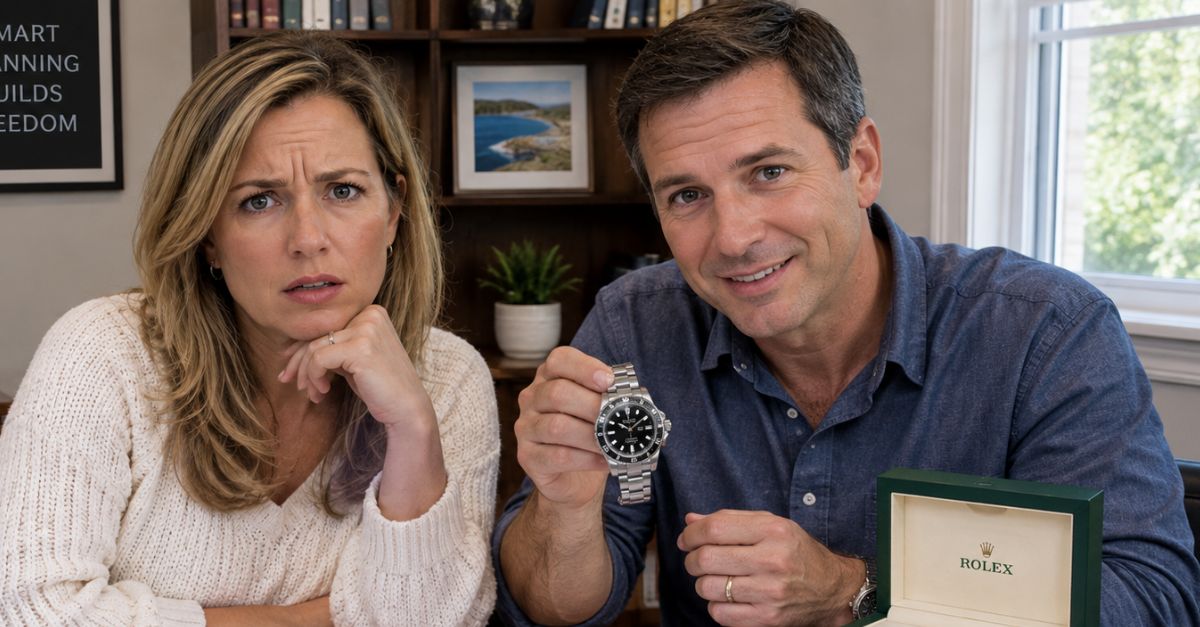
A Retirement Plan That Raises Questions
If one spouse wants to keep retirement accounts separate but expects the couple to spend the other spouse’s savings first, it is easy to see why that feels off. This is not just about feelings. It is also about money, legal rights, and day-to-day reality. A solid retirement plan should make clear whose money is used, when it is used, and what happens if one spouse outlives the other by many years.

Why This Hits A Nerve
Retirement is one of the biggest shared goals in a marriage, and it often brings very different money habits to the surface. One partner may want independence and control. The other may see everything as family money. Trouble usually starts when those two views clash over who pays first.

Separate Accounts Are Pretty Common
Many married couples keep at least some money separate, and retirement accounts are usually separate by default. A 401(k) and an IRA are individually owned accounts, even when a couple plans for retirement together. So separate ownership is not the problem by itself. The real issue is the spending plan built around those accounts.

What The Rules Actually Say
The IRS treats workplace plans and IRAs as individual accounts, not joint ones. Contribution limits, required distributions, and tax reporting all apply to each person separately. That is why a couple can plan together without combining every account. But tax law does not settle the fairness question inside a marriage.
Fair Does Not Always Mean Fifty-Fifty
A fair retirement plan does not mean both spouses have to withdraw the exact same amount at the exact same time. Fairness can mean recognizing that each person contributed in different ways during the marriage, including unpaid caregiving or supporting the other spouse’s career. But if one person protects their nest egg while the other person’s savings get drained first, the burden can quickly become one-sided. That is where resentment starts.

The First Big Risk Is Bad Timing
Using one spouse’s retirement portfolio first can expose the household to sequence risk. If the market drops early in retirement, the account being tapped takes the damage while withdrawals keep going. The spouse whose account is left alone may end up in far better shape later. That may look neat on a spreadsheet, but it can feel deeply unfair in real life.

The Second Big Risk Is Longevity
Retirement planning is not just about the first decade. It is also about who is still standing in year 25 or year 30. The Social Security Administration has long noted that women, on average, live longer than men, which can make late-life income especially important. A plan that burns through one spouse’s money first, without clear guardrails, can leave the survivor in a weak spot.
 simona pilolla 2, Shutterstock
Marriage Changes The Math
Once people marry, they often stop thinking in purely individual terms, even if the accounts stay separate. Housing, healthcare, food, and travel are usually household costs. That means one spouse’s withdrawal strategy affects both people. If one person is effectively financing the early years of retirement alone, that should be plainly acknowledged and clearly agreed to.

Community Property Can Complicate Things
In some states, retirement savings built during the marriage may be treated as marital or community property, even if the account is only in one spouse’s name. The exact rule depends on state law, the kind of plan, and when the contributions were made. That is one reason legal ownership and fairness are not always the same thing. Couples should not assume the name on the account settles the issue.

Divorce Law Gives A Useful Clue
Courts often treat retirement assets built during a marriage as property that can be divided. That does not mean a good marriage should be planned like a divorce case. But it does show how seriously the legal system takes the idea that retirement wealth built during marriage may belong to both spouses in some way. If one spouse wants a one-sided drawdown plan, that tension is worth noticing.
 https://kaboompics.com/, Pexels
Spousal Rights Matter Too
Employer retirement plans often come with protections for spouses, especially when it comes to beneficiaries. The U.S. Department of Labor explains that many plans require the spouse to be the default beneficiary unless the spouse agrees to something else. That reflects a simple idea: retirement money in a marriage affects both people, even when only one name appears on the statement.

Taxes Can Make A Bad Plan Even Worse
Pulling money from one spouse’s tax-deferred account first might force that person into bigger taxable withdrawals while the other spouse’s money keeps growing. Depending on the mix of accounts, that could raise income taxes, increase Medicare premiums, or affect how much of Social Security gets taxed. A household withdrawal plan should be built around after-tax results, not just gut feelings about fairness. Otherwise the couple may lose money while arguing over principle.

Social Security Needs To Be Part Of The Plan
Retirement income is not just about 401(k)s and IRAs. Social Security can change both what feels fair and what actually works. A lower-earning spouse may qualify for spousal benefits, and the survivor may later rely on the higher earner’s benefit. That makes coordinated claiming and coordinated withdrawals much more important than a simple yours-versus-mine approach.

The CFPB Pushes Long-Term Planning For Couples
The Consumer Financial Protection Bureau has stressed that retirement planning works best when couples talk through goals, timing, risk, and future expenses together. Those are not side issues. They are the heart of whether a spending plan will hold up when life gets messy. If one spouse assumes the other spouse’s account gets used first, that conversation is overdue.
 Tony Webster, Wikimedia Commons
There May Be A Hidden Reason
Sometimes the spouse who wants to protect their own retirement account is not just being selfish. They may be scared of running out of money, worried by family history, or trying to keep a reserve for long-term care. Those concerns are real. But they should be said out loud, not quietly built into a plan that shifts the risk to the other spouse.

Ask The Key Question
If your wife wants separate retirement accounts but expects both of you to live on yours first, ask what happens after your account shrinks. Does she then draw equally from hers. Is she hoping to leave her account to heirs. Or does she see her money as a backup fund for both of you. The answer changes everything.

Intent Matters, But Structure Matters More
Good intentions do not automatically make a plan fair. A retirement strategy should spell out the withdrawal order, spending targets, emergency rules, and survivor protections. If the idea is to use one account first for tax reasons, there should be a clear explanation of how the other spouse’s account later balances things out. Without structure, one person can end up carrying the whole load.
 LightField Studios, Shutterstock
A Household Budget Can Expose The Reality
One of the best ways to test fairness is to build a retirement cash-flow plan. List guaranteed income, expected expenses, healthcare costs, and withdrawals by account type. Then run the numbers under different market conditions. Once the math is on the table, vague ideas about fairness usually get a lot clearer.

There Are Better Ways To Share The Load
Couples can alternate withdrawals, take money proportionally based on account size, or set a household target and have each spouse contribute under an agreed formula. Some retirees also split essential costs from optional spending. Housing and healthcare might be covered by guaranteed income and steady withdrawals, while travel comes from both accounts. That often feels more balanced than emptying one nest egg first.

Watch Out For Emotional Accounting
People are not always logical about money in different buckets. A spouse may see their own retirement account as off-limits while treating the other spouse’s account as shared money. That mental split can cause real conflict, especially when both partners spent years supporting the household in different ways. Simply naming that bias can help cool things down.

What If One Spouse Earned Much More
Even if one spouse brought in most of the income, that does not automatically make a one-sided drawdown fair. Many households work because one partner handled childcare, moves, or other work that helped the higher earner build a career. Retirement planning should reflect the whole partnership. Looking only at whose paycheck funded the account can miss the bigger picture.

Healthcare Can Blow Up A Weak Plan
Fidelity’s long-running estimates for retiree healthcare costs show that medical expenses can be one of the biggest late-life risks for couples. That is exactly why flexibility matters. If one spouse’s account is drained early, the household may have fewer options later. A plan that looks manageable at 62 can look reckless at 82.

Try A Written Retirement Agreement
This does not have to be a legal contract. For most couples, it can just be a shared document that lays out how much you expect to spend, which accounts get tapped first, and what would trigger a change. It should also cover market downturns, major medical bills, and support for a surviving spouse. Writing it down cuts confusion and selective memory.

Bring In A Neutral Third Party
If this keeps turning into an argument, a fee-only financial planner can help. The goal is not just to chase higher returns. It is to test whether the plan is sustainable and fair to both people. A neutral adviser can also model taxes, required minimum distributions, and survivor outcomes that couples often miss.

So, Is It Fair
At first glance, a plan where your wife keeps her retirement accounts separate but expects the household to live on yours first does not sound fair. It might make sense in a very specific tax or risk strategy, but only if both spouses clearly benefit and both accounts are ultimately there to support the marriage. If the real-world result is that your savings get depleted while hers stay protected, skepticism makes sense. Fairness requires transparency, give-and-take, and a plan that protects both partners over the long run.

The Smartest Next Step
Do not argue about this in abstract terms. Ask for a full retirement income plan in writing, with numbers, dates, and backup scenarios. If the plan still depends on your account being the first and main sacrifice without any balancing mechanism, it is reasonable to push back. In retirement, vague promises are not a strategy.