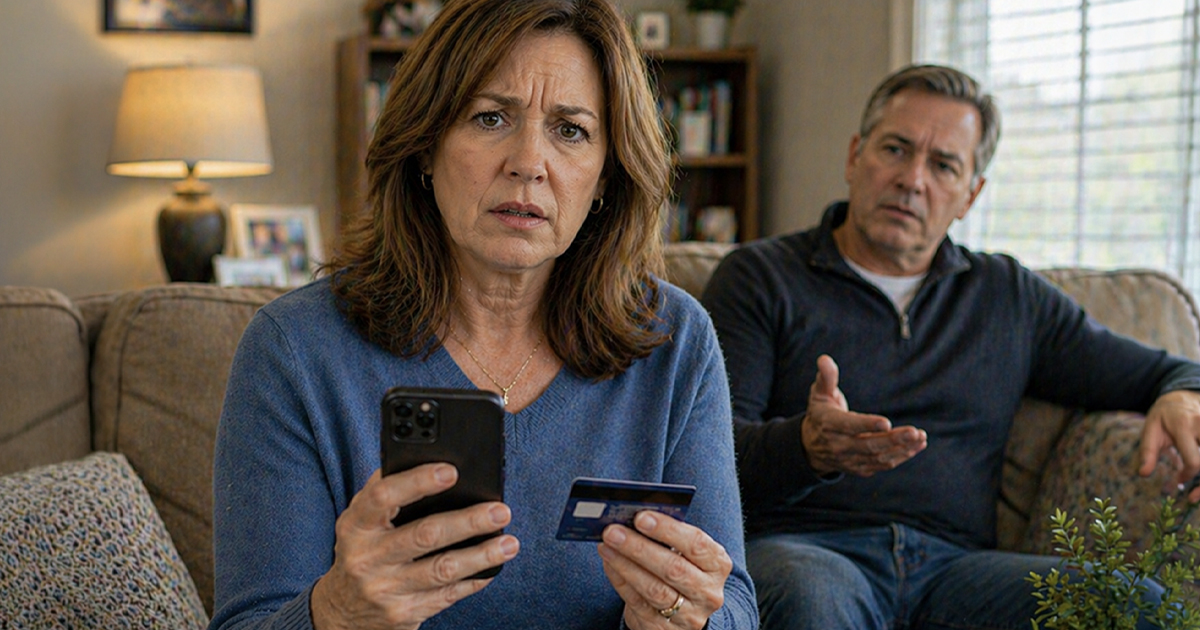
A husband and wife confused with a smartphone.

I connected my bank card to a cash-back app, and my husband says that’s how people get hacked. Should I be worried?


May 4, 2026 | Allison Robertson

I connected my bank card to a cash-back app, and my husband says that’s how people get hacked. Should I be worried?


You Linked Your Card… Now You’re Second-Guessing It

You signed up for a cash-back app, linked your card, and started earning a few dollars here and there. Seemed smart, right? Then your husband says, “That’s how people get hacked.” Now you’re wondering… did you just open the door to something risky?
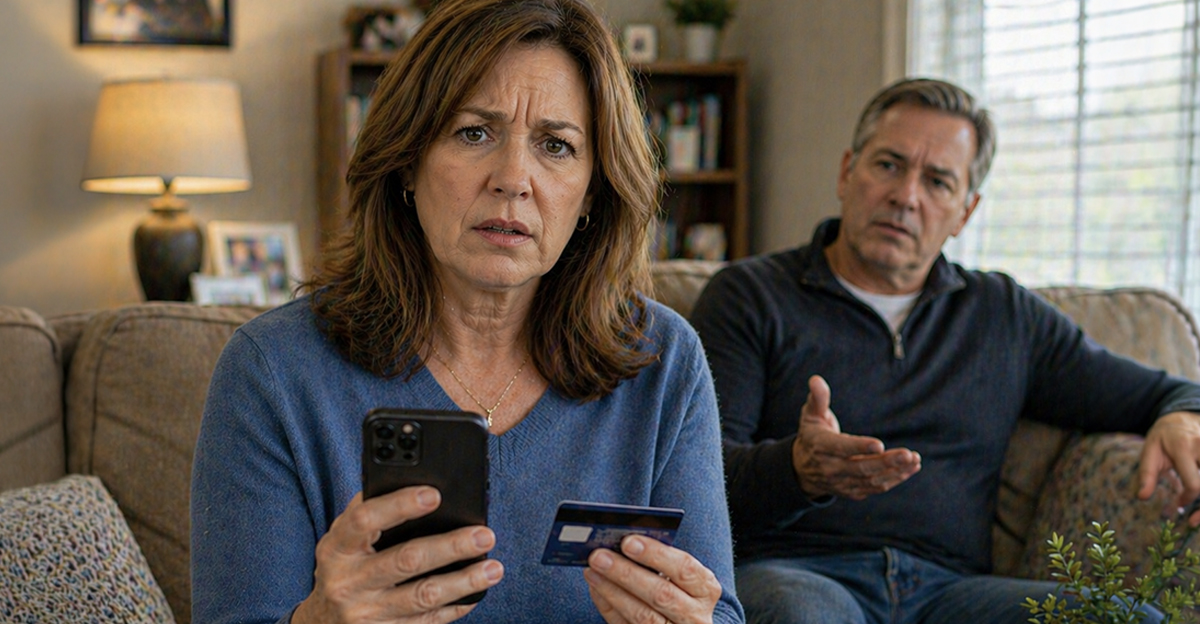
A husband and wife confused with a smartphone.Factinate Ltd.

Advertisement

What Is a Cash-Back App, Really?

These apps promise rewards for everyday spending. You connect your card, and they track purchases to give you points or money back. Sounds simple—but have you ever wondered how they’re actually seeing your transactions?

A woman making an online purchase using a smartphone and credit card outdoors.Leeloo The First, Pexels

Advertisement

Wait—Can They See Everything You Buy?

In many cases, yes. When you connect your card, you’re allowing the app to view certain transaction data. Not your PIN—but details like where you shop, how much you spend, and when.

A woman pays with a card at a store counter to a bearded cashier in a denim vest.MART PRODUCTION, Pexels

Advertisement

How Do They Even Get That Information?

Here’s where it gets interesting. Some apps connect through secure banking systems, while others use third-party services. Ever heard of something called “read-only access”? That’s what most of these apps rely on.

A young man using a smartphone and credit card for online shopping at home.Vitaly Gariev, Pexels

Advertisement

“Read-Only Access”… But What Does That Mean?

It means the app can see your transactions—but not move your money. No transfers, no withdrawals. But still… does it feel a little uncomfortable knowing something is watching your spending?
A woman with curly hair gesturing emotionally while engaged in a phone call indoors.Mizuno K, Pexels

Advertisement

Could Someone Hack Your Bank Account Through This?

That’s the fear, right? But let’s pause—just because something connects to your account doesn’t mean it can control it. The real question is… how secure is the app itself?

Young woman in red dress sitting indoors, using smartphone at a table with a cup of coffee.Anna Shvets, Pexels

Advertisement

Are All Cash-Back Apps the Same?

Not even close. Some are run by large, well-known companies with strong security. Others… not so much. So how do you tell the difference? And does that actually matter?

Woman in coat using smartphone in front of modern building. Professional and focused expression.August de Richelieu, Pexels

Advertisement

What Happens If the App Gets Breached?

This is where things can get a bit concerning. If a company storing your data gets hacked, your information—like purchase history or email—could be exposed. But would that include your actual bank details?

Young woman multitasking with smartphone and laptop in a cozy indoor setting.SHVETS production, Pexels

Advertisement

What About Your Card Number—Is That Stored?

Most legitimate apps don’t store your full card number in plain form. They use encryption or token systems. But still… trusting any company with financial connections feels like a big step, doesn’t it?

Woman using smartphone for online shopping at a cafe with credit card in hand.Vitaly Gariev, Pexels

Advertisement

Why Do These Apps Want Your Data Anyway?

Because your spending habits are valuable. Companies use that data to offer deals, target ads, and partner with retailers. So yes—you’re earning cash back… but you’re also sharing information.

Young woman enjoying a relaxing moment while checking her smartphone indoors with a cup of coffee.Andrea Piacquadio, Pexels

Advertisement

Is This Different From Using Your Card Normally?

Think about it—your bank already tracks your spending. Retailers track purchases too. So is this really new, or just another layer added on top of something that’s already happening?

Young Asian woman using a laptop and credit card for online shopping at home.Antoni Shkraba Studio, Pexels

Advertisement

What’s the Real Risk Here?

Is it hacking? Identity theft? Or just privacy concerns? The answer isn’t always obvious. And honestly, it depends a lot on the app you chose.

Young woman with curly hair and glasses texting on her smartphone while sitting on concrete stairs in daylight.Andrea Piacquadio, Pexels

Advertisement

What Should You Look for in a Safe App?

Check reviews, look for well-known companies, and see if they mention encryption or security practices. If something feels off—or looks rushed—it’s probably not worth connecting your card to it.

A young woman in a polka dot shirt enjoys coffee while using a smartphone in a cozy living room.RDNE Stock project, Pexels

Advertisement

Could You Disconnect It Later?

Yes, in most cases you can unlink your card anytime. But here’s a thought—once the data has been shared, how much of it is still stored on their end?

A young woman sits indoors, using her smartphone while sipping coffee, surrounded by plants.Mikhail Nilov, Pexels

Advertisement

What Would a Hacker Actually Need?

Access to your login, your device, or weak security from the app itself. Simply linking your card doesn’t automatically give someone the keys to your account—but weak links can create problems.

A woman wearing glasses uses her smartphone, sitting on a bed in a cozy bedroom.Matilda Wormwood, Pexels

Advertisement

So… Is Your Husband Right to Be Worried?

Maybe a little—but not for the reason he thinks. It’s not that cash-back apps automatically lead to hacking. It’s more about which apps you trust and how careful you are.
A man and woman using a smartphone together in a city park during daytime.RDNE Stock project, Pexels

Advertisement

What Should You Do Right Now?

Take a moment and review the app. Is it well-known? Do you trust it? If not, you can always disconnect your card and remove your account. Peace of mind matters more than a few dollars back.

woman sitting on bed while using gold turned 8 PlusSamantha Gades, Unsplash

Advertisement

So… Should You Be Worried?

Here’s the honest answer: not necessarily—but you should be aware.

Linking your card to a reputable cash-back app is generally safe because they use secure, read-only systems. But connecting to unknown or poorly reviewed apps can increase your risk.

a woman sitting on the ground looking at her cell phoneLadislav Stercell, Unsplash

Advertisement

The Bottom Line Before You Link Another Card

Cash-back apps aren’t automatically dangerous—but they’re not risk-free either. The real difference comes down to who you trust with your data. A little caution goes a long way here.
Woman holding credit card and phone for online shopping.Vitaly Gariev, Unsplash

Advertisement

You May Also Like:

My insurance company viewed my property on Google Earth, then immediately canceled my policy because I have shipping containers. Can they do that?

I put a $12k purchase on my credit card, and my brother says it’ll be reported to the IRS. My dad says only cash purchases are reported. Who’s right?

Sources: 1, 2, 3


READ MORE

Saving money

Are Canadians Saving More Than Americans? Latest Studies Reveal A Surprising Gap

Curious how your savings stack up? This article compares average savings in the U.S. and Canada, revealing surprising gaps, reasons behind them, and shocking stats about American savings.
January 28, 2026 Allison Robertson
concerned woman holding phone

I just found out about the $600 rule and I’ve been using Venmo and PayPal all year—am I about to owe a huge tax bill?

A growing number of people are suddenly hearing about a $600 rule connected to Venmo and other cash apps, usually in the form of warnings, screenshots, or half-explained posts. There’s rarely context—just the implication that a normal year of payments may have crossed an invisible line with real consequences.
January 28, 2026 Jesse Singer
Adidas X Kanye West Yeezy 750 Boost Light Grey

Who Knew Sneakers Could Cost As Much As Your Mortgage? Here Are The World's Most Expensive Kicks.

Do your sneakers cost more than your dinner payment? That's cute. Some of these kicks could pay your whole house’s mortgage.
January 27, 2025 Miles Brucker
Inheritance

My grandpa just died and my cousins all got a big inheritance, but my mom is keeping my portion. I’m 40 years old. Can she do that?

Your cousins got their inheritance, but your mom is keeping yours—at age 40. Learn what rights you have and how to challenge unfair inheritance issues when a parent blocks your share.
January 20, 2026 Allison Robertson
Ceaseanddesistinternal

I anonymously posted a bad online review. The company posted my name and address and sent a cease-and-desist letter. What can I do?

When you posted a negative online review of a company's service, they published your contact information online and sent a cease-and-desist letter. We look at how you can protect yourself.
January 13, 2026 Jane O'Shea
Insurance Int

Here’s How To Figure Out If You’re Paying Too Much For Car Insurance

Car insurance has a funny way of becoming invisible. You sign up, set the payment to auto-draft, and then forget about it—until your bank account reminds you every month. The problem is that many drivers end up overpaying not because they’re reckless or unlucky, but because their policy hasn’t kept up with their life. If you’ve ever wondered whether your premium feels a little too spicy for what you’re getting, these signs will help you figure it out.
January 9, 2026 J. Clarke


Disclaimer

The information on MoneyMade.com is intended to support financial literacy and should not be considered tax or legal advice. It is not meant to serve as a forecast, research report, or investment recommendation, nor should it be taken as an offer or solicitation to buy or sell any securities or adopt any particular investment strategy. All financial, tax, and legal decisions should be made with the help of a qualified professional. We do not guarantee the accuracy, timeliness, or outcomes associated with the use of this content.


Dear reader,


It’s true what they say: money makes the world go round. In order to succeed in this life, you need to have a good grasp of key financial concepts. That’s where Moneymade comes in. Our mission is to provide you with the best financial advice and information to help you navigate this ever-changing world. Sometimes, generating wealth just requires common sense. Don’t max out your credit card if you can’t afford the interest payments. Don’t overspend on Christmas shopping. When ordering gifts on Amazon, make sure you factor in taxes and shipping costs. If you need a new car, consider a model that’s easy to repair instead of an expensive BMW or Mercedes. Sometimes you dream vacation to Hawaii or the Bahamas just isn’t in the budget, but there may be more affordable all-inclusive hotels if you know where to look.


Looking for a new home? Make sure you get a mortgage rate that works for you. That means understanding the difference between fixed and variable interest rates. Whether you’re looking to learn how to make money, save money, or invest your money, our well-researched and insightful content will set you on the path to financial success. Passionate about mortgage rates, real estate, investing, saving, or anything money-related? Looking to learn how to generate wealth? Improve your life today with Moneymade. If you have any feedback for the MoneyMade team, please reach out to [email protected]. Thanks for your help!


Warmest regards,

The Moneymade team


✕