
One Grandchild Got A Very Expensive Head Start
Years ago, your parents paid tens of thousands of dollars toward one grandchild's college education. The other grandchildren received nothing comparable. Now your parents have died, the estate is being divided, and someone raises an uncomfortable question: Should the grandchild who already received all that money get less from the estate so everyone ultimately comes out even?

It Certainly Feels Like An Inheritance
College tuition isn't exactly birthday-card money. Four years of tuition, housing, and other expenses can easily turn a grandparent's generosity into a substantial financial advantage.
So it's understandable for the other grandchildren to look at an inheritance and think, "Didn't they already get theirs?" Legally, however, things aren't necessarily that simple.
Your Parents Were Allowed To Spend Their Money
Start with the most important point: while your parents were alive and competent, their money generally belonged to them.
They could pay one grandchild's tuition, buy another grandchild a car, help someone with a house, or spend the money themselves. Families may disagree over whether those choices were fair, but an unequal lifetime gift isn't automatically a debt that the recipient owes the family later.

An Estate Isn't Usually A Family Equalization Fund
This is where expectations frequently collide with probate law.
An estate doesn't ordinarily look backward through decades of family spending and automatically calculate whether every child and grandchild received exactly the same amount.
Instead, the personal representative generally follows the will, applicable trust documents, beneficiary designations, and state probate law.

So That Tuition Payment Might Simply Have Been A Gift
Imagine Grandma paid $80,000 toward Emily's college education.
Years later, Grandma dies leaving an estate that benefits Emily and her cousins equally.
The cousins might reasonably believe Emily should have $80,000 deducted from her inheritance. But unless Grandma structured or documented the tuition payments that way, the law may treat the earlier assistance as a completed lifetime gift rather than an advance on Emily's inheritance.

There's Actually A Legal Concept For This
It's called an advancement. An advancement is a lifetime gift that's treated as an advance against what someone would otherwise inherit from an intestate estate.
But simply receiving a large gift doesn't necessarily make it an advancement.

The Paper Trail Can Be Everything
Probate statutes in states following the modern Uniform Probate Code approach generally don't presume that every substantial lifetime gift was an inheritance advance.
For example, Maine law says a lifetime gift to an heir is treated as an advancement against an intestate share only when the decedent declared that intention in a contemporaneous writing, the heir acknowledged it in writing, or qualifying written evidence otherwise indicates that the gift should be considered when dividing the estate.

Michigan Uses A Similar Rule
Michigan's probate code likewise says that, in an intestate estate, a lifetime gift is treated as an advancement when the decedent contemporaneously declared it in writing or the heir acknowledged in writing that it should be treated that way.
In other words, "We always assumed Dad would even things out later" isn't necessarily equivalent to Dad actually documenting that intention.

But State Law Really Does Matter
Don't assume every state handles advancements identically.
Washington, for example, provides that a gratuitous lifetime transfer is presumed to be an absolute gift rather than an advancement unless it's shown to have been an advancement. Its statute also contains specific rules for calculating an advancement when one exists.
That's why the estate's state of administration matters enormously.

There's Another Catch: Who Is Actually An Heir?
We're talking about grandchildren, which creates another wrinkle.
A grandchild isn't necessarily someone who would inherit directly under intestacy while that grandchild's parent—the decedent's child—is alive. State intestacy laws determine who qualifies to receive the estate and in what circumstances descendants inherit by representation.
So before arguing about an "advance," you first need to understand exactly how that grandchild fits into the estate.

A Will Can Change The Situation Completely
Suppose the grandparents left a will saying: "My estate shall be divided equally among my four grandchildren." That instruction matters.
If the will doesn't say that previous tuition payments should be deducted, the executor generally shouldn't casually rewrite "equally" into "equally, except we're going to subtract whatever Grandma spent on everyone during the last 20 years."

But The Will Could Explicitly Require Equalization
Grandparents can plan for this.
They might state that lifetime gifts exceeding a certain amount should be deducted from a beneficiary's eventual share. They could identify a specific tuition payment as an advance, maintain a schedule of lifetime gifts, or use other estate-planning provisions to accomplish their intended result.
Clear documentation can prevent a surprisingly ugly family argument later.

There's A Related Rule For Wills
The concept is sometimes called ademption by satisfaction when a lifetime gift is alleged to have satisfied all or part of a gift provided in a will.
Under Maine's probate code, for example, lifetime property is treated as satisfying a devise if the will provides for the deduction, the testator contemporaneously declares that intention in writing, or the beneficiary acknowledges it in writing.
 Amnaj Khetsamtip, Shutterstock
That's Different From An Advancement
The terminology can get confusing.
"Advancement" traditionally concerns intestate inheritance—property passing when there's no controlling will for that portion of the estate. "Satisfaction" deals with whether a lifetime transfer reduces a gift someone would otherwise receive under a will. The underlying family argument sounds almost identical, but the applicable legal rule may be different.

What If Grandma Actually Said, "This Is Your Inheritance"?
Now things become much more interesting.
Suppose the grandparents wrote a letter saying, "We're paying $60,000 toward Michael's college now, and this amount should be deducted from whatever Michael eventually receives from us."
Preserve that letter.
Written evidence showing that the grandparents intended the payment to count against a later inheritance could materially affect the analysis under applicable state law.

A Casual Conversation Is Much Harder
Now imagine Grandpa simply told his daughter at Thanksgiving, "Don't worry. We'll make everything equal eventually."
That may explain what the family believed was supposed to happen, but proving the legal significance of an old conversation can be difficult—particularly after the person who supposedly said it has died.
Estate disputes have an unfortunate tendency to turn family memories into competing witness testimony.

What About The Parents' Own Records?
Look for more than the will.
Estate-planning files, letters, signed acknowledgments, trust documents, ledgers, correspondence with an attorney, and other contemporaneous records could show whether the grandparents considered the tuition a gift or an advance.
A memo reading "Tuition gift for Sarah" tells a very different story from "Advance against Sarah's inheritance."

Don't Assume The Executor Can Just Make It Fair
This is especially important if you're the personal representative.
Your job isn't to decide what feels most equitable at the kitchen table. You're administering someone else's estate according to the governing documents and applicable law.
If the documents are ambiguous or beneficiaries disagree, obtaining probate counsel may be considerably safer than inventing your own equalization formula.
 Monkey Business Images, Shutterstock
What If The Grandparents Paid $100,000?
The emotional pressure tends to increase with the number.
A $500 graduation present probably isn't starting a probate war. Paying $100,000 for one grandchild's education while three others received nothing might.
But the size of a lifetime gift doesn't necessarily transform it into an inheritance advance by itself.

And Inflation Makes "Equal" Surprisingly Complicated
Suppose one grandchild received $50,000 for college 15 years ago.
If the family decides that amount should somehow be equalized today, do you deduct $50,000? Adjust it for inflation? Calculate investment growth? Compare it with today's tuition?
Probate statutes that recognize advancements may specify valuation rules precisely because "just make it fair" isn't actually a mathematical instruction.

Some Advancement Statutes Address Valuation
Maine's law, for example, generally values an advancement at the time the heir received or enjoyed the property or at the decedent's death, whichever occurs first. Michigan uses a similar framework.
So families shouldn't invent their own compound-interest calculation without first checking the governing law and documents.

What If The Other Grandchildren Weren't Born Yet?
That makes the moral question even trickier.
Perhaps the grandparents paid their oldest grandchild's tuition when she was 20. The younger grandchildren were toddlers—or hadn't even been born.
Grandparents aren't legally required to predict every future descendant and reserve matching amounts before helping someone who needs money today.
 Iulian Florentin Stefancu, Pexels
Circumstances Could Have Changed Too
Maybe the grandparents were wealthy when the oldest grandchild entered college and much less wealthy ten years later.
Maybe another grandchild received scholarships. Maybe someone else received help buying a house. Maybe the grandparents deliberately wanted to reward one person. Equal treatment isn't always the same thing as identical spending.
 LightField Studios, Shutterstock
That's Why Reconstructing Every Gift Can Become A Nightmare
Once a family starts counting tuition, where does it stop?
Do you include the $15,000 wedding contribution? The year someone lived with Grandma rent-free? The used car? Summer camp? Private school? Emergency medical bills? Monthly checks during unemployment?
Without an estate plan establishing what counts, retroactive family accounting can become remarkably subjective.

What If The Will Says "Equal Shares"?
That generally tells the executor how the property governed by the will should be divided. It doesn't necessarily mean that every lifetime gift must first be reconstructed and equalized. If the grandparents wanted prior gifts deducted, the estate documents or applicable legal rules need to support doing so.

What If There Is No Will At All?
Then intestacy law becomes central. State law determines who inherits, and the state's advancement rules determine whether qualifying lifetime gifts should be counted against an heir's share. That's where contemporaneous written evidence can become particularly important.

The Grandchildren Might Not Receive Anything Directly
This catches families by surprise. Depending on which relatives survive the grandparents, intestacy law may distribute property to the grandparents' children rather than directly to their grandchildren.
Grandchildren commonly inherit by representation when their parent in the relevant family line has died, although the exact rules depend on state law.
So the college recipient may not even have an intestate share against which the tuition could be charged.

What If Everyone Agrees It Was Supposed To Be Equal?
Families sometimes resolve these situations voluntarily.
Beneficiaries may be able to enter settlement or redistribution arrangements, depending on state law, taxes, creditor issues, and the estate's circumstances.
But that's different from saying the estate legally owes every grandchild an equal lifetime benefit.

Taxes Are A Separate Question
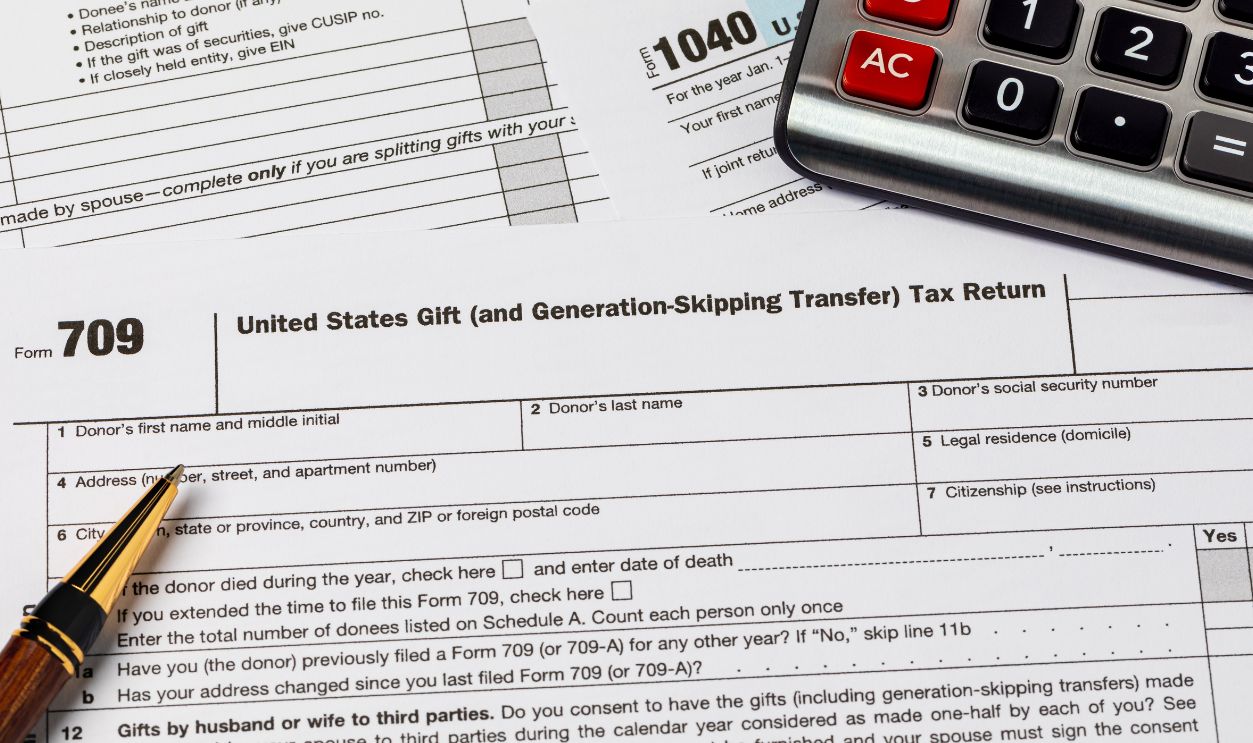
Large lifetime gifts can also raise gift-tax and reporting questions, but tax treatment doesn't automatically determine inheritance treatment.
Something can be a lifetime gift for tax purposes without necessarily being treated as an advancement against a beneficiary's probate inheritance.
Don't assume a tax return answers the probate question by itself.
The Executor Shouldn't Guess
If you're administering the estate and discover a major lifetime transfer, gather the evidence before distributing anything disputed.
Find the will and trusts, determine which state's law governs, locate records concerning the tuition payments, and identify whether the recipient is actually a beneficiary or intestate heir.
Then let the documents and applicable law—not sibling arithmetic—drive the answer.

So... Does The Estate Owe The Other Grandchildren Equal Treatment?
Usually, not simply because one grandchild received more financial help while the grandparents were alive.
A grandparent's payment of one grandchild's college expenses doesn't automatically create a legal obligation for the estate to give equivalent amounts to every other grandchild.
Whether the tuition should reduce the recipient's inheritance depends on the will or trust, applicable state law, whether the estate is testate or intestate, the recipient's status as an heir or beneficiary, and—critically—whether the grandparents documented an intention for that lifetime gift to count against a later inheritance.

Fair And Legally Required Aren't The Same Thing
The other grandchildren may have a completely understandable emotional reaction. Watching one cousin receive a six-figure education and then an equal inheritance can certainly feel unequal.
But probate isn't normally designed to audit an entire family's lifetime financial history and make everybody come out even.
If the grandparents wanted the tuition payment counted against a future inheritance, careful estate planning could accomplish that. If they simply paid the bill and called it a gift, the remaining estate may still be distributed exactly as their will says.
So before anyone starts subtracting tuition from somebody's inheritance, find the documents first. Grandma's checkbook may tell you what she spent—but her estate plan tells you what happens next.

You May Also Like: