Introduction: The Stock Market Crash Of 1929
The Roaring 20s in America were a time of decadence and prosperity, but they came to an infamous end on Thursday, October 24, 1929. The economy had been showing signs of slowing for months, but investors—used to making more and more money with little consequence—continued to buy shares in sectors where unemployment was now rampant and products were in decline.
This meant that the price of the stocks they were buying had very little relation to the actual value of the product. Even so, the prices for these stocks kept going up, and up, and up, until they couldn't possibly rise any further. Eventually, the more senior investors on New York's Stock Exchange began to see the writing on the wall. In response, they began to sell their stocks, causing share values to falter—and then came the crash.
Soon enough, everyone got into a panicked, selling frenzy, trading 12.9 million shares on just that one Thursday, far above the average of 4 million shares traded per day. Prices plummeted, fortunes were lost and families ruined. It would forever after be known as "Black Thursday". It was followed by "Black Monday" and "Black Tuesday" the week after, where shareholders continued to sell and prices continued to drop, and kickstarted the ravages of the Great Depression.
All from that one day. These photos tell its story.

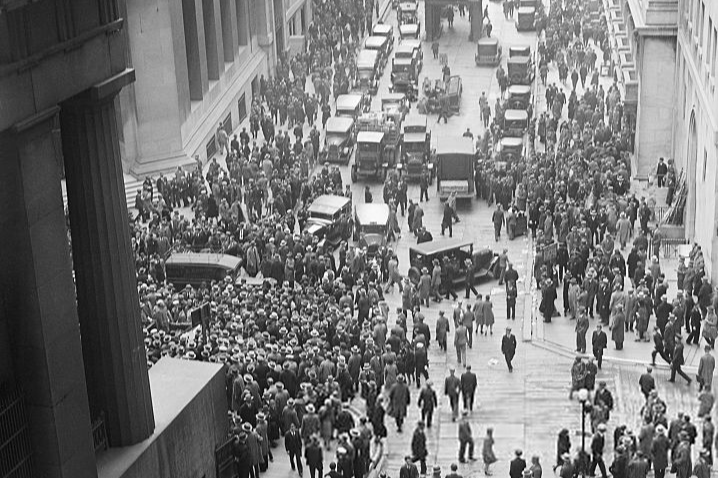
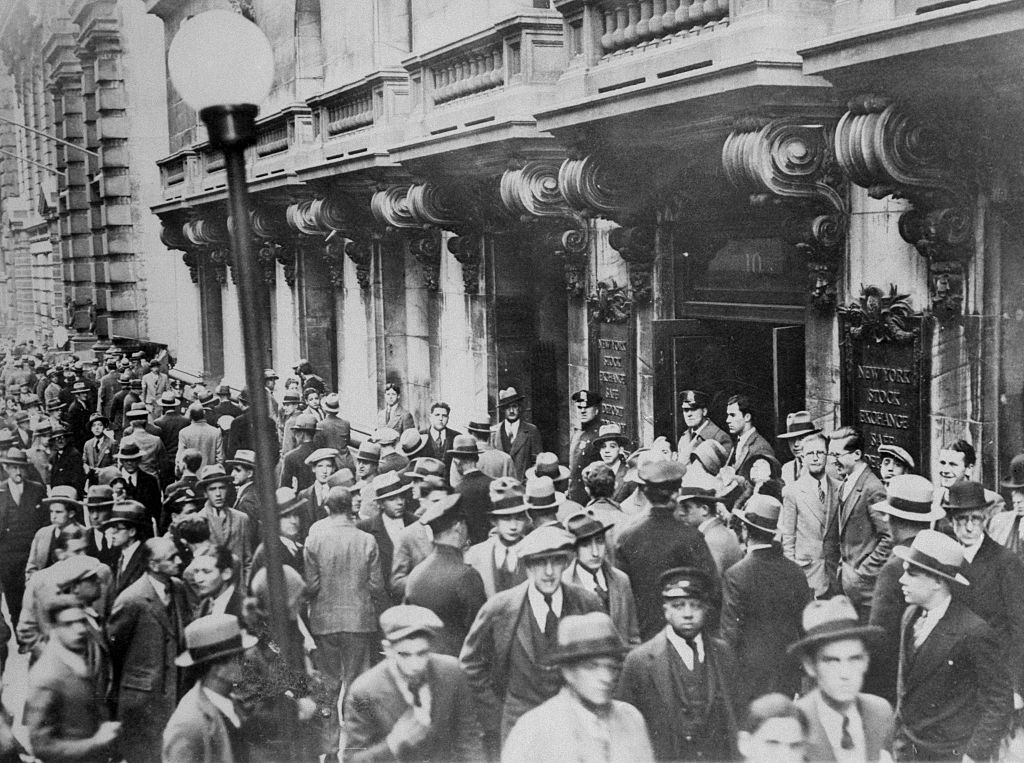
Crowd Gathering On Wall Street
As word got out about the panic on Wall Street on October 24, crowds began gathering downtown. In particular, they converged around the front of the famous columns of the New York Stock Exchange, hoping to get reassurance, or answers, or both. They wouldn't.
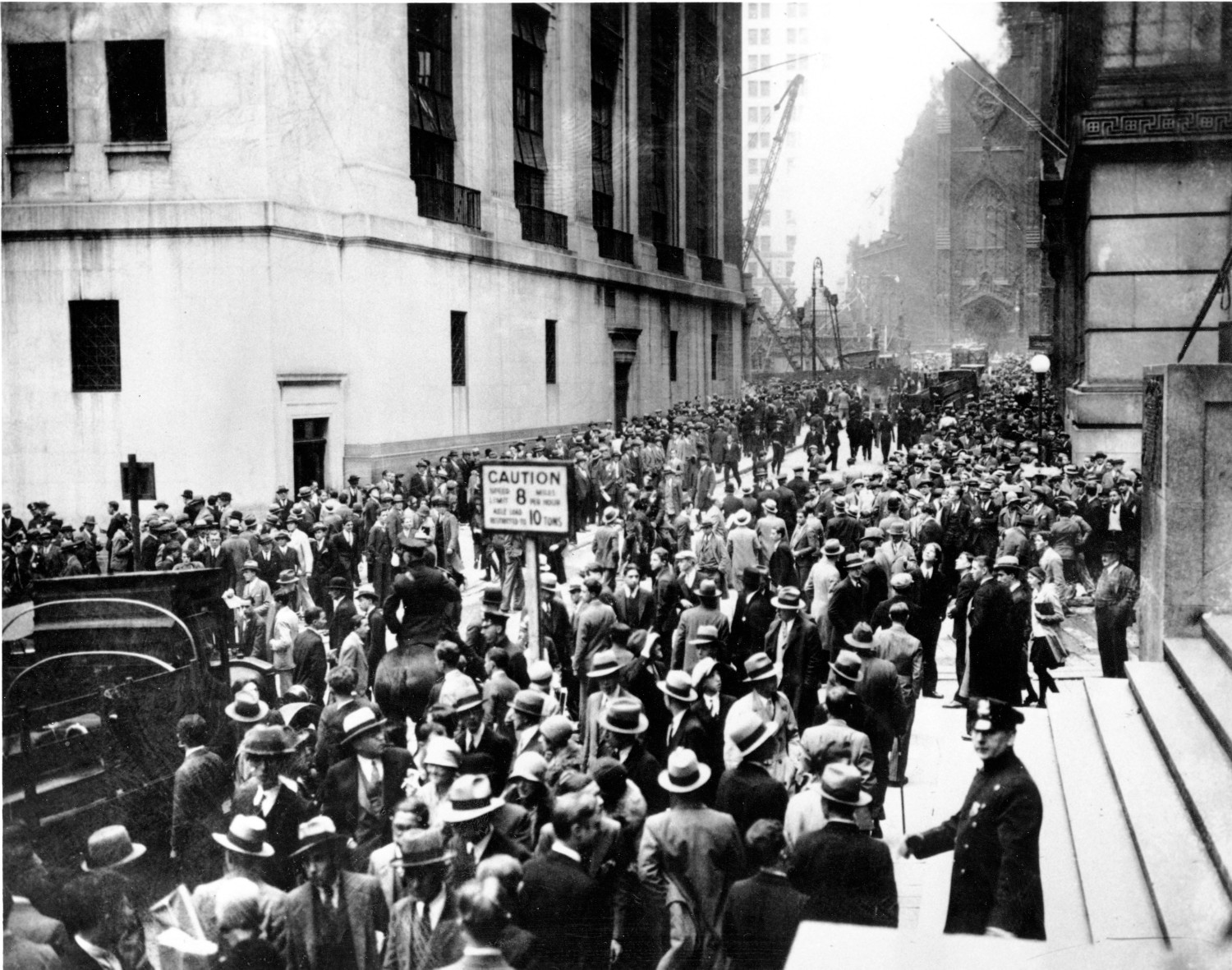
Panic Builds
As more and more people made their way into the Manhattan financial district, crowds became more and more dense. Then, just like the investors, the crowds themselves began to panic about what this meant for Wall Street, and what it meant for their own jobs and families.
 Associated Press, Wikimedia Commons
Ticker Tape Mania
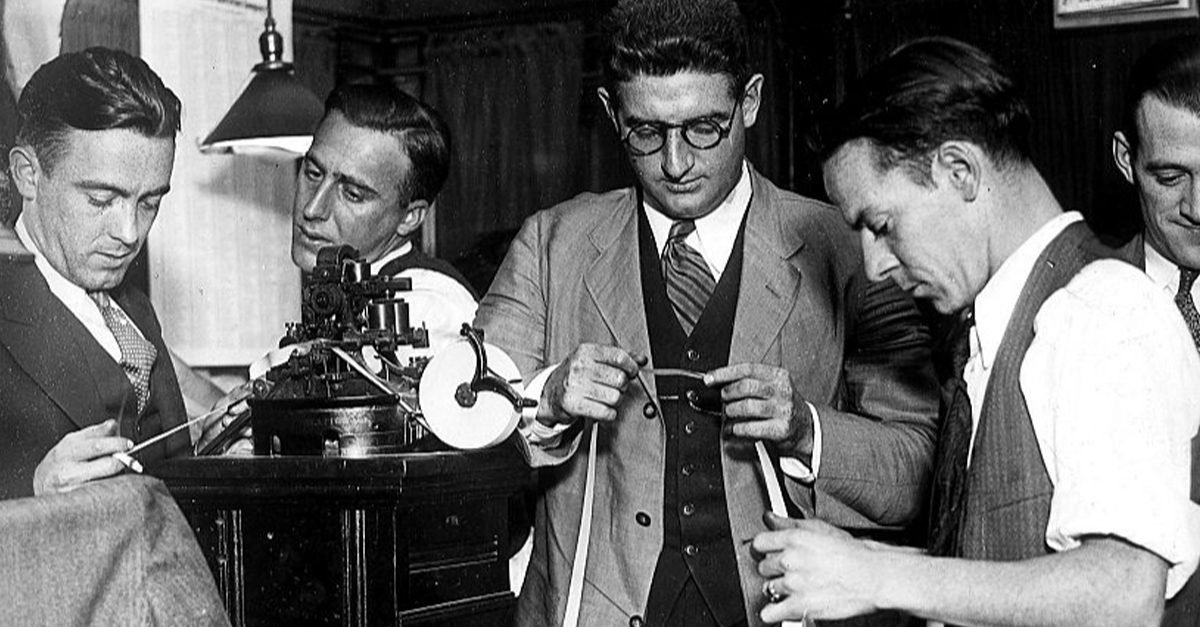
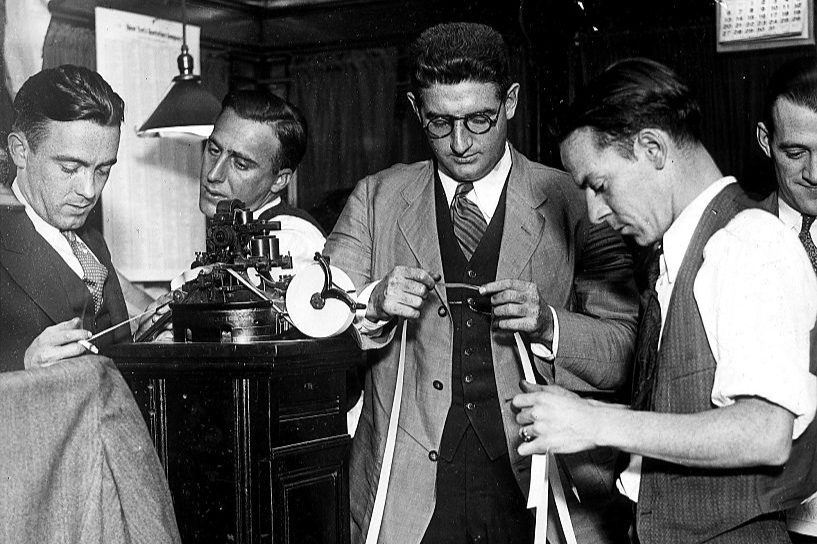
The real chaos, however, was inside the Stock Exchange. In just three minutes on Thursday, 3 million shares of stock—worth $2 million dollars—moved hands. At the time, people tracked stock prices through ticker tape in brokerage offices around America, but this enormous volume of stocks meant the ticker tape was hours delayed.
Even as prices dropped, then, no one had any idea what the current worth of any stock was.
 ullstein bild Dtl., Getty Images
Headlines Hit
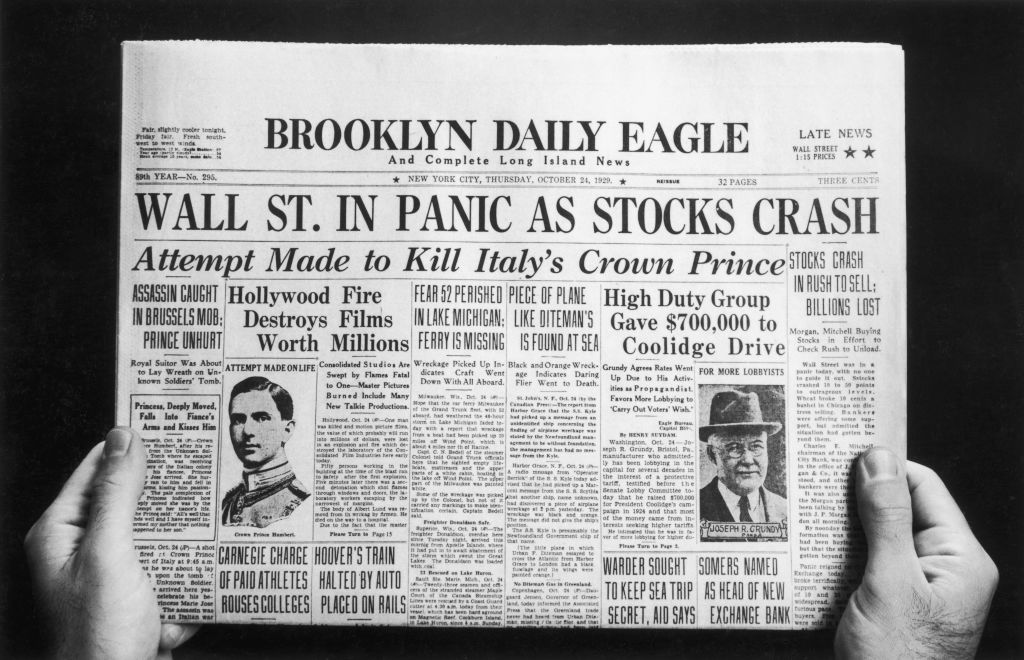
The front page of the Brooklyn Daily Eagle newspaper gives a snapshot of everything that was going on in the world that day. Yet even with the attempted assassination of Italy's Crown Prince and a Hollywood fire, the top headline notes Wall Street's "Panic as Stocks Crash" on the issue dated October 24, 1929.
 Icon Communications, Getty Images
People Can't Tear Their Eyes Away
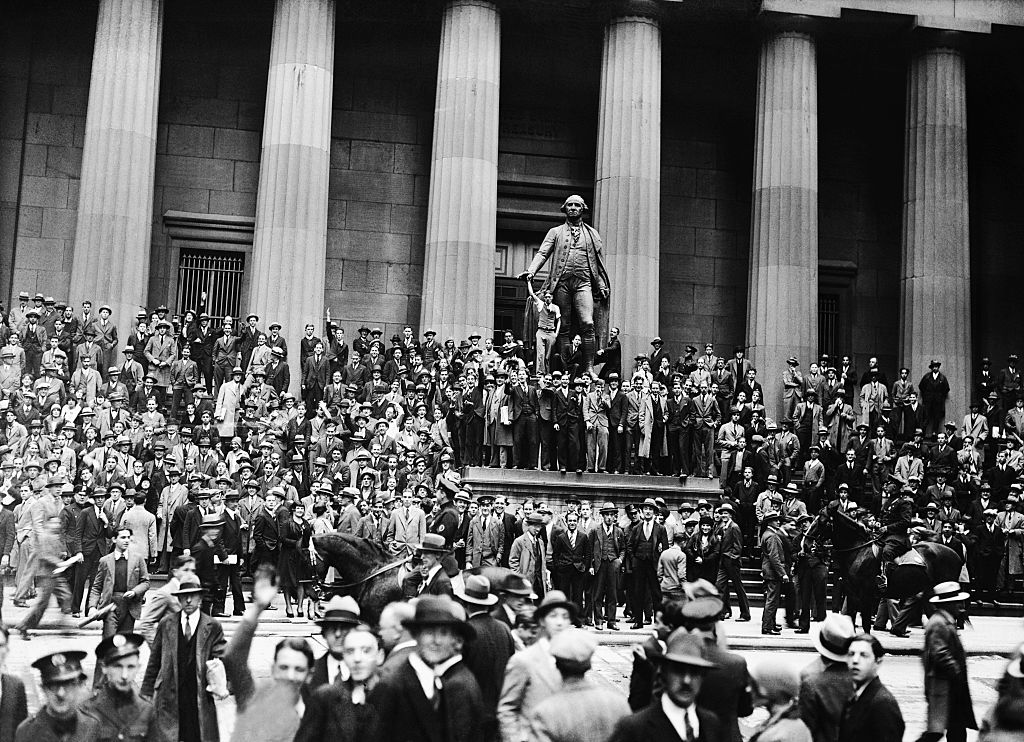
Amidst the chaos of the trading floor and the streets of Manhattan, huge bankers—such as the acting head of Morgan Bank and the head of Chase National Bank—met and tried to stem the tide by buying up shares well over market value in order to halt the slide of the market.
This had worked before in the Panic of 1907, and for a time it seemed to work again, with the Dow Jones closing out the day only marginally down. This time was brief. This photograph shows another street scene on Black Thursday.
Black Tuesday
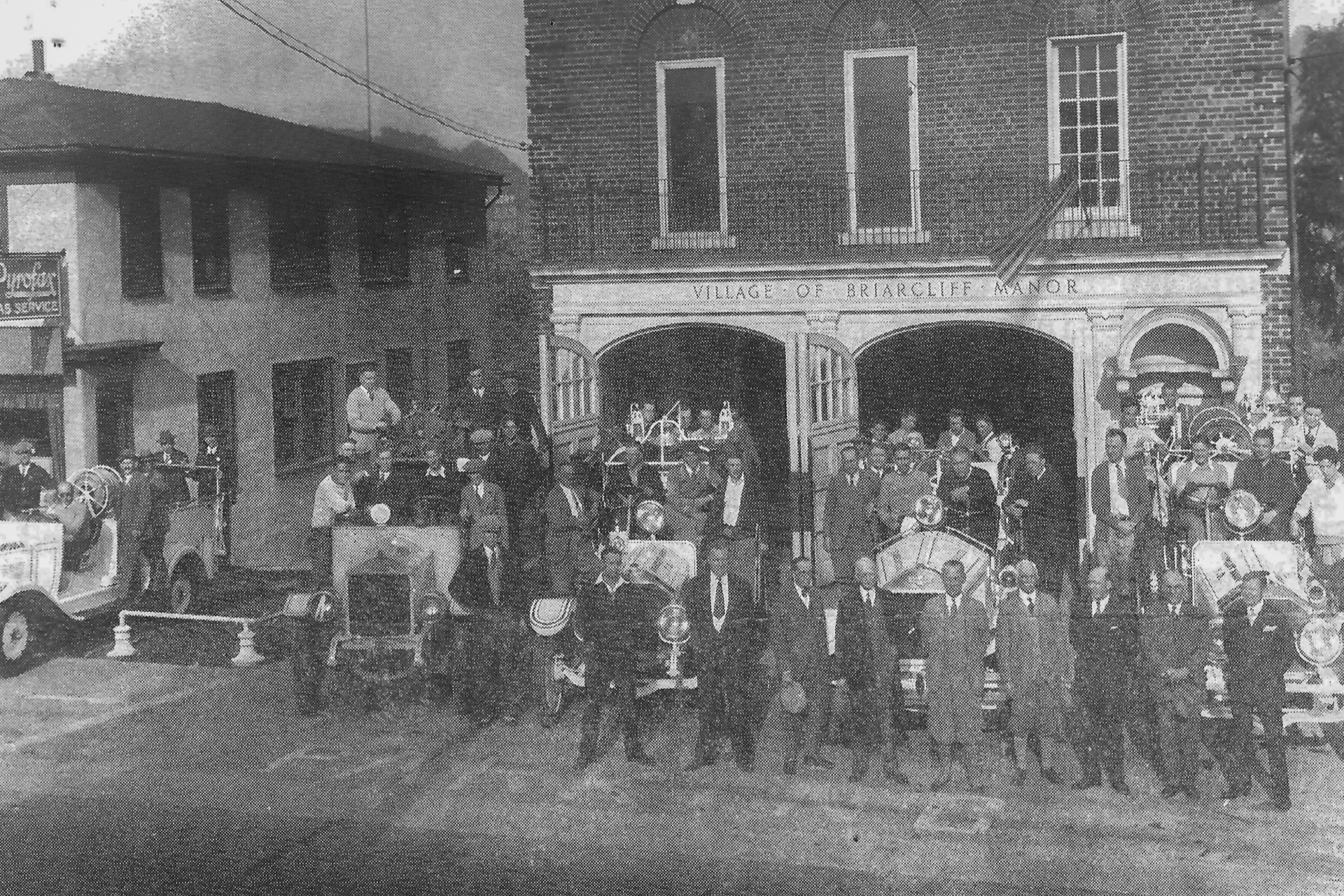
Despite the hopes that "Black Thursday" was just a blip, the next Monday and Tuesday sealed the nail in the economy's coffin. Sellers, still panicked and facing losses, continued to shed their holdings, sending the market into another tailspin. Here, men stand in front of New York's Briarcliff Manor Municipal Building on the day of "Black Tuesday," October 29, 1929.
 Unknown authorUnknown author, Wikimedia Commons
Traders Sleeping At Work After The Crash
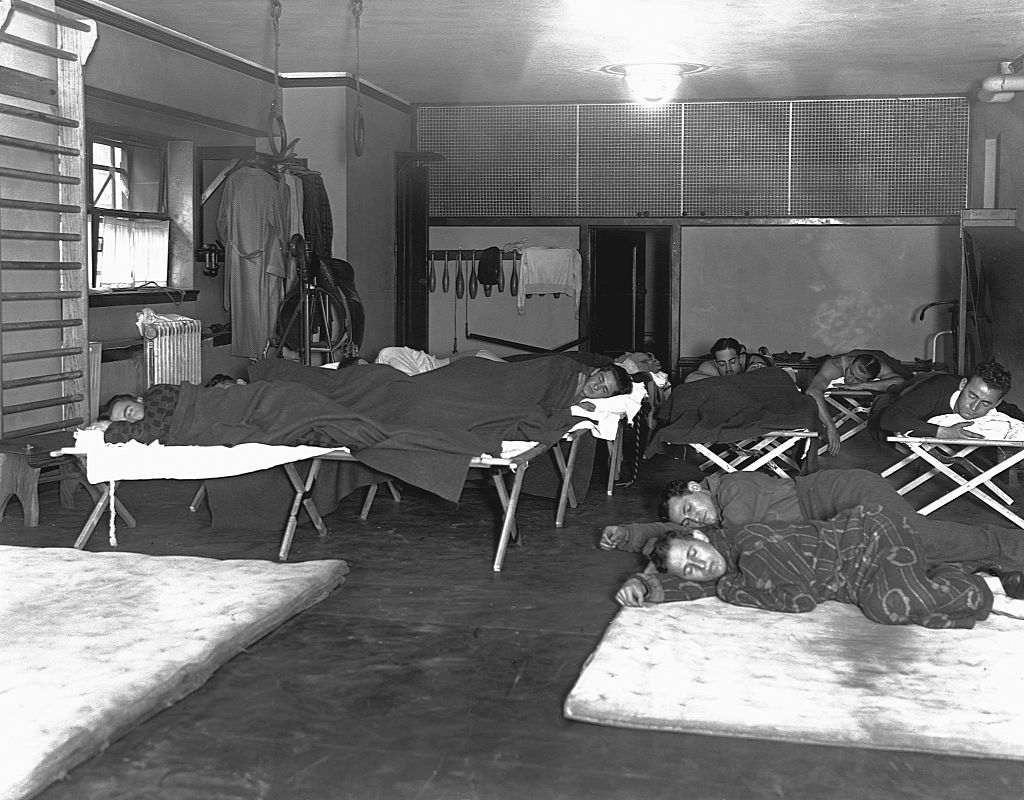
As the days went on, the market just couldn't ever make a full recovery, which put Wall Street stock brokers and their clerks into overtime. After a sleepless "Black Tuesday," the clerks shown in this photo found themselves sleeping in a gym nearby the New York Stock Exchange building.
Lines Of Communication
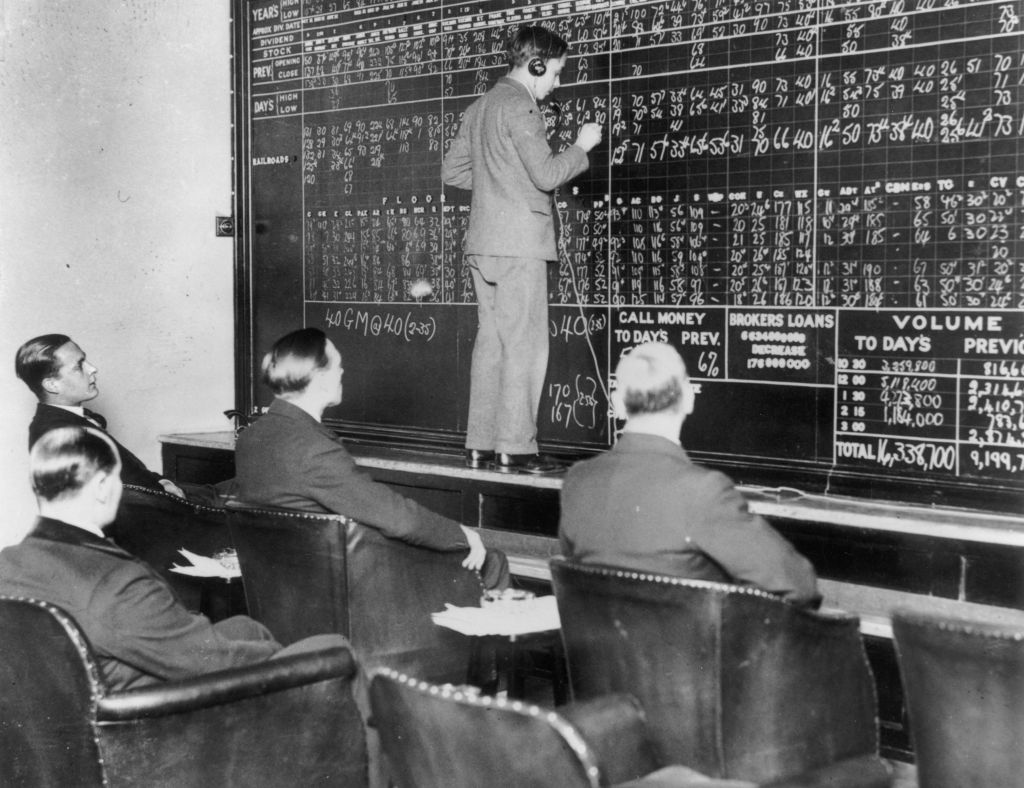
Thanks to the ticker tape mess on Black Thursday, many stock brokers now tried to up their game when it came to finding out up-to-date information on the stocks. This photo from October 31st, 1929 shows men in London tracking stock fluctuations via telephone operators connected to New York.
The Stock Market Tries To Come Back
"Black Thursday" and the coming week permanently altered Americans' trust in banking, investors, and money making through stocks. Where it once seemed an Eden of endless money, it now looked like a house of cards.
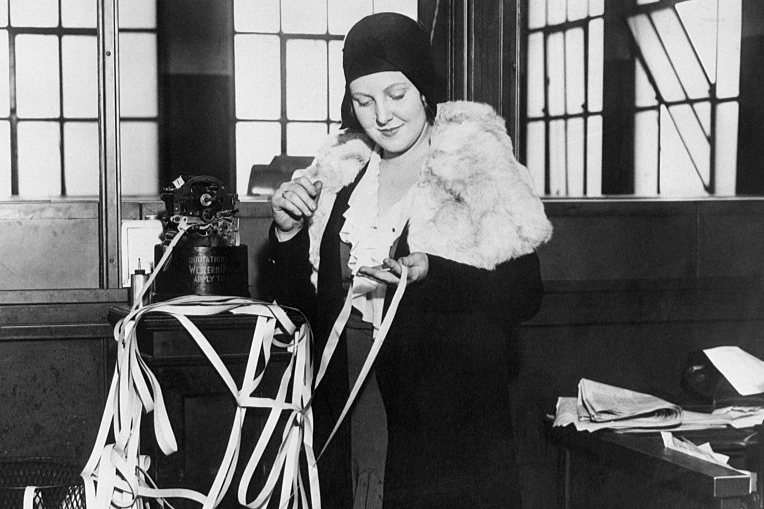
The stock market tried to combat this by putting their best face forward; as early as November 1, 1929—when this photo was taken—they were staging photo ops announcing the return of the market. Here, "The Most Beautiful Blond Watches the 'Market' Make Its Comeback." But the truth was, there was no coming back.
Investors Go Bankrupt
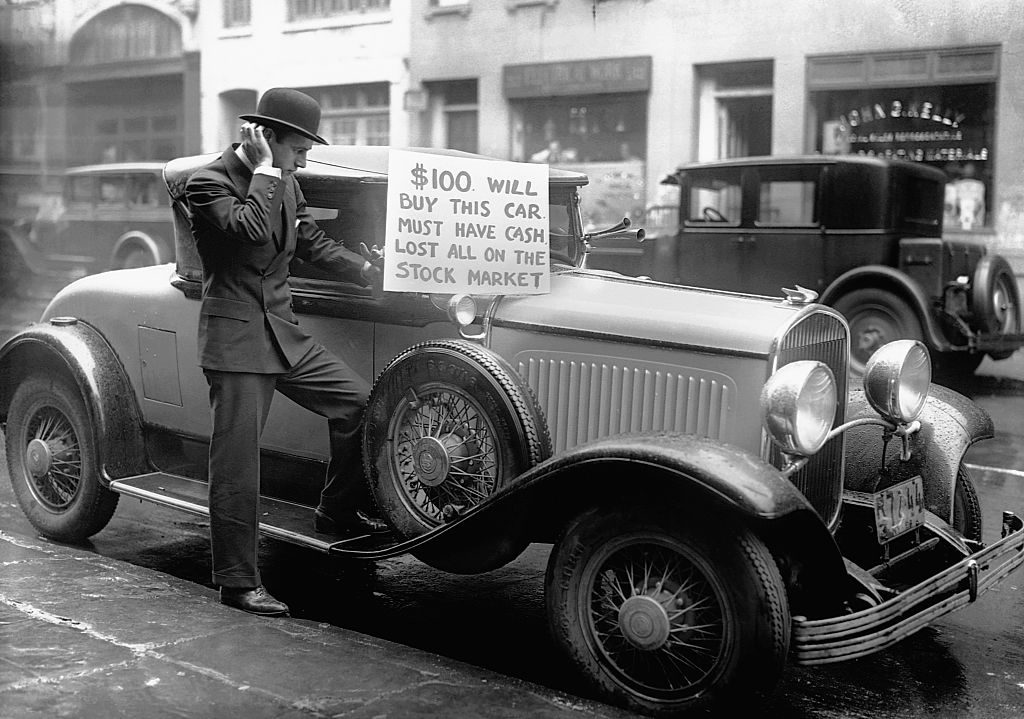
Lives were changed after Black Thursday, even wealthy lives, as people lost millions in minutes. Investor and model Walter Thornton reportedly went bankrupt, and the photo here shows him trying to sell a luxury roadster for $100 cash on New York streets. But those who were already living hand to mouth had it much worse.
The Trading Floor Six Months After
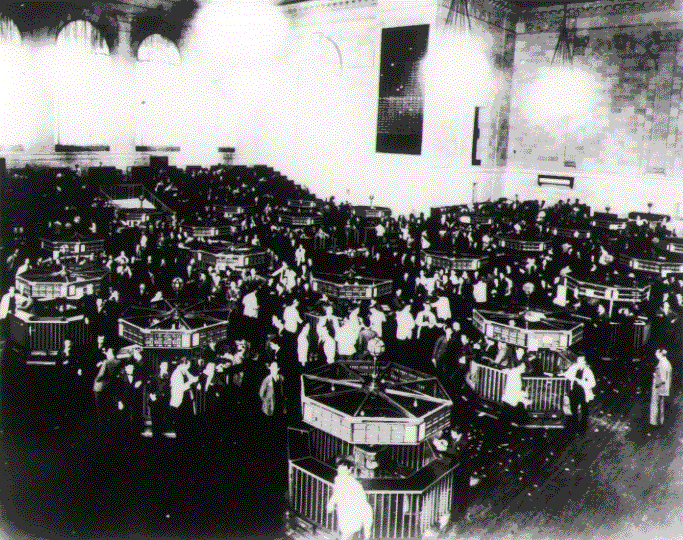
The trading floor of the New York Stock Exchange is shown here just half a year after the crash. It is much emptier, much less frenzied, and much less profitable.
Poverty Grows
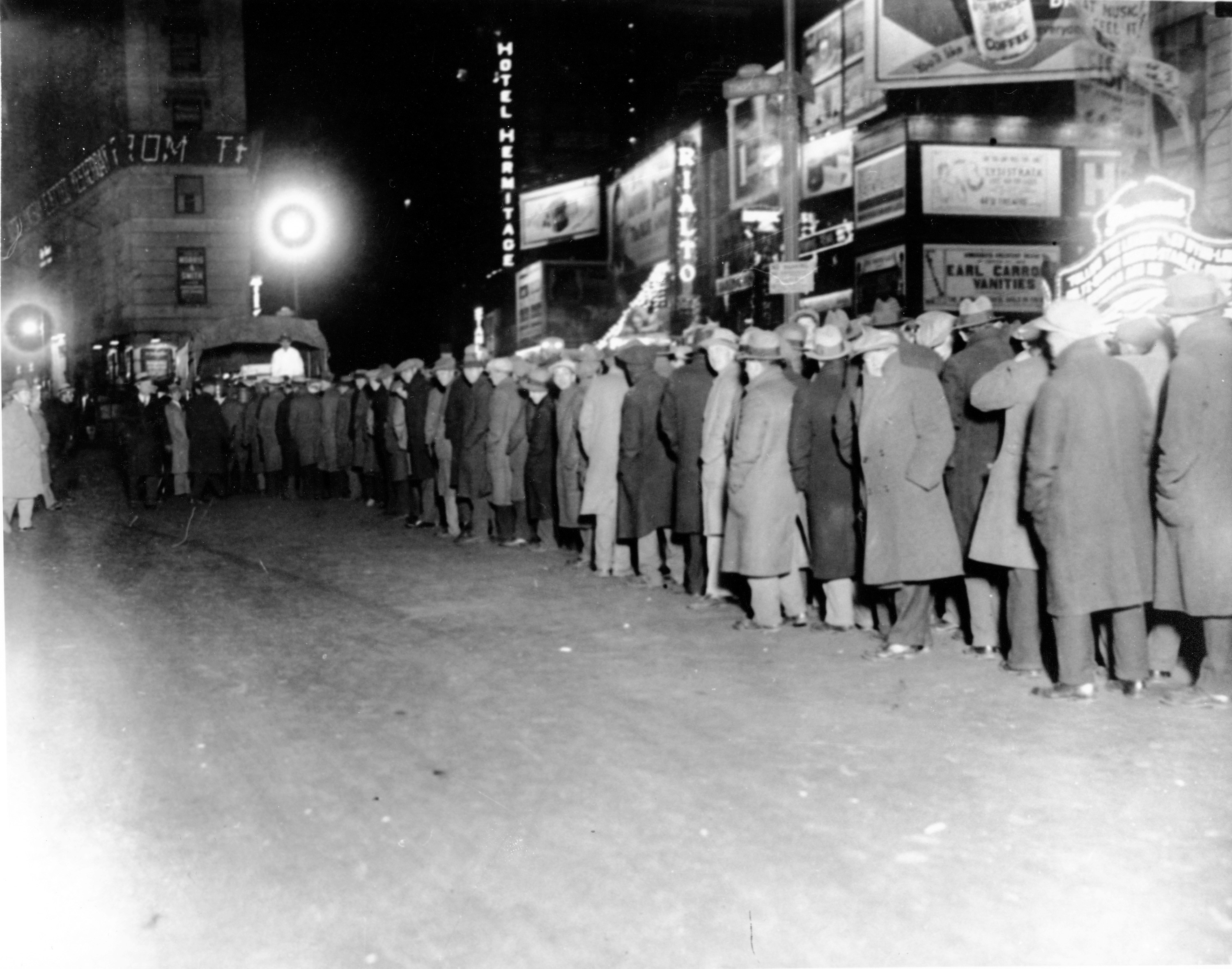
Despite all the blustering about the stock market being back, the damage of Black Thursday lasted a lifetime. By 1930, America was headed into the Great Depression, as unemployment rates dropped and cash flow was next to nothing. In this photo taken December 1930, a year on from the crash, people line up along Times Square and 43rd Street for a meal.
 Associated Press, Wikimedia Commons
Banks Falter Even Years Later
After the crash, bank after bank faltered, even with wealthy men trying to prop the financial sector of New York back up. On April 26, 1932, the American Union Bank closed, leading to a group of desperate people standing outside its shuttered doors.
 Wikideas1 (talk) (Uploads), Wikimedia Commons
The Drop Heard Round The World
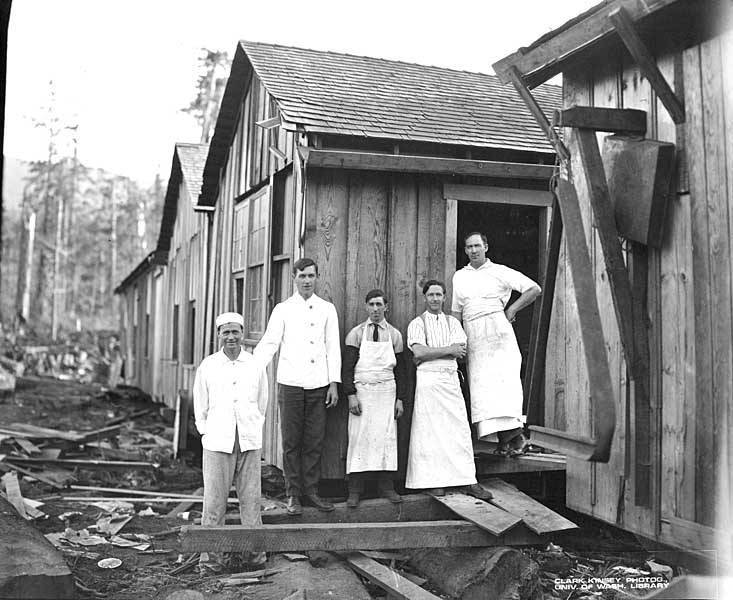
Even though the crash started in the financial epicenter of New York City, it reached far beyond those borders. In the Great Depression, production of every good imaginable scaled back—due in no small part to the fact no one could buy them. This further meant that people working in factories lost jobs.
The Puget Sound Mill & Timber Company, shown here, began in 1914 and ended shortly after the stock market crash of 1929.
 Clark Kinsey, Wikimedia Commons
The First Mobile Stock Exchange
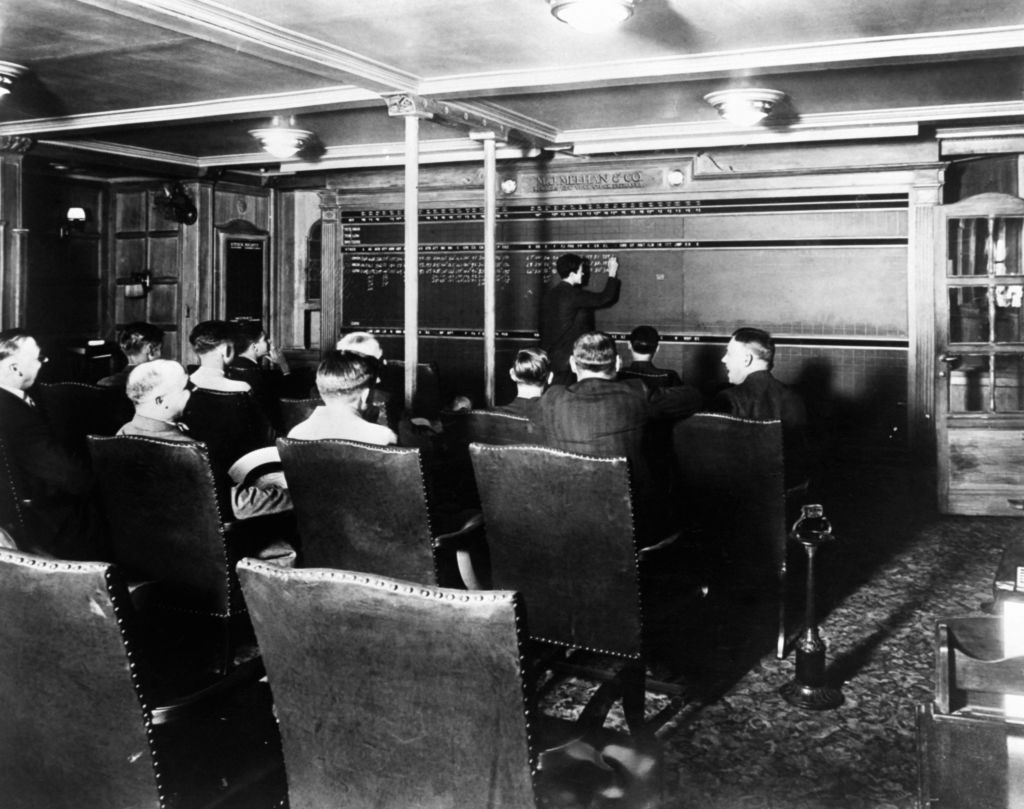
Some developments came out of the 1929 stock market crash, and it wasn't all losses. The first mobile stock exchange began on board the ship Berengaria in November 1929, which would allow for even more accurate communication of stock prices in remote parts.
Conclusion
The 1929 Stock Market Crash remains a defining moment in American history, and the Great Depression that it triggered affected the country for years afterward. Although governments and banks would soon develop laws and programs to make sure a crash like that never happened again, the photos we have from that day and just after serve as constant reminders of the stock market's folly.
You May Also Like:
The Biggest Stock Market Crashes In History
The Best Performing Stocks Of All Time
Not A Gamble: Basics To Know About The Stock Market
Sources: 1