5 Study Hacks to Help Improve Your Memory
5 Study Hacks to Help Improve Your Memory
We've all been there: You're sitting your exams, staring at a question you're confident you know the answer to but for some reason, you just can't find it. You know it's in your head somewhere, you've been studying for days, but no matter how hard you try, you can't think of the answer—even after all of that memorizing. If you're tired of feeling that frustration, there are a few study hacks that you can use to improve your memory and ace your next test. These tricks will have you studying like a pro.
Don't forget to check the comment section below the article for more interesting stories!
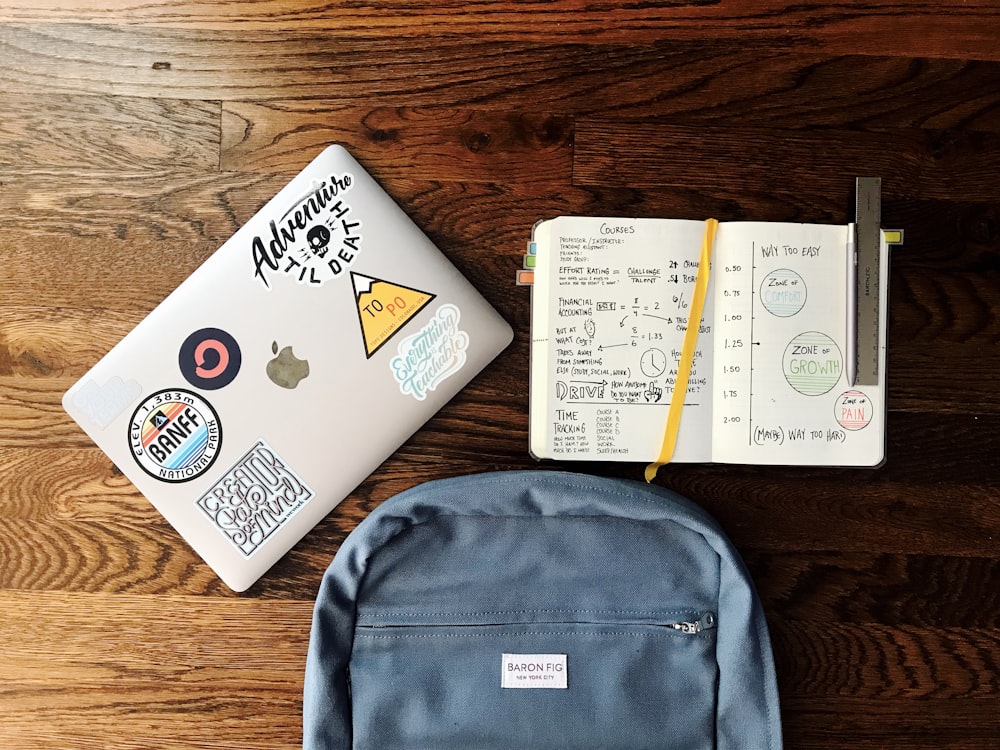
#1 Draw diagrams and mind maps
One method that has been backed by researchers is mind mapping. The complicated spiderweb-like maps may look daunting, but they're actually pretty easy to make—and the payoff is worth the effort. Visual representation of information is a great way to improve your understanding and memory by organizing information, just make sure you're using all of the right tools. The trick to mind maps is using plenty of color and symbols, which will help you recall key information quickly.
 Unsplash/mattragland
#2 Verbalize it
Did you know that you're 50 percent more likely to remember something if you say it out loud? Rather than just reading to yourself silently, find the keywords and phrases you need to remember for that big exam and say them aloud to yourself. You may look a little silly if you're studying in a cafe or library, but hey, it's worth the A+, isn't it?
Unsplash/brookecagel
#3 Re-write your study material
Because we can type faster than we can write, many of us overlook re-writing—or perhaps even writing at all—our study material. But students who write out their notes actually learn more. A recent study showed that those who write out their notes by hand have a stronger conceptual understanding than those who take notes with their laptops. Basically, because writing out your notes takes such a long time, you tend to digest your notes better and summarize key points. Try it. It works.
Unsplash/ts_imagery
#4 Use flashcards
Flashcards are hands-down the most effective way for students to study and retain factual knowledge, especially when they're used effectively. The trick to good flashcards is simplicity. Don't overcrowd a flashcard with too much information and don't just write down words. Think as simply as possible when creating your own cards. Mix words with images, only include the information you will use on a test and don't use flashcards as your only study material. When used right, you can be sure they'll help you ace a test.
Pixabay
#5 Teach what you have learned
Teaching someone else calls for a complete understanding of the subject. It forces you to present the information in your own words and communicate your thoughts clearly. Studies have found that students enlisted to tutor others recall information more accurately and apply it more effectively. You can't argue with science!
Unsplash/alexisrbrown
READ MORE
As the crisis continues, airlines are hemhorraging money. Will airlines survive this crisis? And if so, how?
If you're looking to expand your buying power, you need to check out the best credit cards of 2020. You won't believe some of these extras!
Whether it's an incompetent client or an unhinged attorney, these lawyers' stories of their most outrageous plot twists had us banging the gavel.
There is a reason why shows like Gray's Anatomy and ER are so addictive: Hospital drama is insane, and not just on TV—that stuff happens in real life, too.
Courtroom cases can take months or even years to go in front of a judge. Then, in the blink of an eye, it can all unravel spectacularly.
On TV, courtrooms seem like well-oiled machines. In real life, though? Not so much. These court cases are wild rides from start to finish.
Disclaimer
The information on MoneyMade.com is intended to support financial literacy and should not be considered tax or legal advice. It is not meant to serve as a forecast, research report, or investment recommendation, nor should it be taken as an offer or solicitation to buy or sell any securities or adopt any particular investment strategy. All financial, tax, and legal decisions should be made with the help of a qualified professional. We do not guarantee the accuracy, timeliness, or outcomes associated with the use of this content.
Dear reader,
It’s true what they say: money makes the world go round. In order to succeed in this life, you need to have a good grasp of key financial concepts. That’s where Moneymade comes in. Our mission is to provide you with the best financial advice and information to help you navigate this ever-changing world. Sometimes, generating wealth just requires common sense. Don’t max out your credit card if you can’t afford the interest payments. Don’t overspend on Christmas shopping. When ordering gifts on Amazon, make sure you factor in taxes and shipping costs. If you need a new car, consider a model that’s easy to repair instead of an expensive BMW or Mercedes. Sometimes you dream vacation to Hawaii or the Bahamas just isn’t in the budget, but there may be more affordable all-inclusive hotels if you know where to look.
Looking for a new home? Make sure you get a mortgage rate that works for you. That means understanding the difference between fixed and variable interest rates. Whether you’re looking to learn how to make money, save money, or invest your money, our well-researched and insightful content will set you on the path to financial success. Passionate about mortgage rates, real estate, investing, saving, or anything money-related? Looking to learn how to generate wealth? Improve your life today with Moneymade. If you have any feedback for the MoneyMade team, please reach out to [email protected]. Thanks for your help!
Warmest regards,
The Moneymade team