
A Secret Apartment Changes the Story
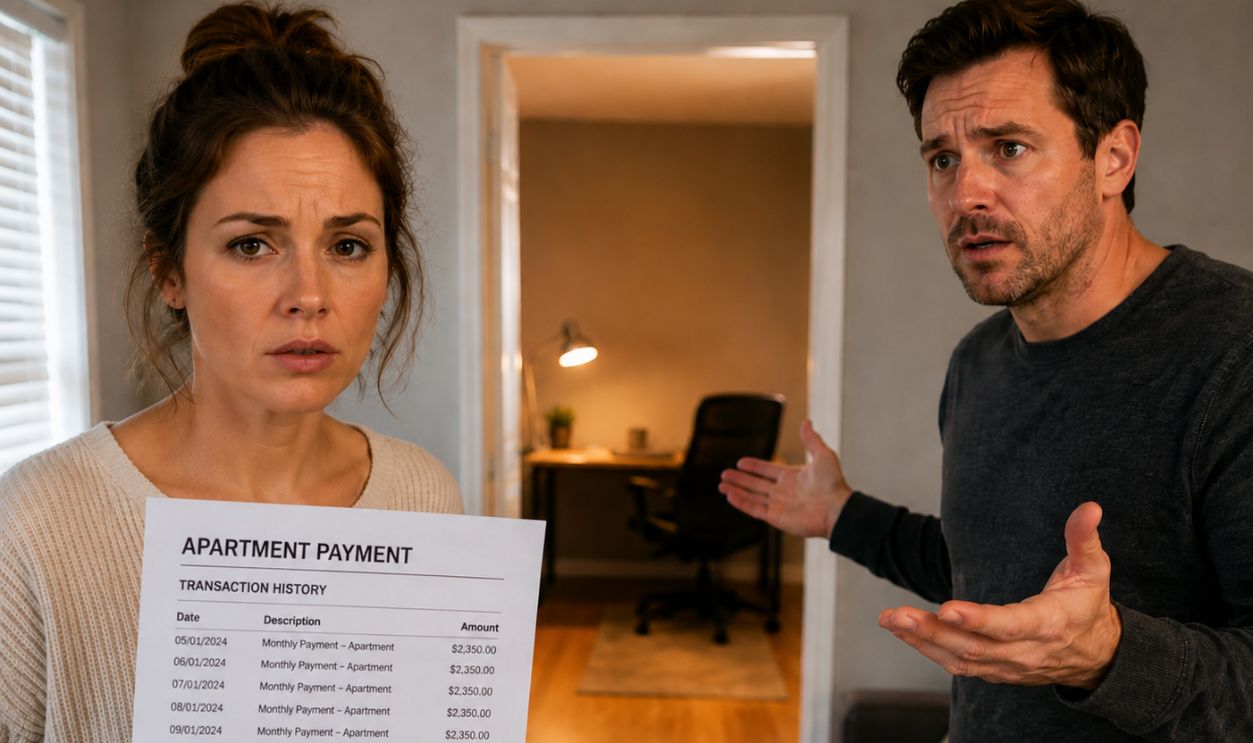
Learning that your spouse has been quietly paying for a second apartment can be a real shock, even if they can prove they're not cheating on you. Even if they only used it as a workspace, their secrecy changes everything. Though it may seem like the biggest question is simply "Why did you have it?", the financial price of their secrecy can be even worse.
Why This Hits So Hard
Money secrets usually stop being just about money. Hidden accounts, secret debt, and undisclosed spending can damage trust in a deeply personal way. A second apartment raises the stakes fast because it is a major, ongoing expense that is hard to brush off as a simple mistake.

What Financial Infidelity Means
Financial infidelity usually means lying to a partner about money, especially by hiding spending, debt, accounts, or financial decisions that affect the household. A March 2024 Bankrate survey found that 28 percent of U.S. adults in committed relationships said they had committed financial infidelity. That helps show how common money secrecy can be, even if many couples do not use that phrase.

The Numbers Show It Happens a Lot
Bankrate reported that among people who admitted financial infidelity, 40 percent said it involved secret spending. Another 24 percent said they hid a purchase because they knew their partner would disapprove. That matters here because a hidden apartment would almost certainly count as concealed spending if it was intentionally kept secret.

A Workspace Can Still Be a Secret
Your spouse may have truly used the apartment for work, calls, or a quiet place to focus. But the main issue is not just what the space was for. It is whether money was spent in secret, whether household resources were used, and whether your spouse knew this was something you would want to know about.

What Experts Look at First
Relationship experts often separate the item from the deception. The apartment itself is not the whole story. The bigger questions are how long it was paid for, how much it cost, whether joint money was used, and when the other spouse found out.

Discovery Is Often the Breaking Point
These situations usually blow up when the paper trail appears. A bank statement, credit card charge, auto-pay record, or lease notice often turns suspicion into proof. That moment matters because it is when private spending becomes a documented breach of trust.

Why an Apartment Raises the Stakes
Secret spending can mean a lot of things, from hidden shopping to private debt. An apartment is different because it usually comes with monthly bills that keep going. Rent, utilities, deposits, furniture, parking, and internet can add up quickly. That makes the secrecy more serious because the cost is ongoing, not one-time.

Intent Matters
If your husband kept the apartment hidden because he thought you would be upset, that points toward deception. The National Endowment for Financial Education has said financial infidelity often involves intentionally hiding financial information from a partner. The reason does not have to be romantic or criminal for the secrecy to become a serious relationship problem.

It Does Not Have to Mean Cheating
A second apartment naturally raises suspicions about an affair, but financial infidelity does not require sexual betrayal. A spouse can be telling the truth about using the space only for work and still be hiding a major financial commitment. That distinction matters because it keeps the focus on facts that can actually be checked.

Start With the Timeline
If you are trying to figure out what happened, start by building a timeline. When did the lease begin, when was the deposit paid, and how many months of rent were paid before you found out. Dates can help show whether this was a short-lived decision or a long pattern of concealment.

Follow the Money
Look at how the apartment was paid for. If the rent came from a joint checking account, shared credit card, or income meant to support the household, the financial impact is easier to see. If it came from a separate account, that does not erase the secrecy, but it can change the legal and practical side of the situation.
 Cast of Thousands, Shutterstock
Ask Whether Shared Goals Took a Hit
A hidden expense becomes even more serious if it hurt your savings goals, added debt, or caused bills to be missed. Maybe retirement contributions dropped, emergency savings stalled, or credit card balances rose while the apartment was being paid for. If that happened, the problem is not just secrecy. It is financial harm.

Trust Has a Price
Research from the National Endowment for Financial Education found that financial deception can seriously affect relationships. Once one partner discovers a hidden financial life, old conversations about budgets and priorities can suddenly look very different. That is why many people describe the discovery as emotionally similar to other kinds of betrayal.

A Hidden Apartment Is Hard to Shrug Off
Some money secrets fall into a gray area, like setting aside a small amount of personal spending money. A leased apartment paid for over months is usually not in that category. It is a big enough expense that most people would expect it to be discussed before the first rent payment went through.

There Could Be Non-Romantic Reasons
There are possible explanations that have nothing to do with an affair. He may have wanted a quiet place to work, somewhere closer to a long commute, or space during a stressful period. But even a practical reason does not remove the need for honesty when major household money is involved.

The Question Experts Keep Coming Back To
Professionals often focus on one basic question. If your spouse knew you would want to know and still chose not to tell you, why. The answer can point to fear, shame, conflict avoidance, control, or a broader pattern of deception.

How People Justify It
People who hide spending often tell themselves they are keeping the peace. Bankrate's March 2024 findings included respondents who said they kept purchases secret because they expected disapproval. That does not make the secrecy harmless. It just shows how common the excuse can be.

When It Crosses Into Financial Infidelity
If your husband deliberately hid the apartment, the lease, or the payments from you, many experts would say that fits the basic definition of financial infidelity. The hidden spending is the key fact. Calling the apartment a workspace may explain the purpose, but it does not undo the secrecy.

When the Label Might Not Fit
If the apartment was disclosed in some way, paid for with clearly separate funds, and did not interfere with shared obligations, some couples might not use the term financial infidelity. They might still see it as poor communication or a serious breach in the marriage. The label matters less than the facts and the damage done.

What to Check Before You Confront Him
Before making accusations, gather the records. Lease documents, payment history, utility bills, building access logs, emails, and texts can help show whether the apartment was really used as a workspace and for how long. Solid records keep the conversation grounded and lower the chances of it turning into a fight over things that cannot be proved.

Questions Worth Asking
Ask when the apartment was rented, why it was hidden, how it was paid for, and why you were never told. Ask whether there are any other accounts, debts, or obligations that have also been kept secret. If the story changes over time, that may matter as much as the apartment itself.

What This Says About Your Finances
A hidden lease can expose weak spots in a couple's money system. Maybe there is no regular budget review, no visibility into automatic payments, or no agreement on what level of spending needs to be discussed. Fixing those gaps can matter just as much as arguing about the apartment itself.

How to Protect Yourself
Review bank and credit card statements, check your credit reports, and make sure there are no hidden debts or accounts. The Consumer Financial Protection Bureau recommends reviewing your credit reports and monitoring your accounts when you suspect hidden liabilities or financial harm. This is a practical step, not an overreaction, and it can help stop one secret from leading to several more.

Repair Takes More Than an Apology
If the marriage is going to recover, transparency has to become part of everyday life. That could mean full account access, regular budget meetings, and clear rules about major expenses going forward. In some cases, couples counseling or financial therapy may help because the real issue is rarely just the rent.

The Bottom Line
If your husband paid for a hidden apartment for months and never told you, many experts would likely see that as financial infidelity, even if he really used it only as a workspace. The most important facts are the secrecy, the size of the expense, and the effect on your shared financial life. The smartest next step is not guessing about motives. It is documenting the timeline, following the money, and deciding what honesty has to look like from this point on.