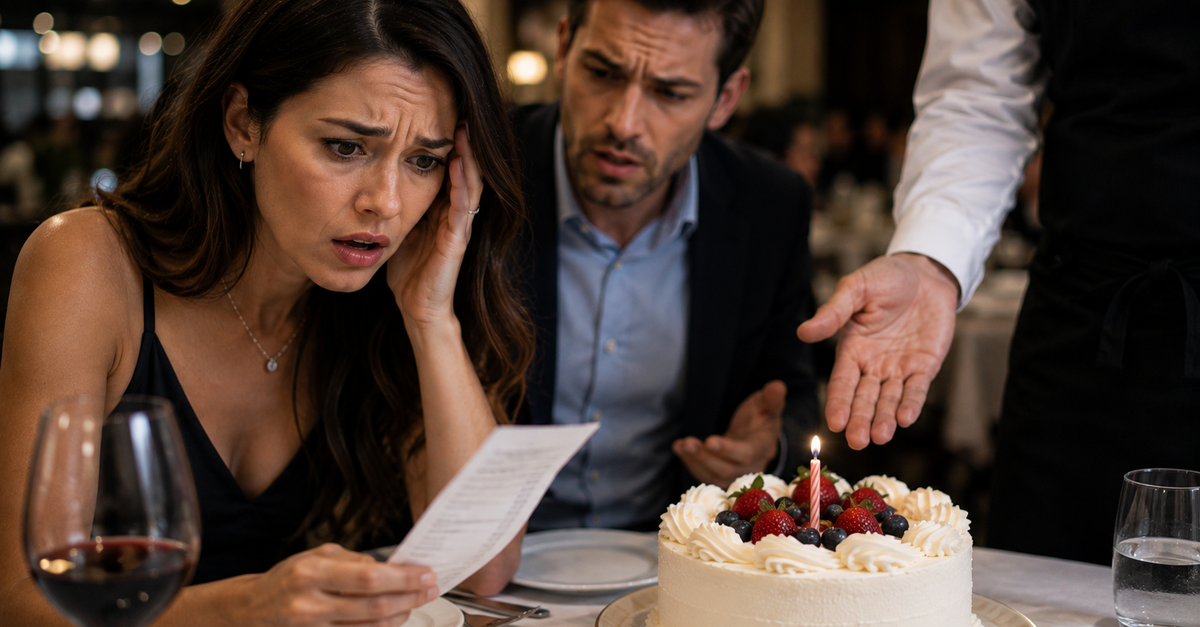
The Anniversary Surprise Nobody Ordered
An anniversary dinner is supposed to end with a sweet memory, not an unexpected line item on the bill. Yet some diners who bring an outside cake discover that the restaurant charges a separate fee to cut, plate, or serve it. These charges are commonly called cake-cutting, slicing, dessert-service, or “cakeage” fees. The real question is not simply whether the restaurant can charge one, but whether it disclosed the charge before you agreed to the arrangement.
Yes, Cake-Cutting Fees Are A Real Thing
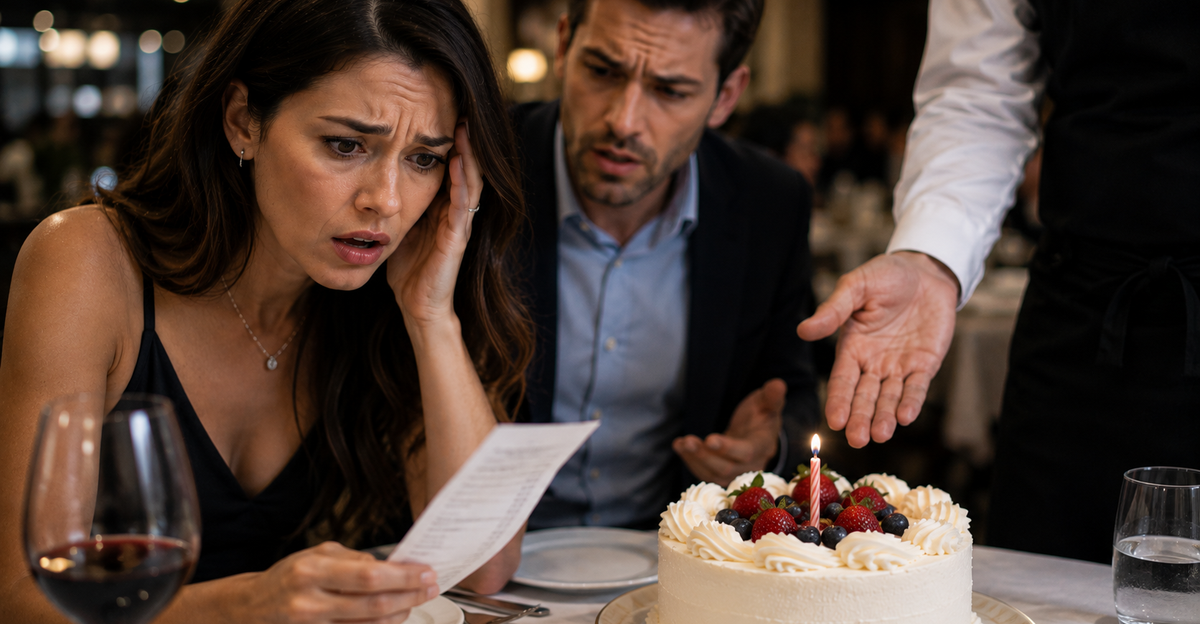
Cake-cutting fees are an established practice at some restaurants and event venues. Food & Wine notes that restaurants may impose a slicing or cakeage fee when customers bring their own desserts. Individual restaurants publish policies charging either a flat amount or a per-person fee for outside cakes. That means seeing a cake fee on a bill is not, by itself, proof that anything improper happened.

Restaurants Have Reasons For Charging Them
Serving an outside cake can involve more than handing over a knife. Restaurants may provide plates, forks, staff time, cutting and plating service, cleanup, dishwashing, and table space while customers eat dessert purchased elsewhere. Some restaurants also say the charge helps offset lost sales of their own desserts. Those explanations show why the fee exists, but they do not settle the separate question of whether customers were told about it.

The Fee Itself Is Not The Main Issue
There is no general nationwide rule saying restaurants may never charge customers for serving an outside cake. Pricing and disclosure requirements can instead depend on state and local consumer-protection law. Some jurisdictions allow restaurant fees but impose specific rules about when and how they must be disclosed. For that reason, the strongest complaint is usually not “cake fees are illegal,” but “we were charged a fee that was never disclosed to us.”

Disclosure Is Where Things Get Interesting
Consumer-protection authorities increasingly focus on whether customers receive important pricing information before making a purchasing decision. Washington, D.C., for example, says restaurants may charge fees but cannot hide them, bury them in fine print, or wait until after customers have ordered to reveal them. California also imposes specific disclosure requirements on mandatory restaurant fees. Whether those rules apply to your cake charge will depend on exactly where the restaurant is located and how the fee was presented.

Your Booking Conversation Could Matter
Start by reconstructing what happened when the reservation was made. If you specifically told the restaurant that you planned to bring an anniversary cake and the employee approved it without mentioning a fee, that conversation could strengthen your complaint. A restaurant that publishes its cake policy in advance is in a different position from one that says nothing until the check arrives. The exact legal significance still depends on local law and the facts of the transaction.

Permission To Bring Cake Is Important Evidence
Some restaurants require customers to arrange outside cakes in advance and explicitly state the applicable fee in their published policies. That approach gives diners an opportunity to accept the cost or change their plans. If your restaurant knew about the cake beforehand but never disclosed its fee, keep a record of that fact. It helps focus the dispute on what information you received before dinner rather than on whether outside cakes create work for the restaurant.

Check Your Reservation Confirmation
Pull up the email, text message, reservation-app confirmation, or other communication associated with the booking. Look for references to outside food, celebrations, desserts, special-event policies, service charges, or additional fees. Save the original confirmation rather than relying on memory alone. A written record showing no fee is especially useful if you later ask the restaurant, a consumer agency, or your card issuer to review the situation.

Then Check The Restaurant Website
Look at the restaurant's website and online reservation pages while the dispute is still fresh. A clearly published outside-cake policy could weaken an argument that the fee was impossible to discover, although local law may require more specific disclosure. If no policy appears, take screenshots showing the relevant reservation and dining information. Consumer agencies often ask complainants to provide supporting documents such as receipts, contracts, advertisements, and screenshots.

Do Not Forget The Menu
The menu can be particularly important because some jurisdictions require restaurant fees to appear where prices are displayed. California says mandatory restaurant and bar fees can remain separate from listed food prices if the fee is clearly and conspicuously displayed wherever prices are shown. New York City also regulates restaurant surcharges and service charges, including advance disclosure requirements for certain permitted charges. Photograph or save the menu if the cake fee was missing from it.

Keep The Final Receipt Too
The receipt establishes exactly what the restaurant charged and how it described the fee. Save both the itemized restaurant bill and your credit-card receipt if you have them. If the charge is labeled only as something vague such as “service” or “fee,” note that wording as well. Washington, D.C., specifically warns restaurants that ambiguous descriptions and late fee disclosures may violate its consumer-protection rules.

Start With The Restaurant Manager
Your first practical move should normally be to contact the restaurant rather than immediately escalating the dispute. The Consumer Financial Protection Bureau similarly recommends first asking the merchant to correct a problem before pursuing certain credit-card remedies. Explain that you do not object to restaurants having an outside-cake policy, but that nobody disclosed this charge when you arranged the celebration. Ask whether the manager can refund the fee.

Ask For One Specific Resolution
A focused request is easier to evaluate than a broad complaint about the entire meal. Identify the cake-cutting charge on the receipt and request reimbursement of that amount. Mention when you booked, when the restaurant learned about the cake, and when you first learned about the fee. That keeps the conversation centered on the disputed charge rather than turning it into an argument about restaurant pricing generally.

Make The Missing Disclosure Your Main Point
Avoid claiming that restaurants have no right to charge cake fees because that statement is too broad. Instead, say that you would have made a different decision if the fee had been disclosed before dinner or before the cake was served. Advance price information is precisely what several consumer-protection regimes are designed to provide. Washington, D.C., says diners are entitled to complete, accurate, and timely information, while California requires qualifying restaurant fees to be clearly displayed.

A Calm Paper Trail Helps
If a phone conversation does not resolve the matter, follow up in writing. Include the date of the dinner, the amount of the fee, the fact that you arranged the cake in advance if applicable, and copies of the relevant receipt and reservation confirmation. Written communications create a record of what you told the restaurant and how it responded. That documentation can become useful if you later dispute the charge or file a consumer complaint.

Local Law Can Change The Answer
Restaurant-fee rules differ significantly around the country. A disclosure that satisfies the law in one city may not satisfy the rules somewhere else. Your state attorney general, city consumer-protection department, or similar local agency is therefore a better source for location-specific rights than a generalized social-media answer. New York City expressly directs consumers outside its jurisdiction to contact their local consumer affairs office or state attorney general.

Washington, D.C., Offers A Clear Example
The District of Columbia provides one of the clearest official examples of restaurant-fee disclosure rules. Its attorney general says restaurants may charge fees, but they should clearly and prominently disclose the type and amount at the beginning of the ordering process. The office says waiting until the customer receives the bill may violate District consumer law. It can seek refunds, penalties, and changes in business practices when violations occur.

New York City Also Regulates Surprise Charges
New York City says restaurants generally may not simply add surcharges to listed food and beverage prices. Certain bona fide service charges are permitted, but the city says they must be clearly disclosed before food is ordered. NYC311 specifically accepts complaints about restaurant surcharges and tells diners how to report them. These rules illustrate why the restaurant's location can be decisive in a fee dispute.

California Takes A Transparency Approach
California's Honest Pricing Law generally requires businesses to include mandatory fees in advertised prices, but restaurants and certain food vendors received a special rule. Mandatory restaurant fees may be separately listed if they are clearly and conspicuously displayed wherever prices are shown. The California attorney general describes the law as a transparency measure rather than a price-control measure. In other words, disclosure is central even when the business remains free to set its prices.
Federal Rules Do Not Automatically Solve This
A federal rule on unfair or deceptive fees took effect on May 12, 2025, but its specific total-price requirements cover live-event tickets and short-term lodging. Ordinary restaurant dining is not one of the categories covered by that particular rule. That makes it a mistake to tell every diner that the federal “junk fee” rule automatically invalidates an undisclosed cake-cutting charge. State and local consumer laws remain especially important in restaurant disputes.

Federal Law Still Targets Deceptive Practices
The Federal Trade Commission has long treated materially misleading representations and omissions as potential deceptive practices under Section 5 of the FTC Act. The FTC's deception framework looks at whether a representation, omission, or practice is likely to mislead a reasonable consumer and is material to a purchasing decision. That is a broad federal consumer-protection principle, not a guarantee that the FTC will intervene in an individual restaurant-bill disagreement. For a small local dispute, state or municipal consumer agencies may offer a more direct complaint path.

A Credit-Card Dispute Is Another Option
If the restaurant refuses to refund the fee and you paid by credit card, you can ask your card issuer whether the charge qualifies for its dispute process. The CFPB says consumers should contact their credit-card company promptly when disputing a charge. In some cases, the issuer can reverse a disputed transaction through a chargeback process. A chargeback is not guaranteed simply because you were unhappy with a fee, so give the issuer accurate information about what was disclosed and what you agreed to pay.

The Sixty-Day Deadline Matters
Federal credit-card billing protections include important timing requirements. The CFPB says that to protect certain billing-error rights, a consumer must send the card issuer a written billing-error notice within 60 calendar days after the charge appeared on the statement. The issuer generally must acknowledge the dispute within 30 days unless it has already completed the required resolution process. Keep copies of your correspondence and records of follow-up calls.

Paying The Bill Does Not Necessarily End It
You may still be able to dispute a credit-card charge even if you already paid the statement containing it. The CFPB specifically says payment does not automatically eliminate the ability to raise a dispute. However, receiving a refund depends on the issuer's investigation and the circumstances surrounding the transaction. This is another reason to preserve the receipt, reservation records, and communications with the restaurant.

Be Precise About What Was Unauthorized
Do not describe the entire restaurant transaction as unauthorized if you willingly used your card to pay for dinner. The issue is more accurately described as a disputed fee or an amount you say was not properly disclosed. Credit-card issuers distinguish between genuinely unauthorized card use and disputes concerning goods, services, or billing errors. Accurately describing the problem will make your complaint clearer and more credible.

A Consumer Complaint Can Add Pressure
If the restaurant will not resolve the issue, check whether your city or state consumer-protection agency accepts complaints. New York City's Department of Consumer and Worker Protection, for example, accepts consumer complaints and asks people to submit documents such as receipts, contracts, and screenshots. The District of Columbia attorney general also invites complaints concerning potentially deceptive restaurant fees. These agencies may use individual complaints for mediation, enforcement, or identifying broader business practices, depending on their authority.

The FTC Accepts Reports Too
Consumers can also report fraud, scams, and bad business practices to the Federal Trade Commission through ReportFraud.ftc.gov. The FTC explains that reports help investigators identify patterns and build enforcement cases. Filing a federal report should not be confused with obtaining an individual refund from the restaurant. For a small local restaurant charge, pursuing the merchant, card issuer, and appropriate local consumer agency may still be the more directly relevant route.

Next Time, Ask The Cake Question Directly
Before bringing a celebration cake to a restaurant, ask whether outside desserts are permitted and whether there is a cutting, plating, storage, or service fee. Food & Wine specifically recommends checking with the restaurant before bringing a cake. Some restaurants publish detailed cake policies with the price and the services the fee covers. Getting the answer in writing prevents an anniversary surprise from becoming a billing dispute.

So, Do You Have Any Recourse?
Yes, potentially, especially if the restaurant knew you were bringing a cake and the fee was never disclosed before it was served. Start by asking the restaurant to refund the specific charge and gather the reservation confirmation, menu, receipt, screenshots, and any communications about the cake. If that fails, check the consumer-protection rules where the restaurant is located and consider a credit-card dispute within the applicable deadlines. The restaurant may ultimately be allowed to charge a cake fee, but whether it could surprise you with that fee is a separate question that local law may answer very differently.

You May Also Like: