Hidden Cash Jackpot
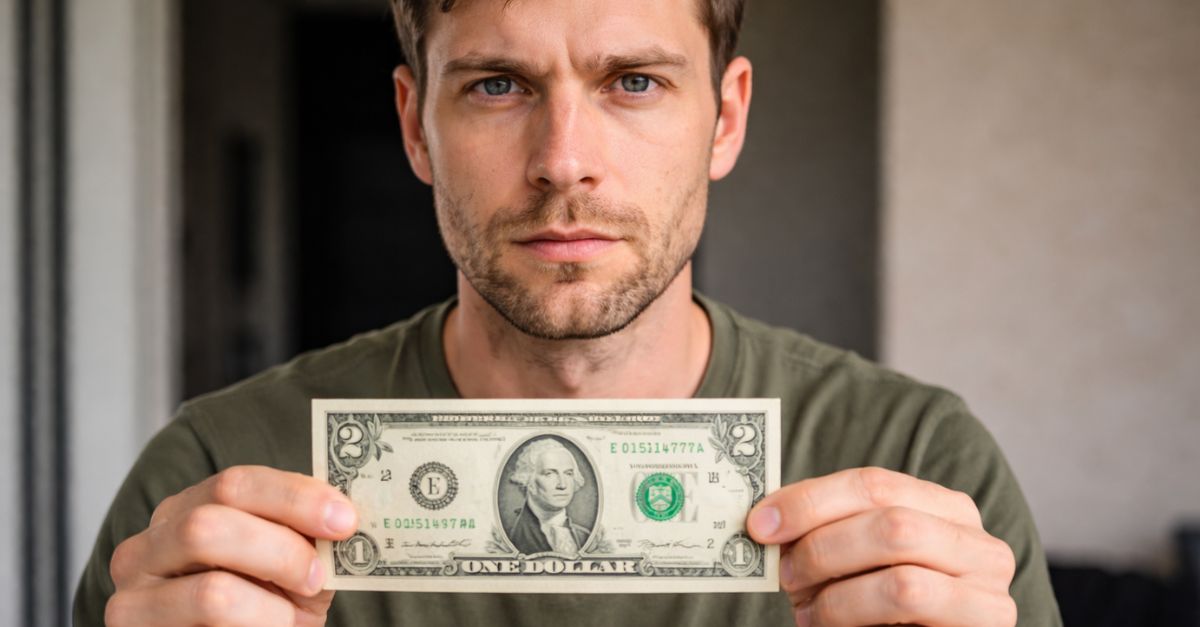
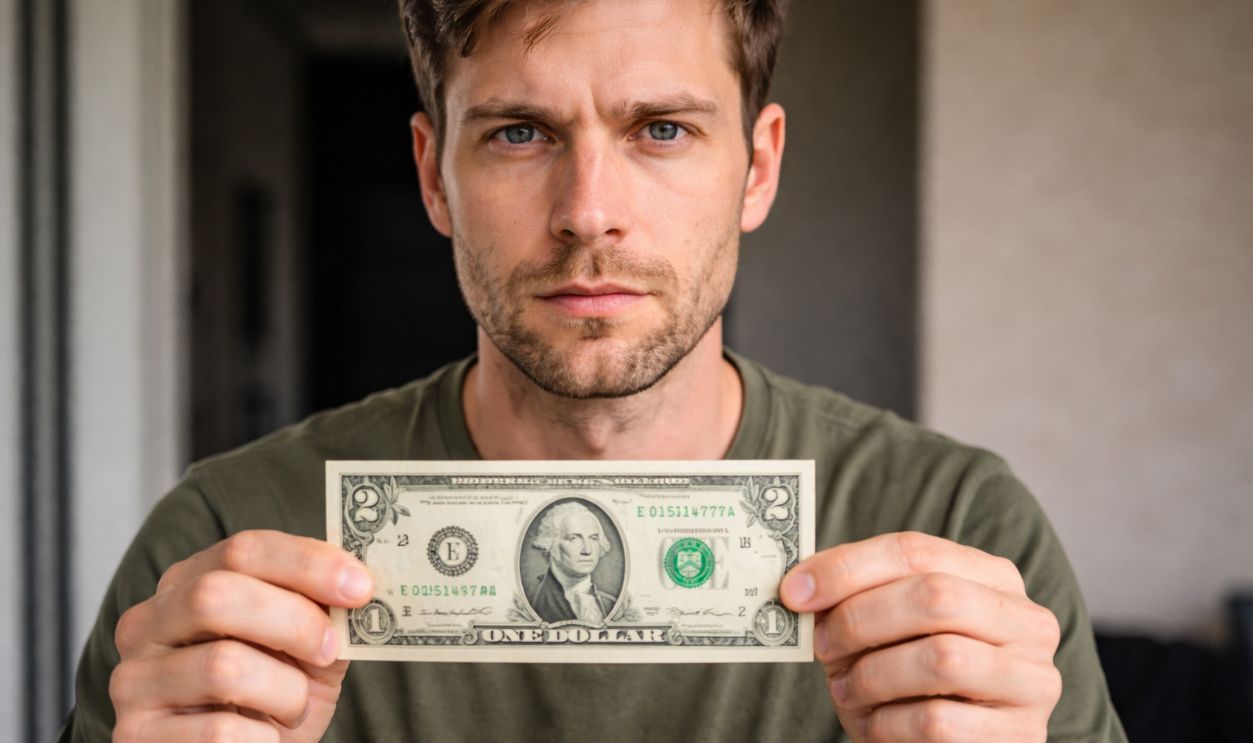
The $2 bill has always been weird. Nobody uses them. Banks barely stock them. Yet certain ones command jaw-dropping prices among collectors. Serial number patterns can make all the difference.
1862 Debut
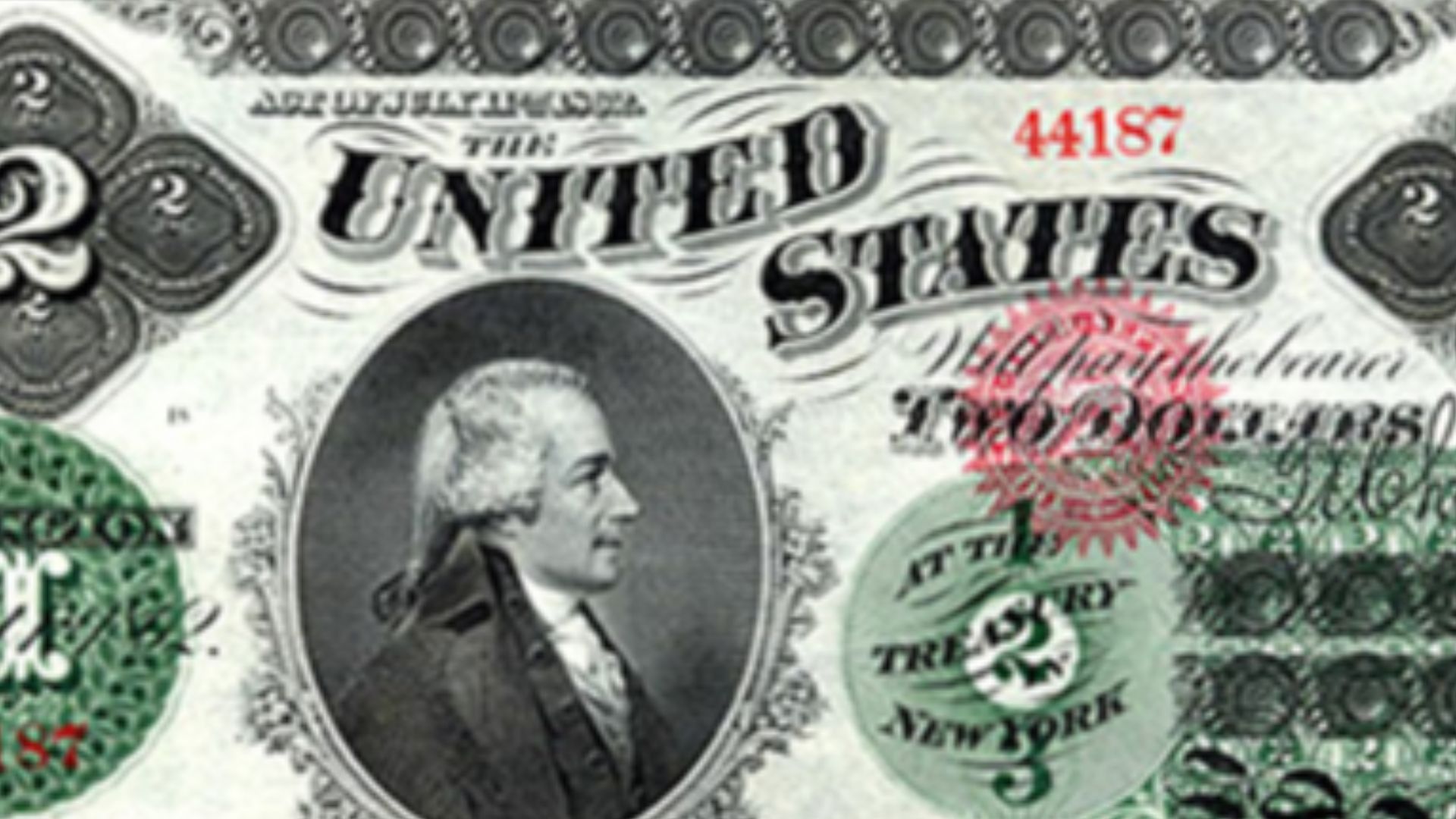
The Civil War was bleeding the Union treasury dry, forcing Treasury Secretary Salmon Chase to make a bold move. In March 1862, the federal government issued its very first $2 bill as a Legal Tender Note, marking a turning point in American finance.
 Red devil 666, Wikimedia Commons
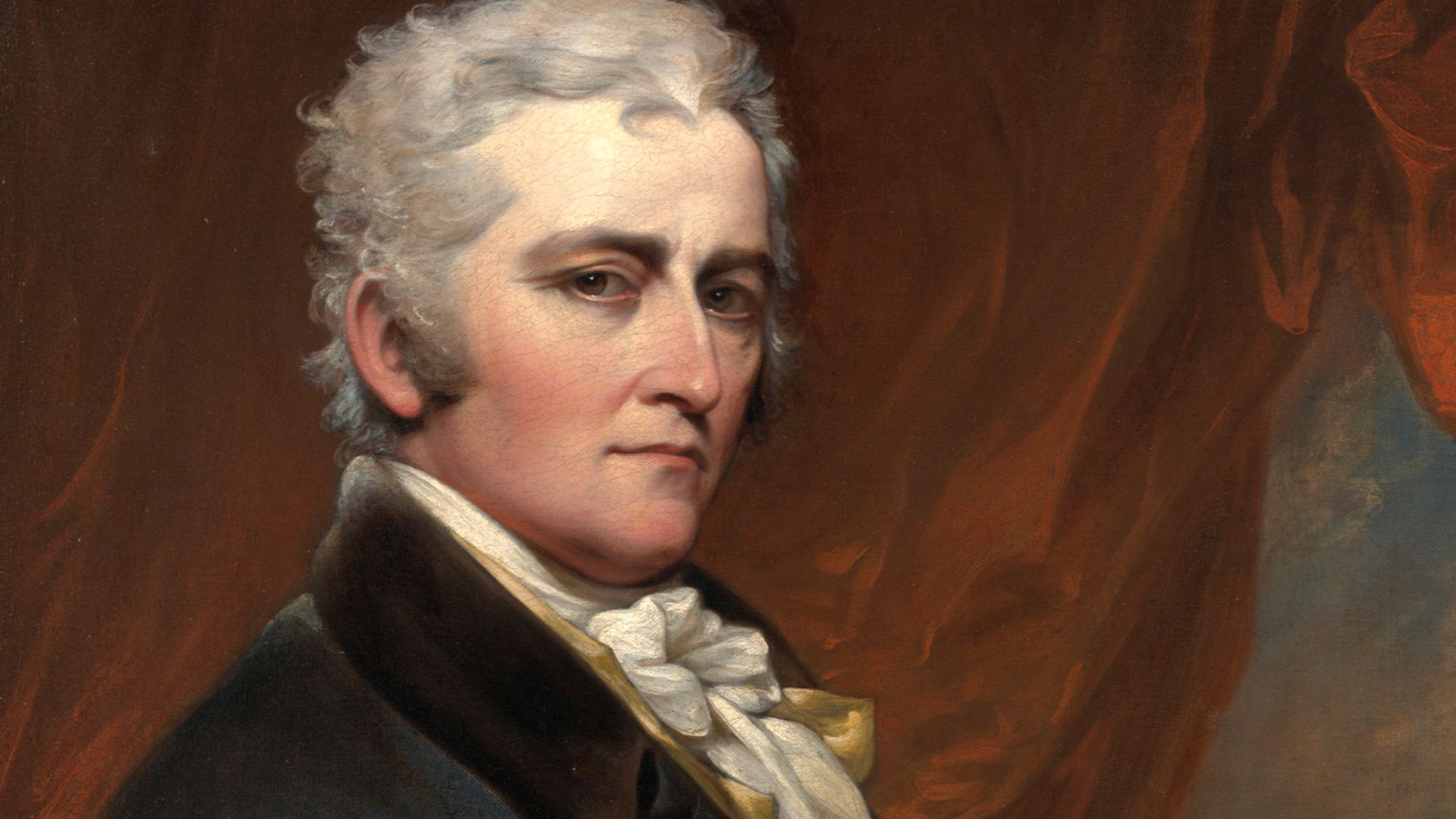
Hamilton's Portrait
Alexander Hamilton's profile graced the inaugural $2 bills, a fitting tribute to the man who essentially invented the American financial system. As the nation's first Treasury Secretary from 1789 to 1795, Hamilton had championed the idea of a central banking system and federal currency.
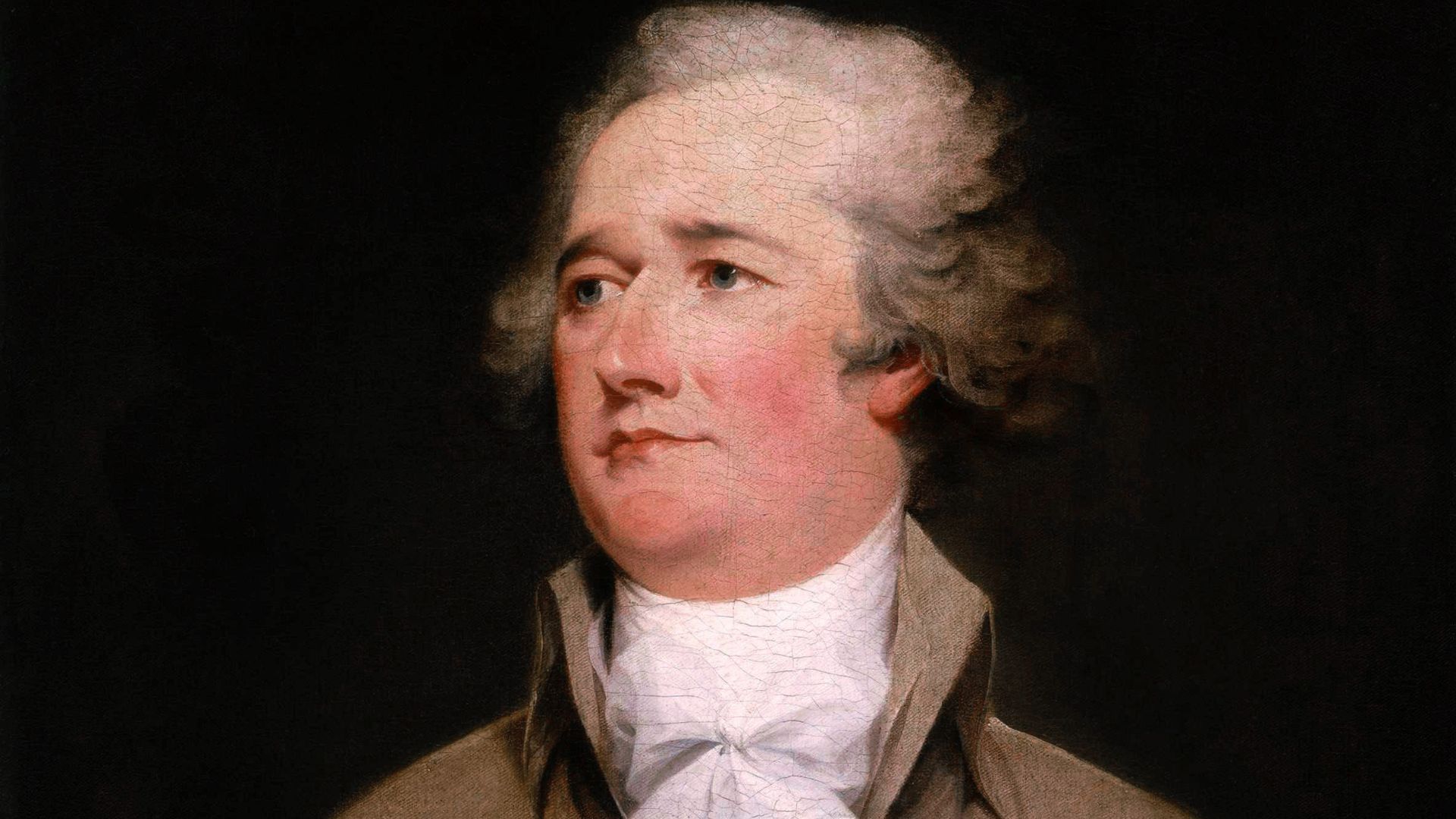 John Trumbull, Wikimedia Commons
Jefferson Takes Over
By 1869, the Treasury Department decided Hamilton's tenure on the $2 bill had run its course, replacing him with Thomas Jefferson's portrait. This redesign also introduced the US Capitol building as a central vignette and added green tinting to the top and left portions of the note.
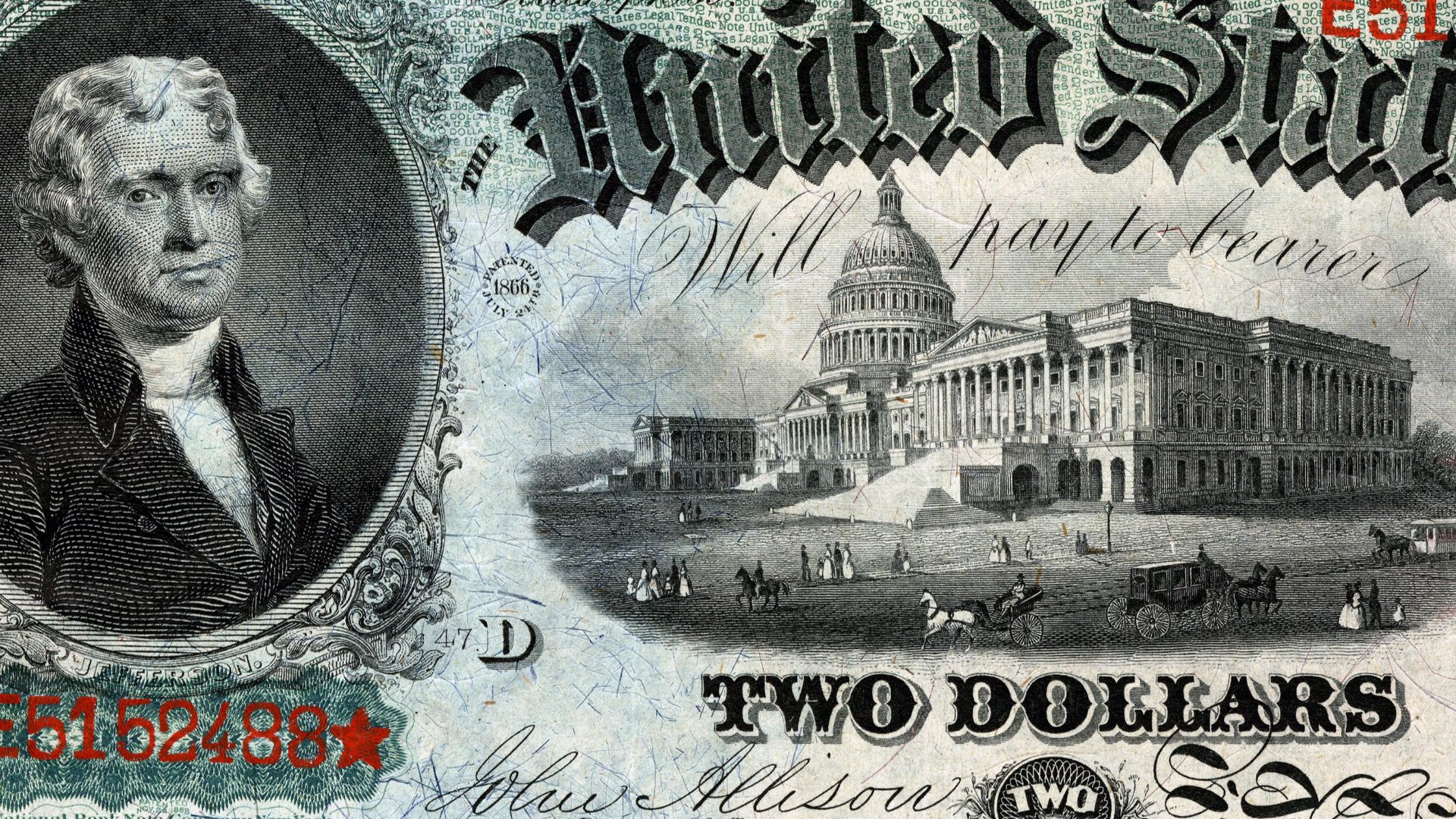 National Museum of American History , Wikimedia Commons
1890 Treasury Note
These "Coin Notes" were created specifically for government purchases of silver bullion from the booming mining industry out West. The 1890 $2 Treasury Note featured General James McPherson, a Union Army hero killed during the Atlanta Campaign of the Civil War. What makes these bills extraordinary today is their ornate reverse design.
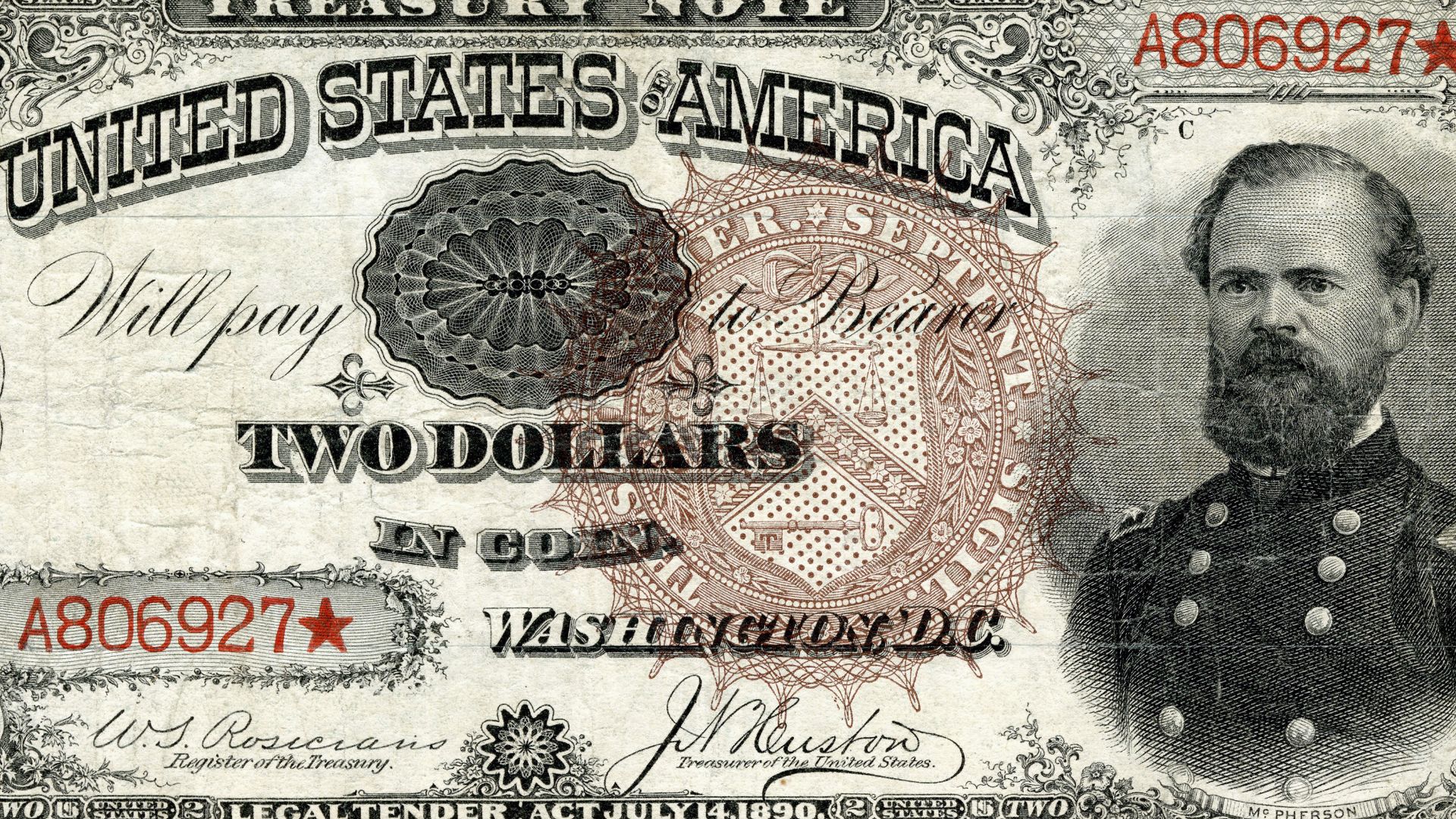 National Museum of American History , Wikimedia Commons
Large-Size Era
Before 1928, all American paper currency came in what collectors now call "large-size" format, sometimes affectionately dubbed "horse blankets" for their substantial dimensions. The $2 bills from this period are instantly recognizable by their 7.375 by 3.125-inch measurements.
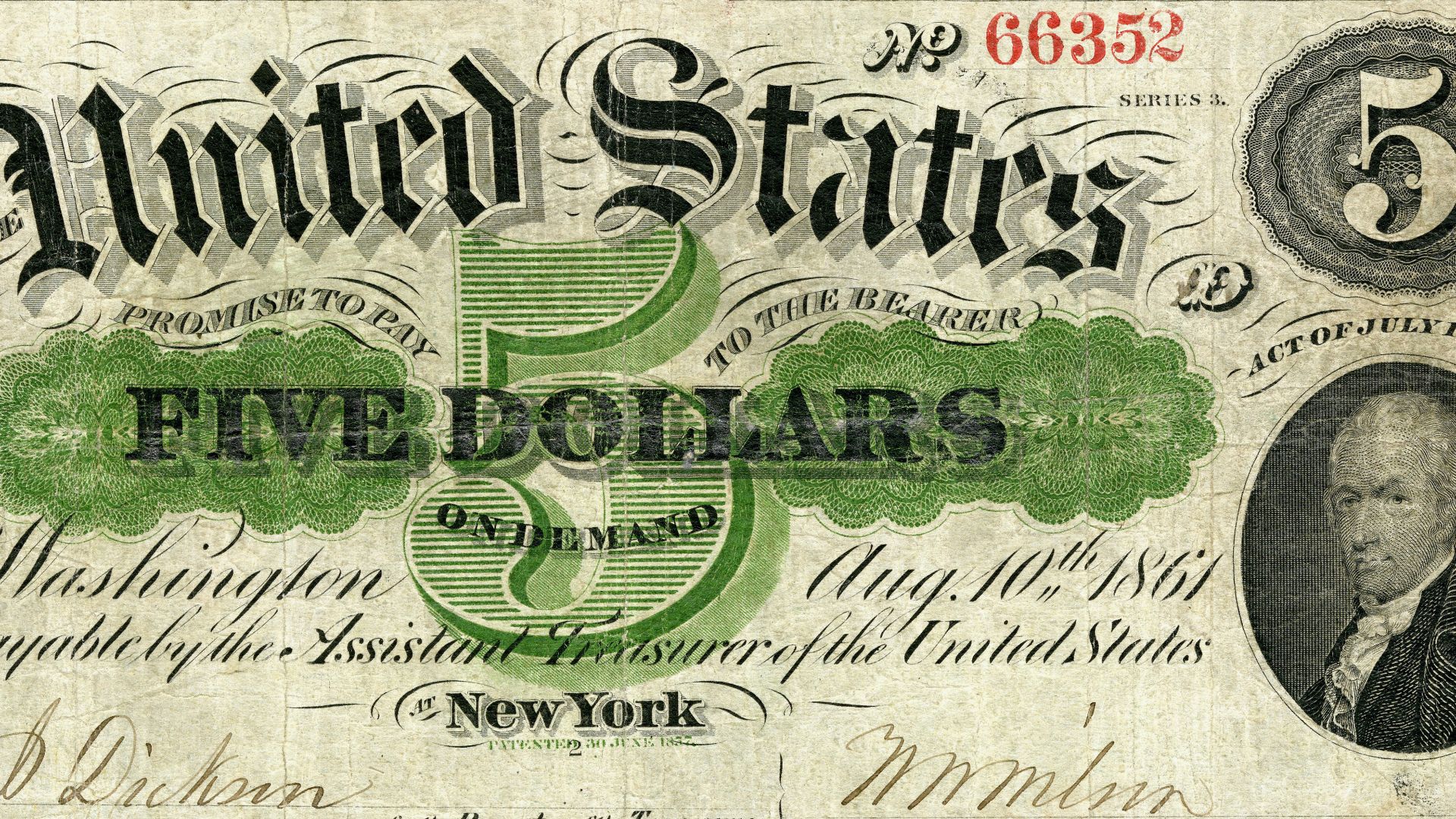 National Museum of American History , Wikimedia Commons
1928 Redesign
Everything changed when the Bureau of Engraving and Printing decided to standardize American currency to its current compact size. The Series 1928 $2 bill became the first small-format version. Jefferson's portrait remained, but the reverse now showcased his beloved Virginia estate, Monticello, replacing previous designs.
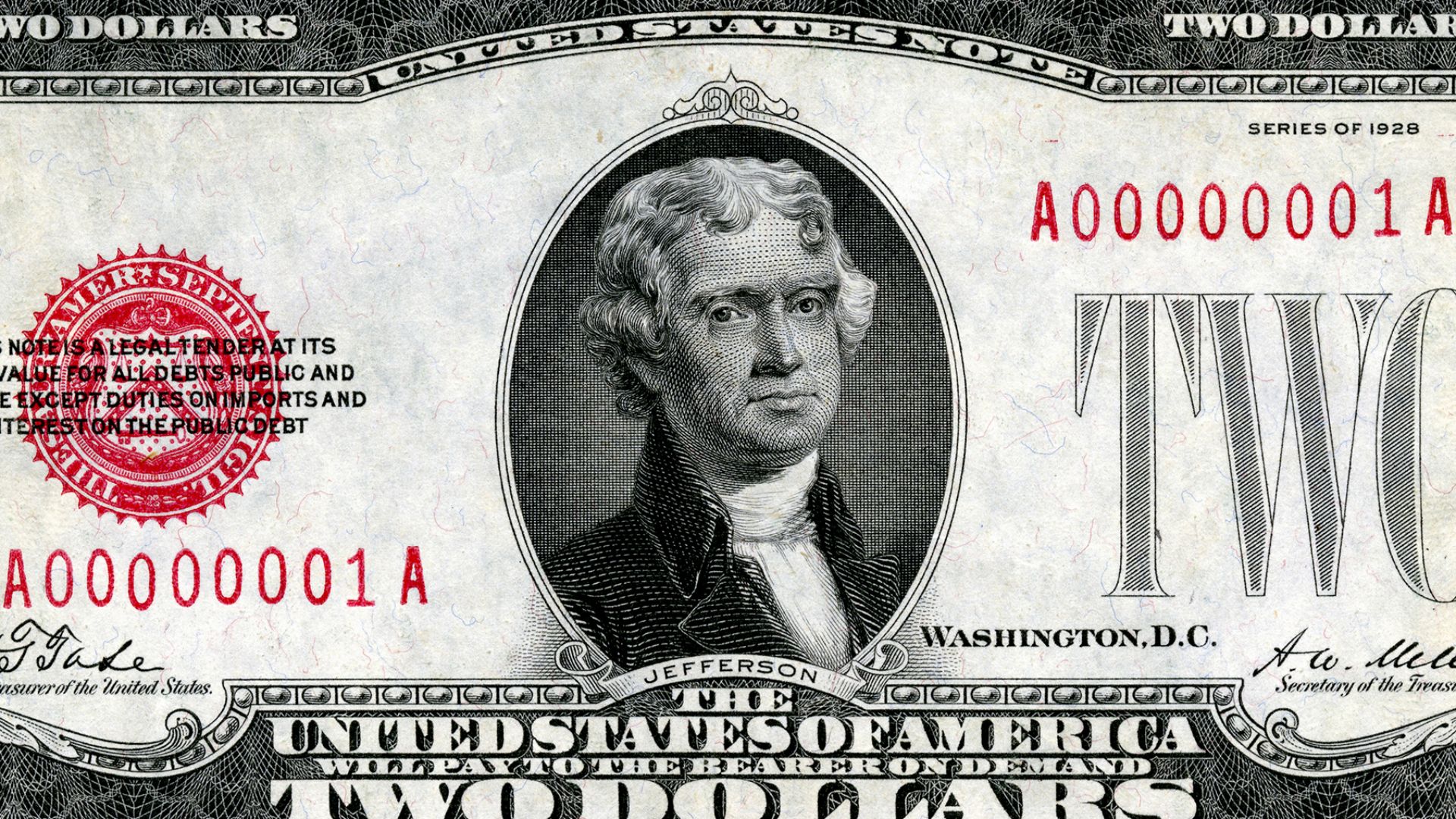 National Museum of American History , Wikimedia Commons
Red Seal Significance
That crimson-colored seal identifies the bill as a United States Note rather than a Silver Certificate or Federal Reserve Note. Until 1966, all $2 bills carried these distinctive red seals and serial numbers, signifying they were backed by the government's full faith and credit rather than precious metals.
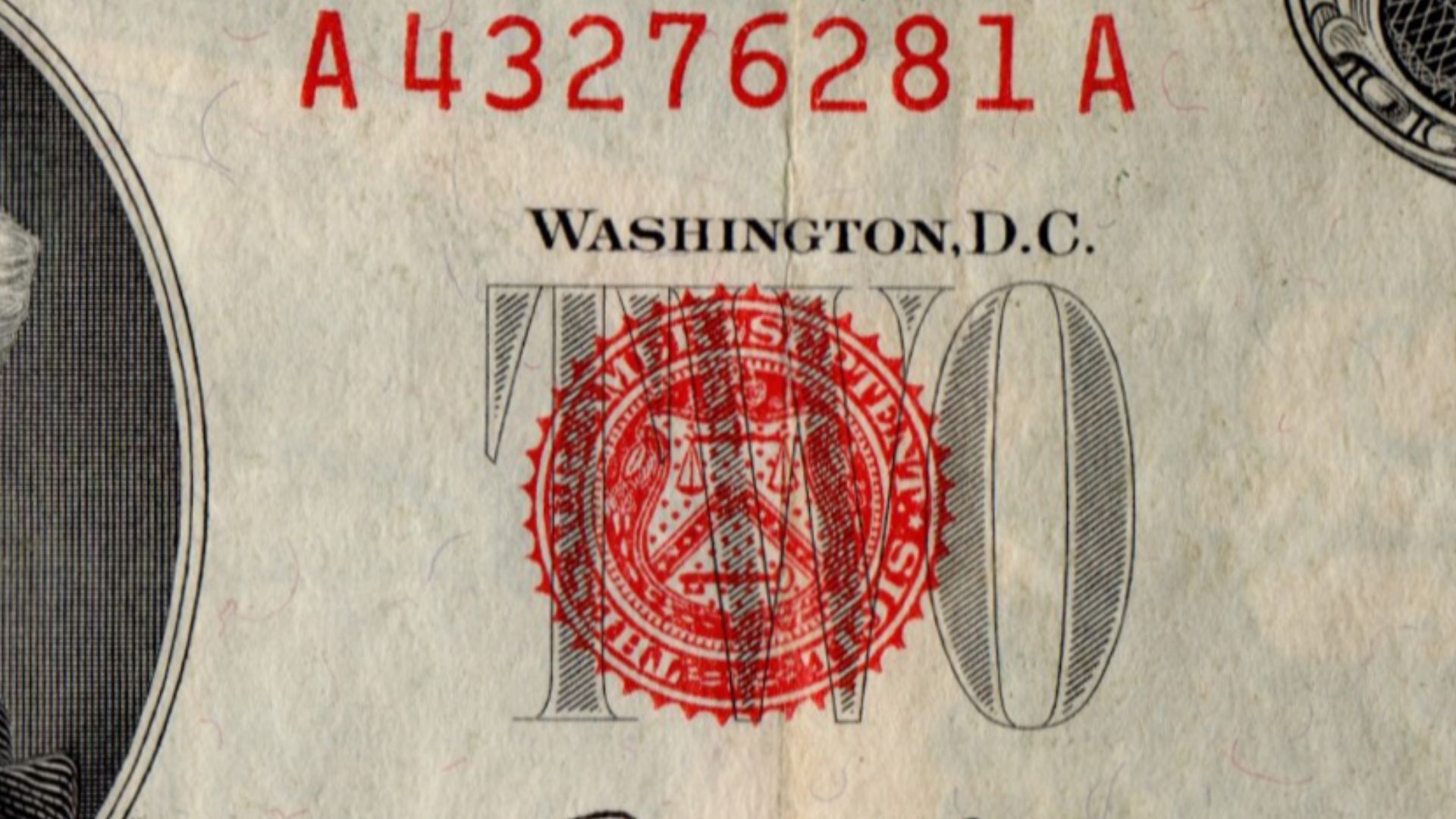 United States Bureau of Engraving and Printing, Wikimedia Commons
1953 Series
The Bureau of Engraving and Printing continued to produce red-seal $2 bills throughout the 1950s. Multiple subseries exist—1953, 1953A, 1953B, and 1953C—with some being considerably scarcer than others. The 1953-C star notes are especially rare, with only 360,000 printed, making uncirculated examples worth approximately $100.
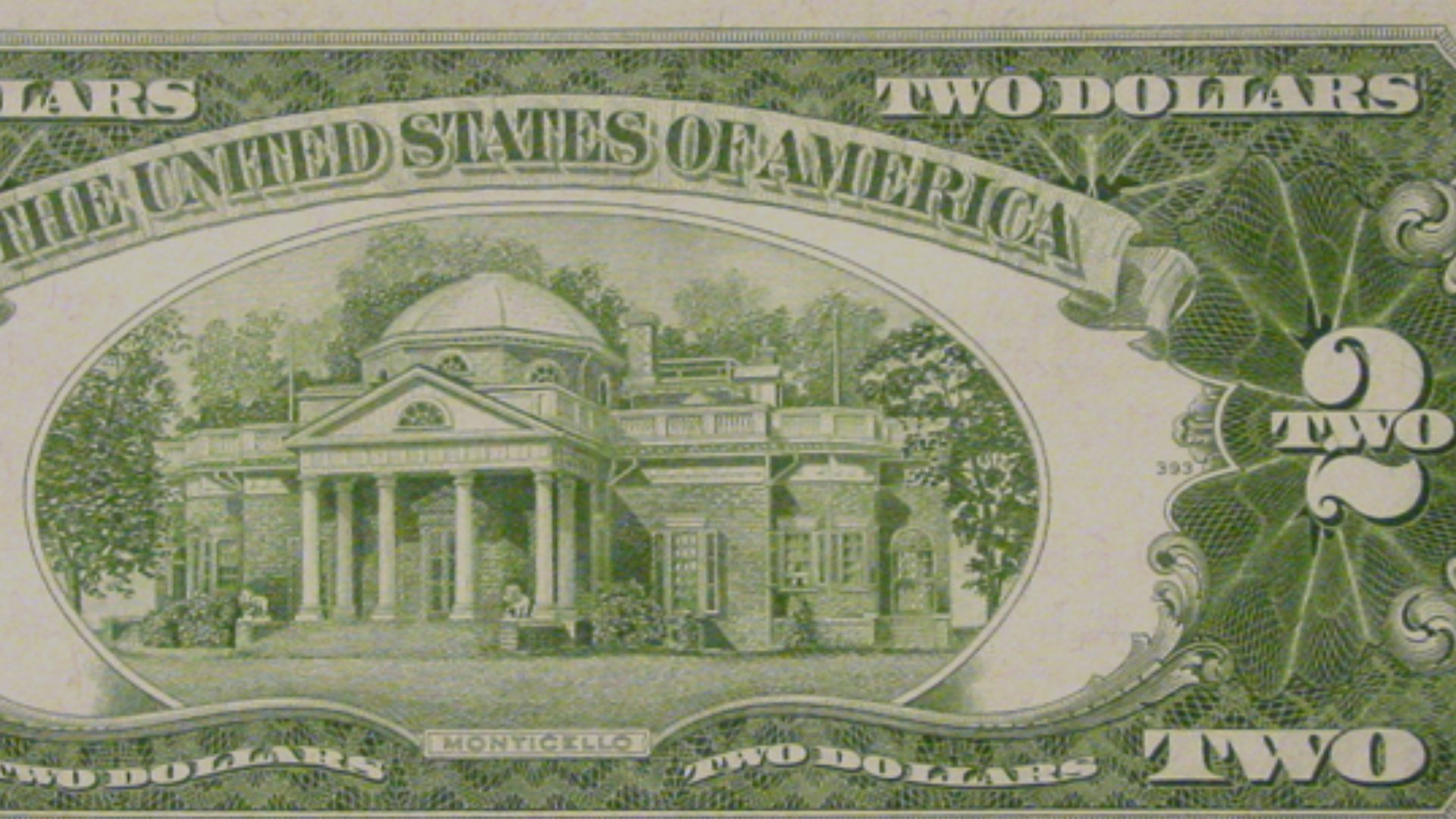
1963 Edition
It is said that the final red seal $2 bills rolled off the presses with the Series 1963, 1963A designations, marking the end of an era. 1963 represents a pivotal moment as these were the last $2 bills printed before the denomination was discontinued entirely in 1966.
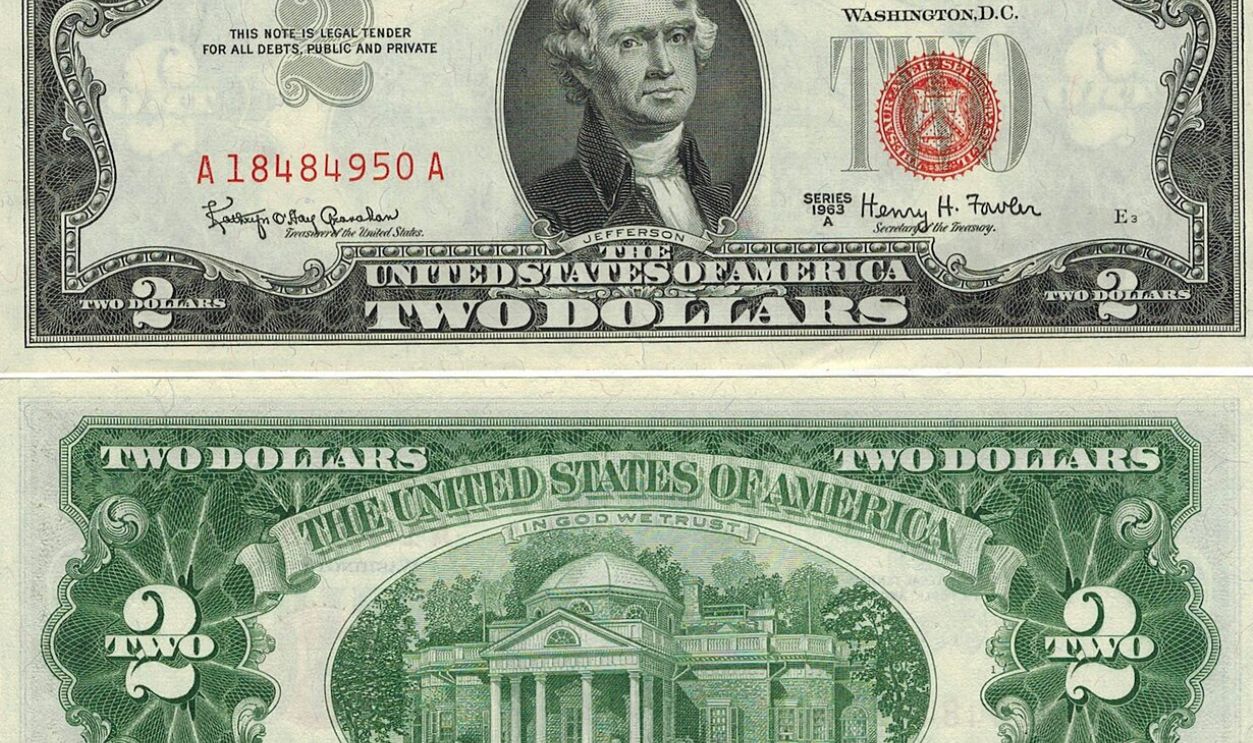 Bureau of Engraving and Printing: U.S. Department of the Treasury, Wikimedia Commons
Production Discontinued
By the early 1960s, the $2 bill had become America's forgotten denomination, rarely circulating despite millions being printed. The Treasury Department cited overwhelmingly low public demand when announcing the cessation of production in August 1966. Americans had developed strange superstitions around the bill, associating it with gambling.
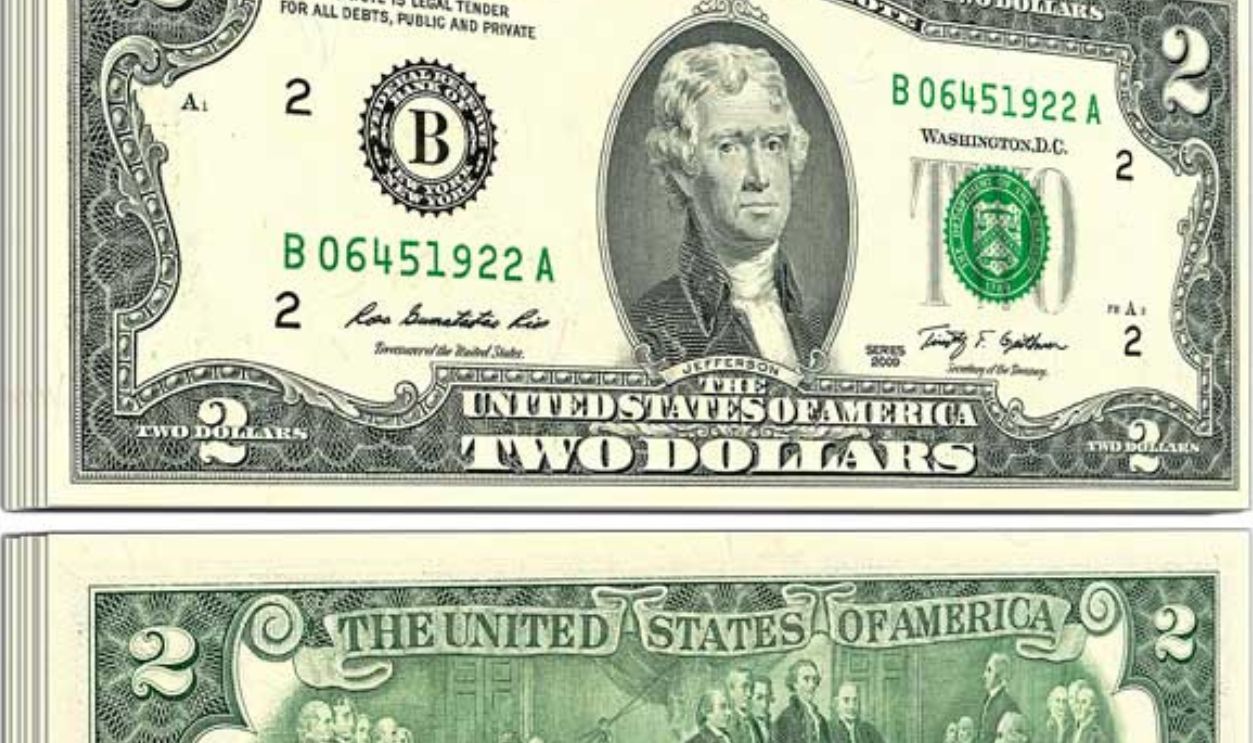 Sar Maroof, CC BY-SA 4.0, Wikimedia Commons
1976 Revival
The Treasury Department revived the $2 bill in 1976 as part of the US bicentennial celebration, with President Gerald Ford ceremonially accepting the first redesigned bills. Well, the Federal Reserve commissioned studies showing that while nobody was actively demanding the denomination, massive distribution could spark public adoption.
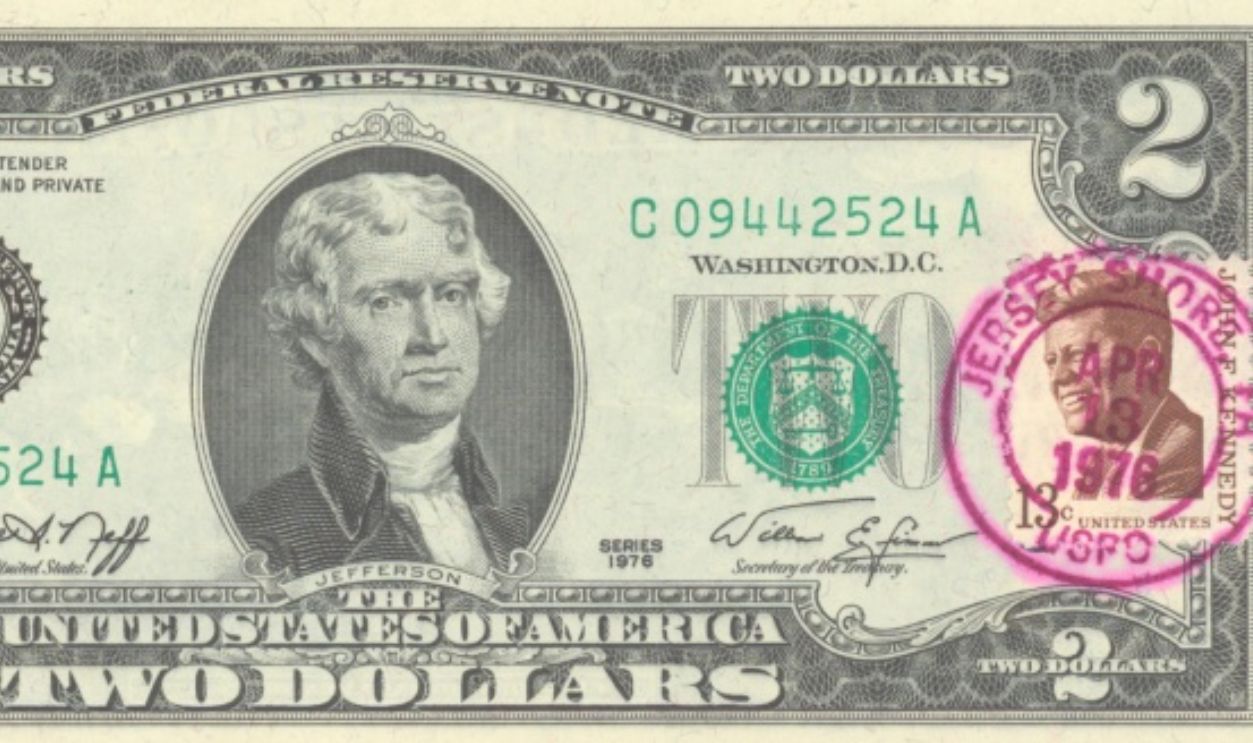
Bicentennial Design
The reverse design underwent a dramatic transformation for the 1976 reissue, swapping Monticello for something far more patriotic. John Trumbull's 1818 painting "Declaration of Independence" occupied the back, showing the historic moment when Jefferson's document was presented to Congress.
 John Trumbull, Wikimedia Commons
Modern Printing
Series 1995, 2003, 2003A, 2009, 2013, and 2017A have all been printed, with the latest batches still entering circulation sporadically. Recent production has varied, with 108 million in $2 bills printed in FY2022 and 128 million in FY2023, though this pales compared to the billions of $1 bills produced annually.
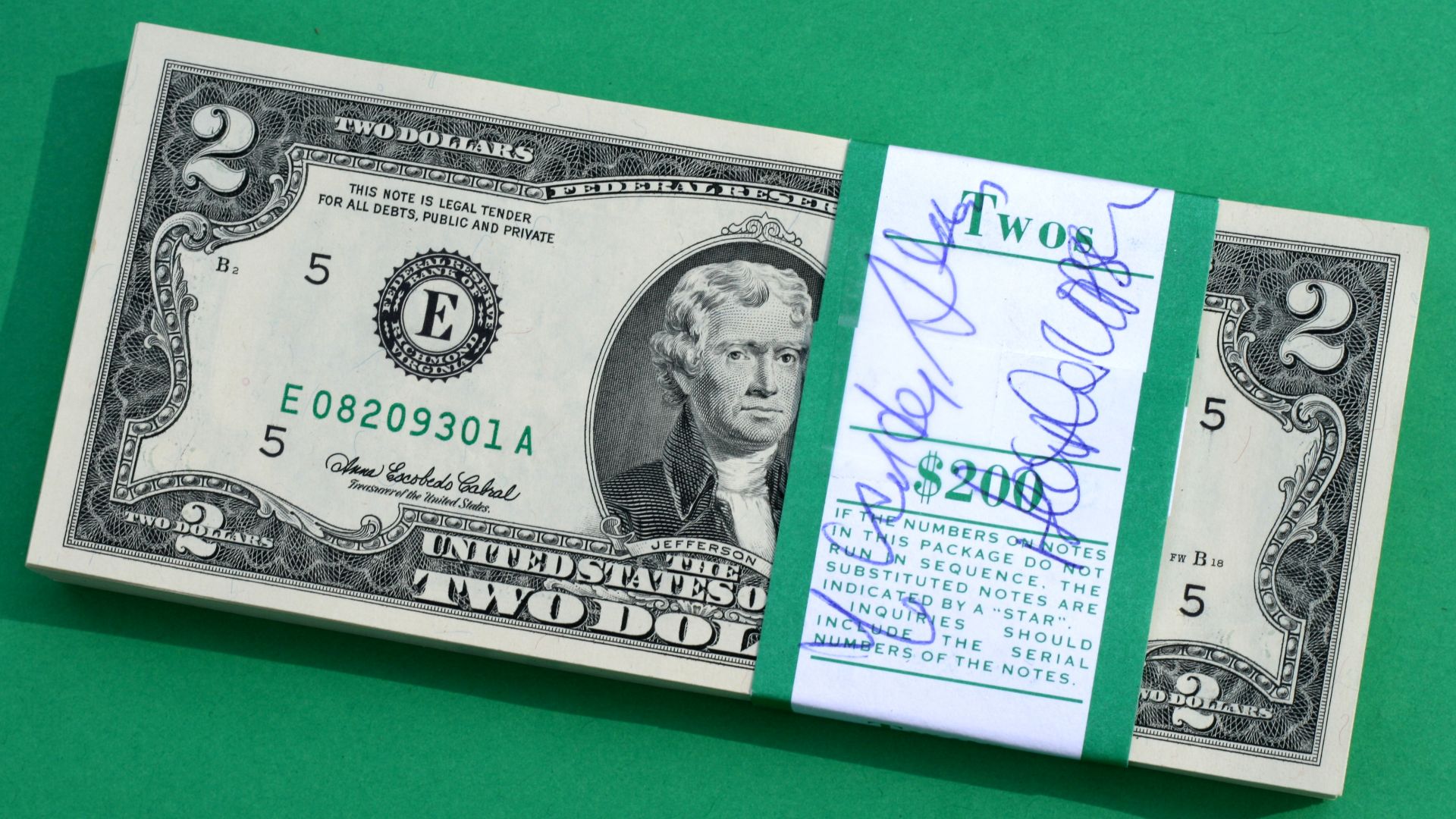 Ildar Sagdejev (Specious), Wikimedia Commons
Serial Number Patterns
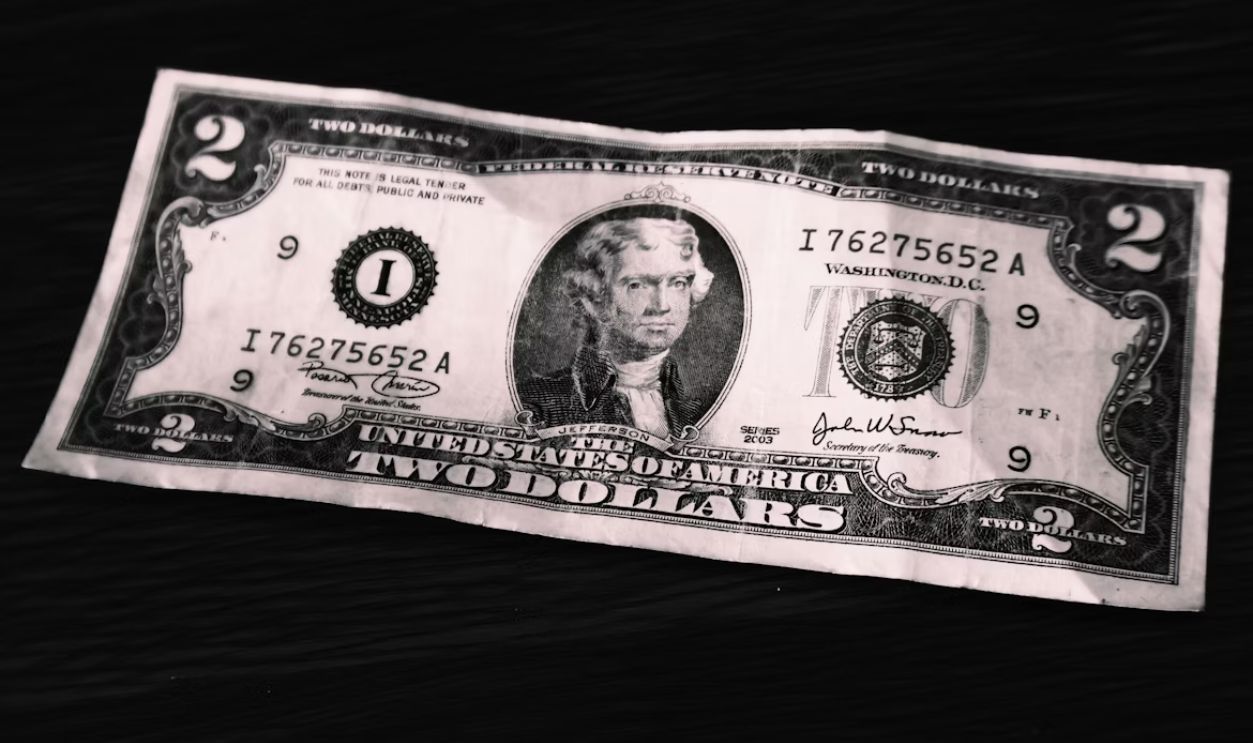
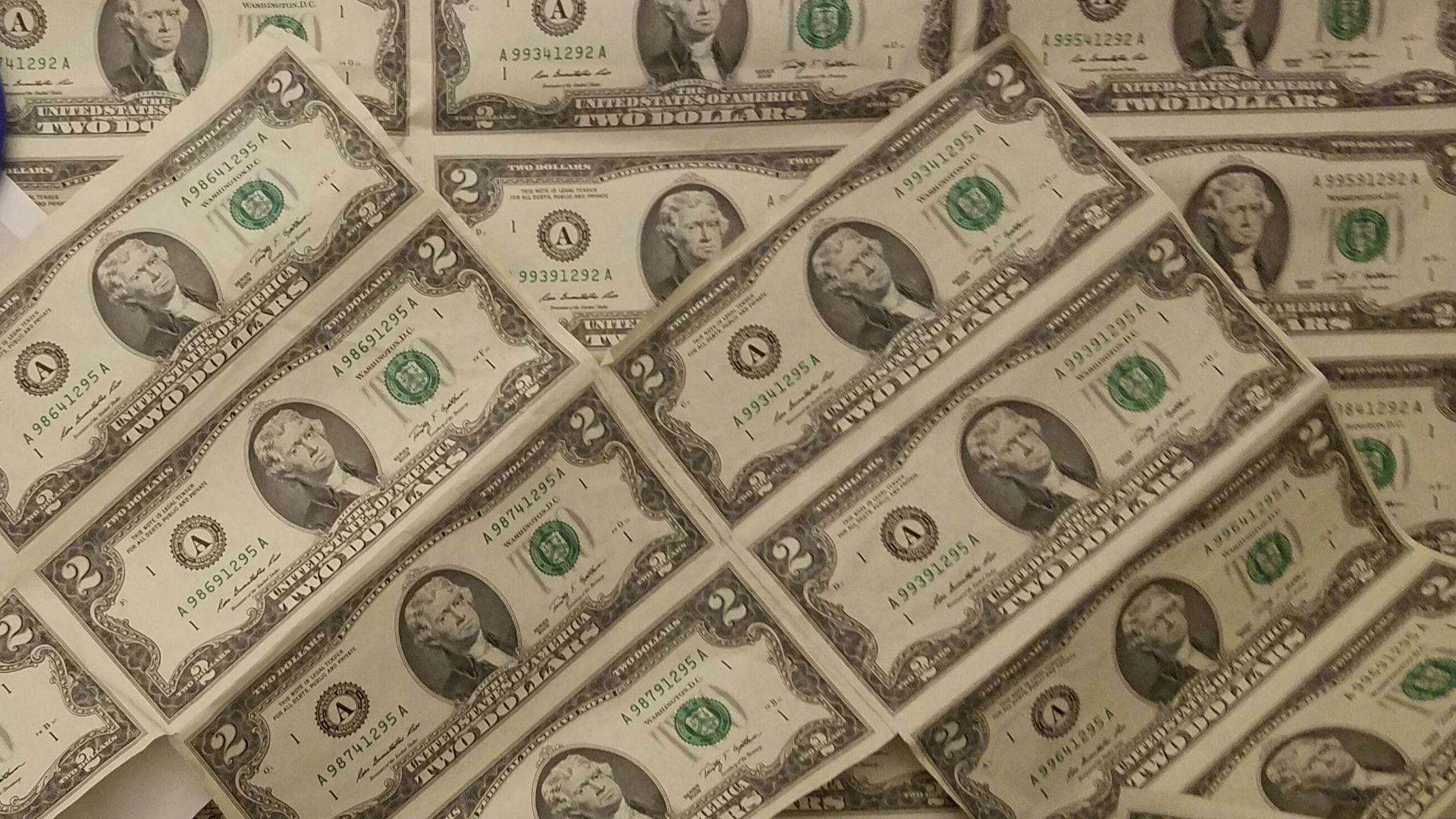
Every US banknote carries an eight-digit serial number printed twice on the front, and certain patterns drive collectors wild. These numbers follow specific Treasury printing rules. Low serial numbers under 100, solid numbers where all digits match, and radar numbers reading identically forwards and backwards all command premiums.
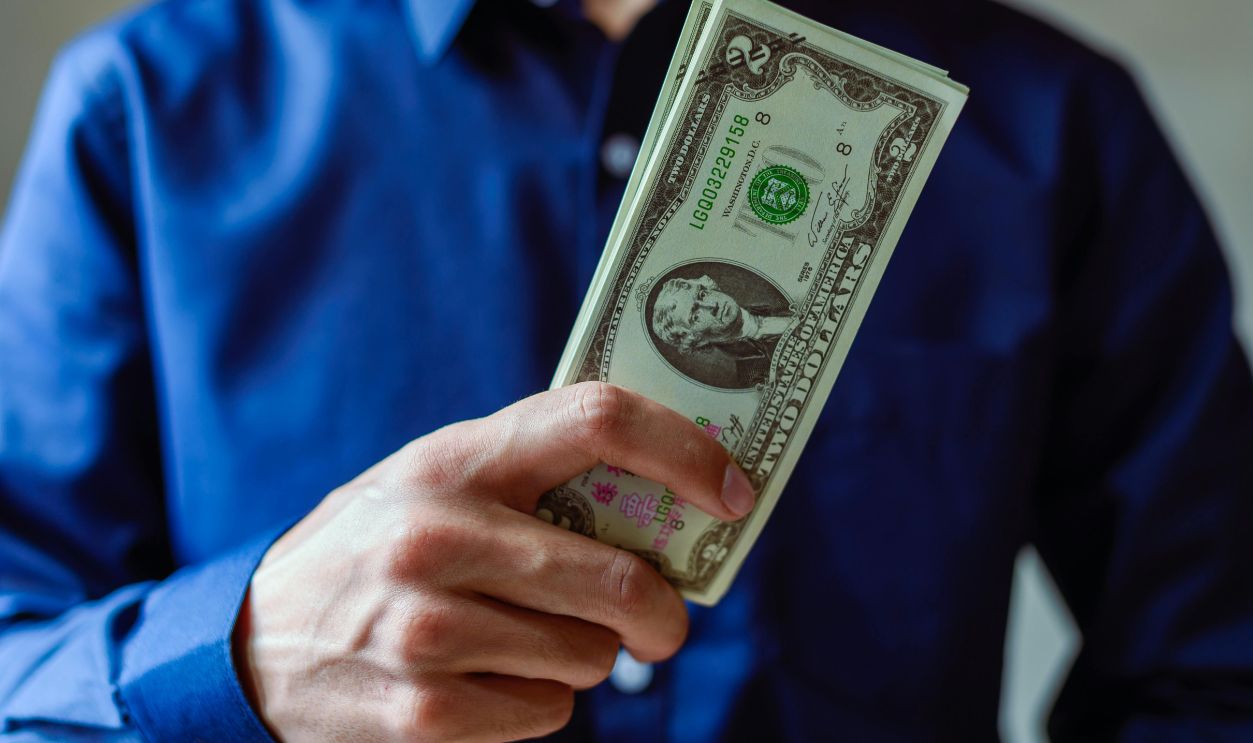
Ladder Notes
The holy grail of serial numbers is the ladder, where each digit ascends consecutively like 12345678 or descends like 87654321. Only one banknote out of every 96 million printed naturally produces a perfect ascending ladder, making these extraordinarily rare finds.
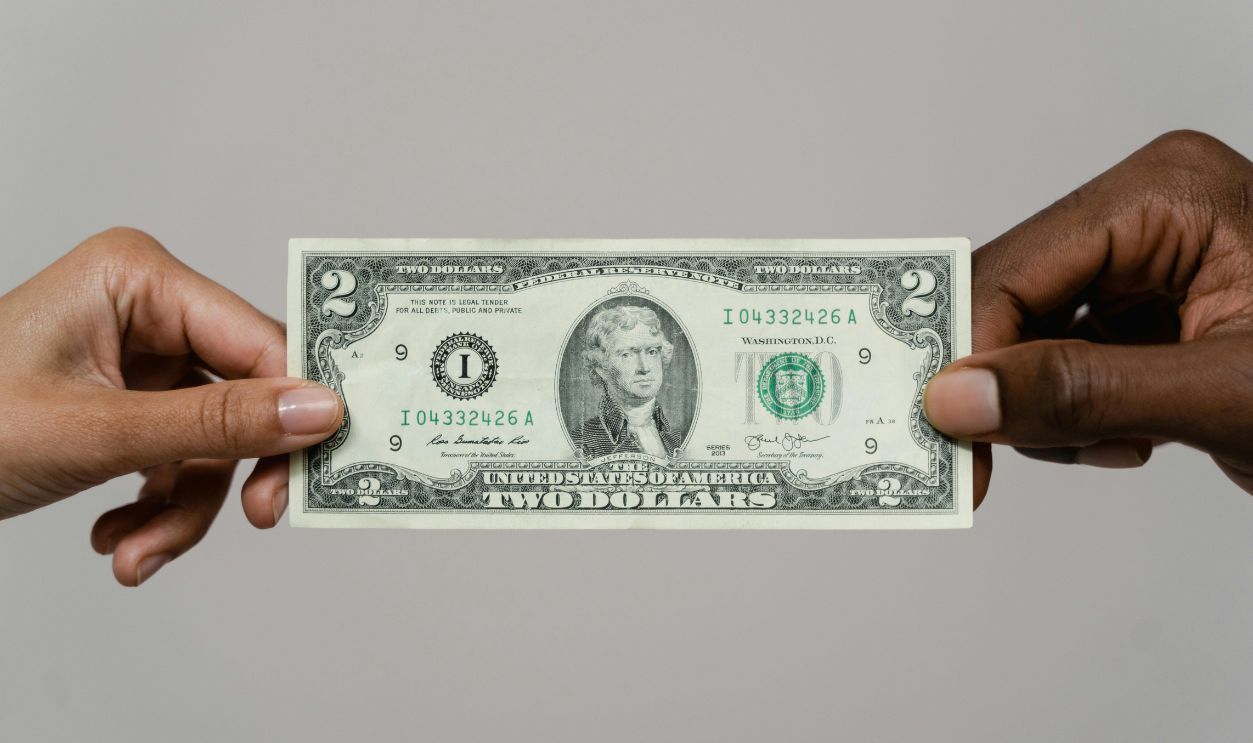
Repeating Sequences
Serial numbers with repeating patterns create another category of collectible currency that enthusiasts actively hunt. Repeaters show blocks of digits recurring throughout the number, like 27527527 or 45454545. Double quads feature two different digits each repeated four times, such as 11223344.
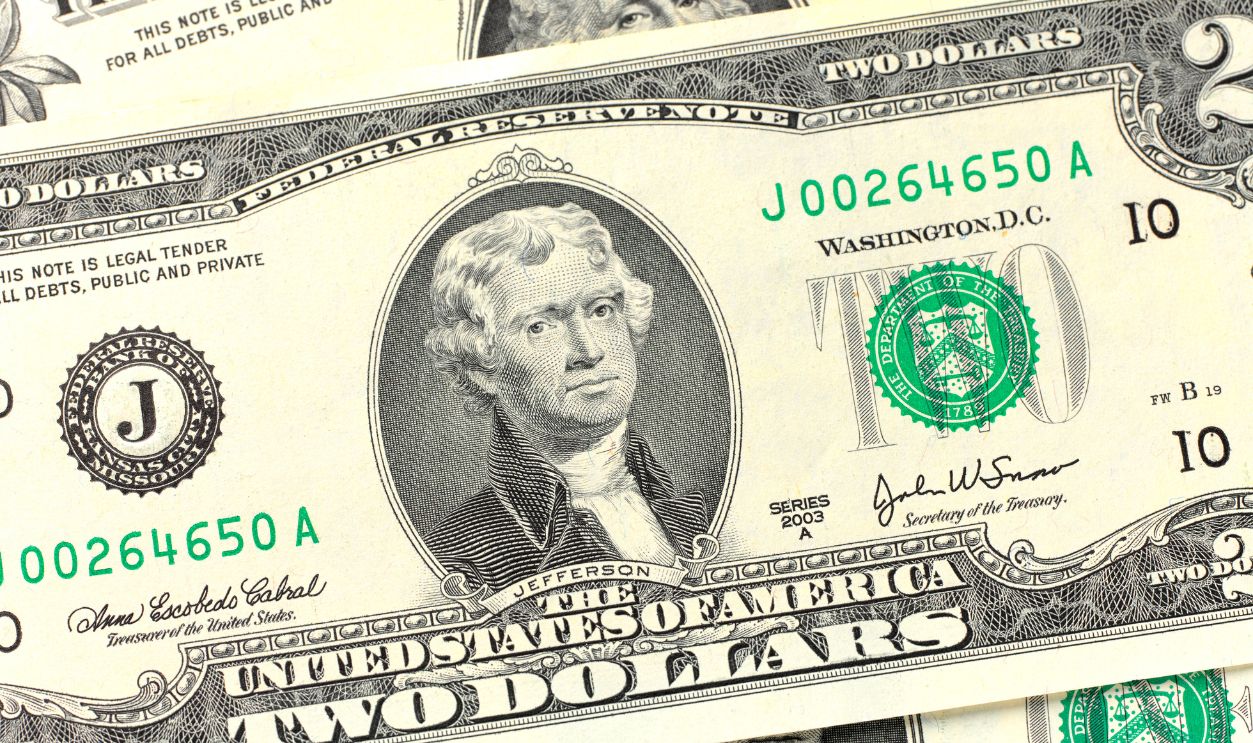
Low Number Rarities
Serial numbers under 100 represent some of the most coveted finds in currency collecting, especially when professionally graded. Auction records show $2 bills with extremely low serial numbers selling for thousands of dollars when in pristine condition. A serial number like 00000001 would be extraordinarily valuable.
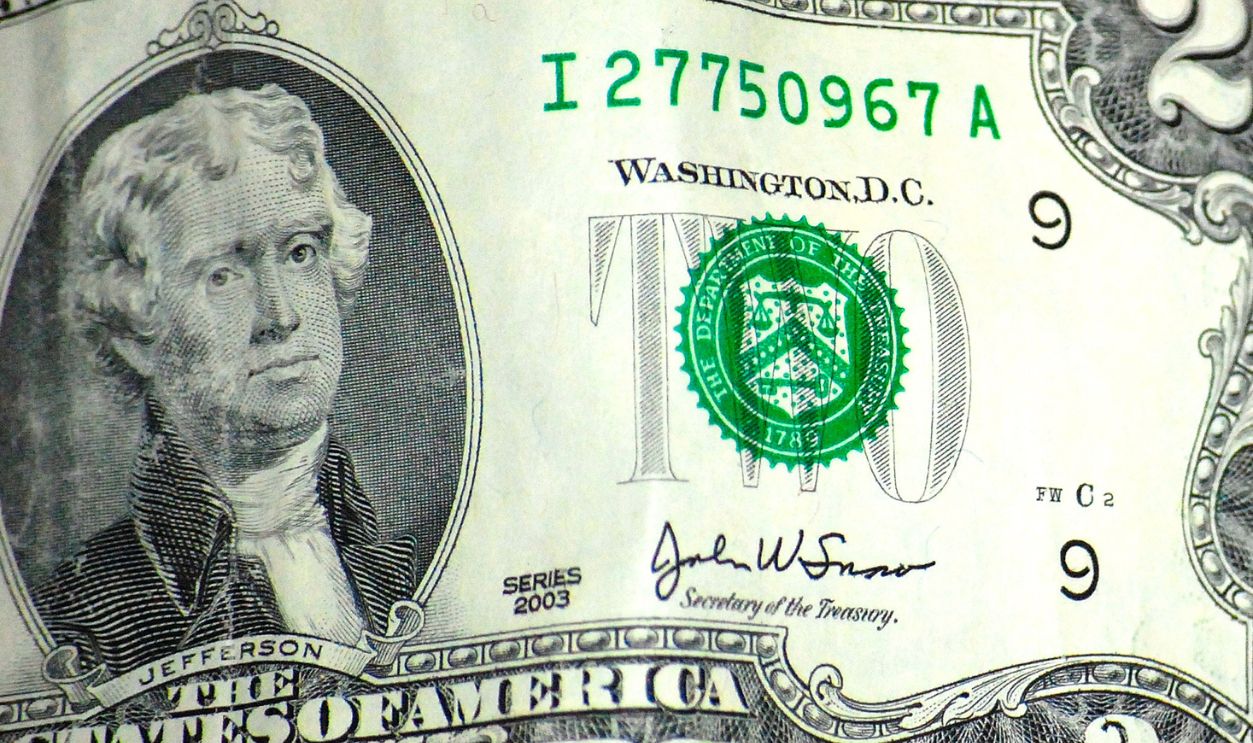
Star Replacements
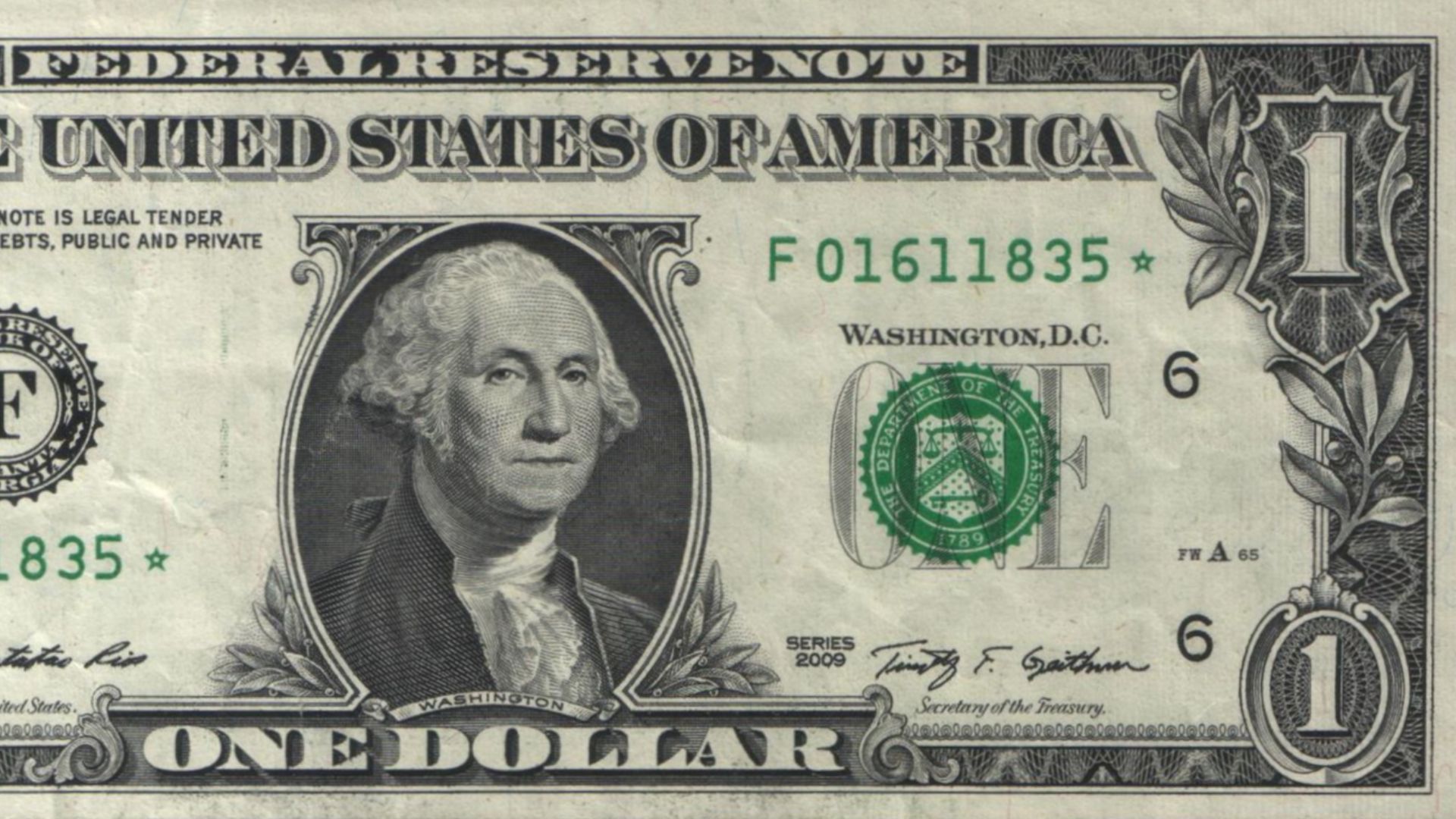
That small star symbol next to the serial number identifies the bill as a replacement note printed to substitute a defective one. Since government policy prohibits producing duplicate serial numbers, the Bureau adds a star and assigns a unique number to these replacements.
 Federal Reserve System, Wikimedia Commons
Printing Errors
Manufacturing mistakes that escape quality control become some of the most valuable currency collectibles when discovered. Miscut errors occur when cutting tools malfunction, creating bills with uneven borders or off-center designs, typically worth $50 to several hundred dollars.
Condition Assessment
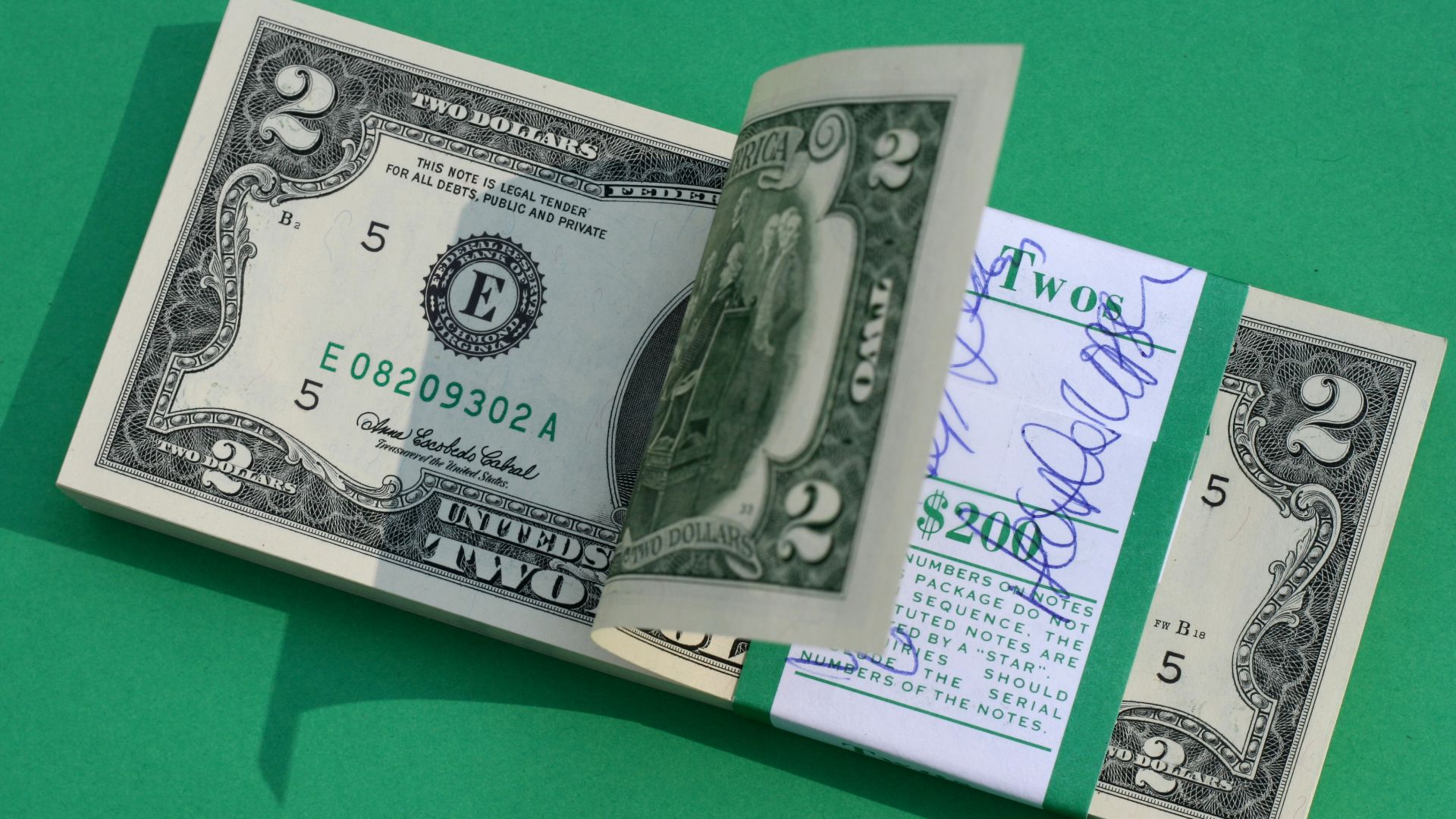
A bill's physical state dramatically impacts its market value, sometimes creating thousand-dollar differences between similar notes. Collectors classify bills into two broad categories: circulated and uncirculated. Circulated bills show wear from everyday transactions while uncirculated bills remain crisp, clean, and completely free from folds.
 Ildar Sagdejev (Specious), Wikimedia Commons
Grading Services
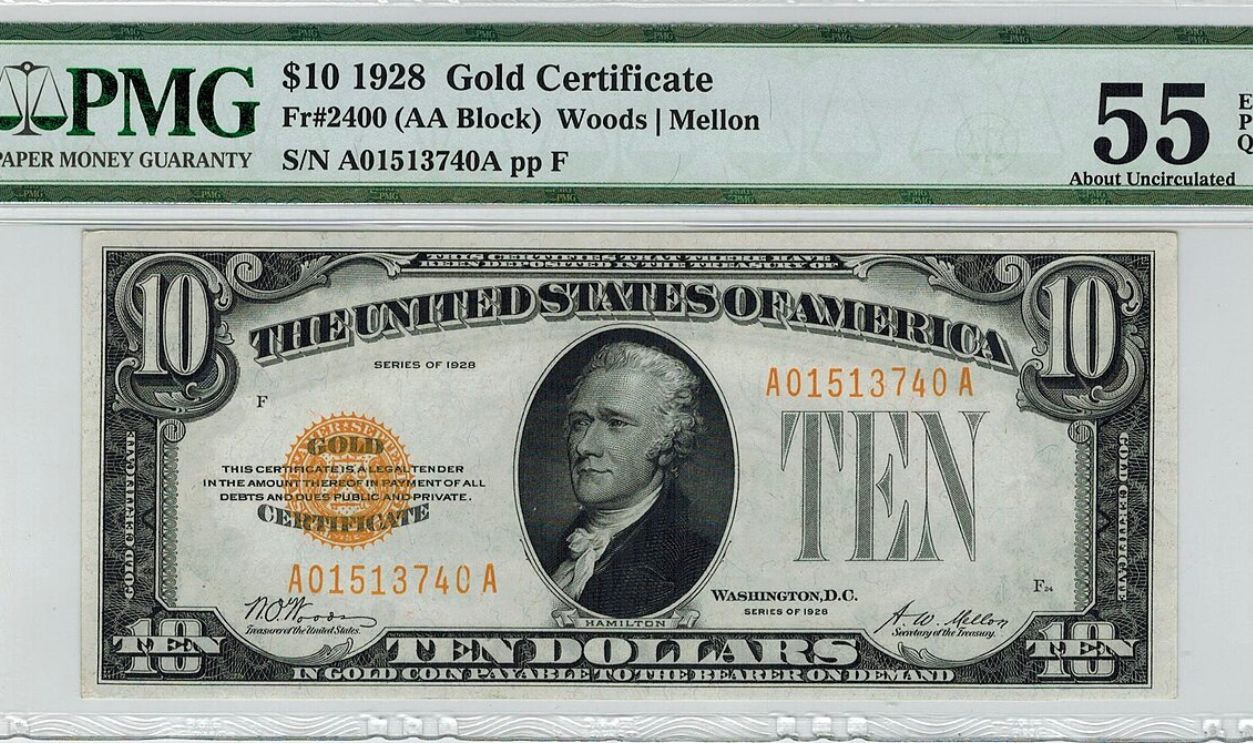
Professional third-party grading companies provide the trusted authentication and condition assessment that serious collectors demand. PMG (Paper Money Guaranty) and PCGS Banknote Grading are the industry's leading authorities, using a 70-point numerical scale adapted from the internationally recognized Sheldon grading system.
 Unknown U.S. Government employees, Wikimedia Commons
Authentication Process
Determining whether your $2 bill is valuable requires systematic examination, starting with basic identification. Check the series year printed on the front near Jefferson's portrait, then note the seal color. Red seals indicate pre-1966 bills automatically worth investigating further.
 Dodsonhalloween, Wikimedia Commons
Auction Markets
Heritage Auctions dominates the high-end currency market, holding records for numerous million-dollar collectible sales worldwide. This platform attracts serious collectors willing to pay premium prices for certified, rare bills in exceptional condition. Stack's Bowers represents another major auction house with deep numismatic expertise and no extra fees.

Selling Options
Local coin and currency dealers offer immediate payment and face-to-face transactions, eliminating shipping risks and delays. These brick-and-mortar shops provide instant cash but typically pay wholesale prices, meaning you'll receive less than auction values. Online dealers like APMEX also purchase currency collections.