Your Job Is Over, But Your Paycheck Is Being Held Hostage
You expected your final paycheck, not an ultimatum. Now your boss says you won't receive the money you've already earned until you hand over your company laptop, raising an uncomfortable question about what an employer can legally demand.
Your Boss Can't Simply Rewrite Payday Rules
Your employer has a legitimate interest in getting company equipment back, but that doesn't automatically give them the right to withhold your wages. In the United States, final-paycheck rules depend on federal law and the state where you worked. The important distinction is between your obligation to return company property and your employer's obligation to pay you.

Federal Law Doesn't Require Immediate Final Pay
The U.S. Department of Labor explains that federal law does not generally require employers to issue a final paycheck immediately after employment ends. However, some states impose much faster deadlines, and federal wage protections still apply. Your boss cannot simply invent a new payment schedule without considering those legal requirements.
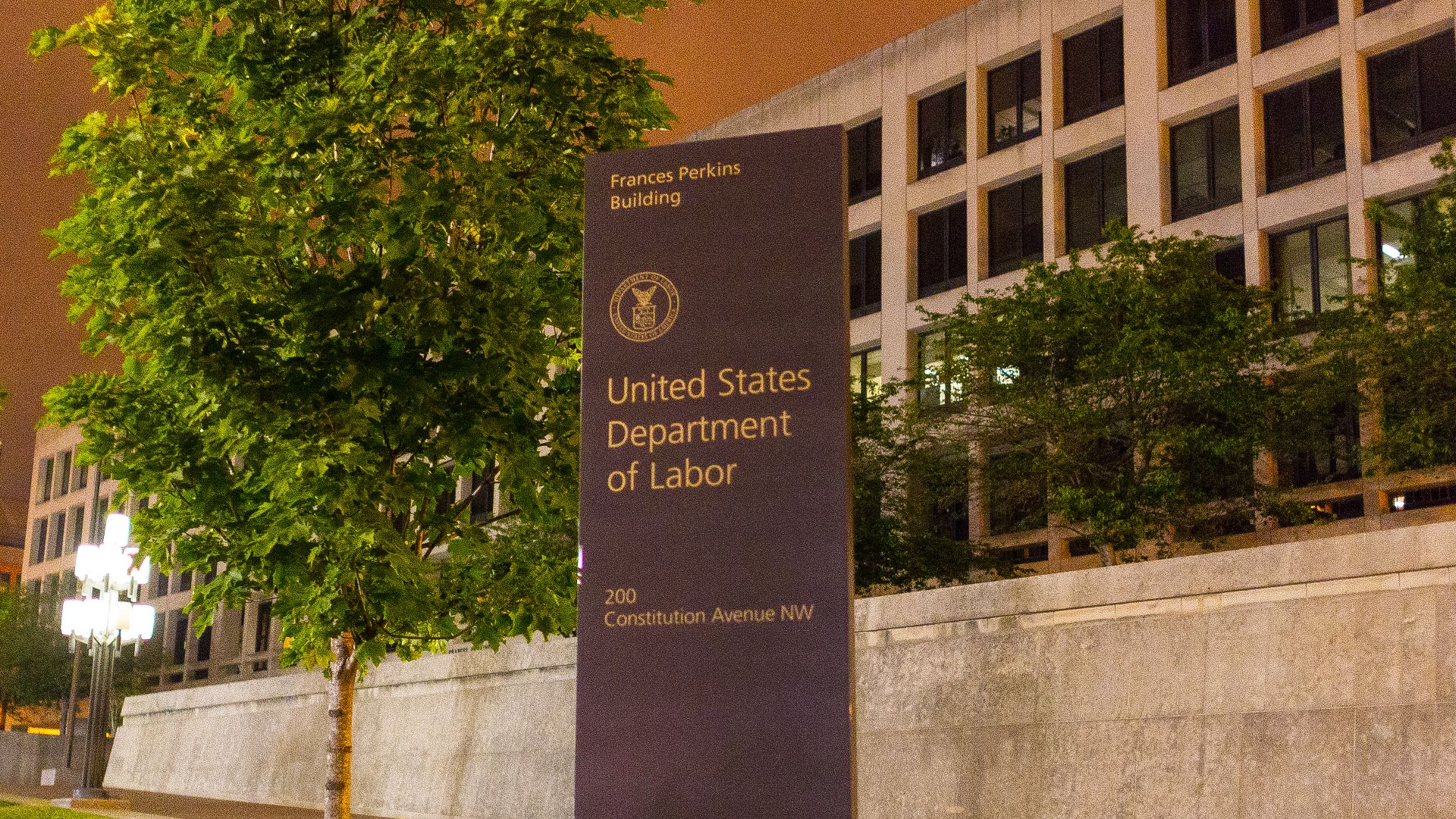 US Department of Labor, Wikimedia Commons
State Law Could Make Your Boss's Demand Illegal
Some states explicitly prohibit employers from holding wages hostage over unreturned equipment. Oregon, for example, says employers cannot withhold or delay paychecks in exchange for company-owned items. California also prohibits withholding final wages to pressure employees into returning laptops and other property.

California Has Particularly Strict Rules
In California, employees who are fired or laid off generally must receive their final earned wages immediately. Employees who quit without giving at least 72 hours' notice generally must be paid within 72 hours, while those giving sufficient notice are generally due payment on their last day. Those deadlines do not disappear because a company laptop is still sitting on someone's desk at home.

Oregon Also Separates Wages From Equipment
Oregon's Bureau of Labor and Industries states that an employer cannot delay a paycheck to recover company property. If you're fired, your final wages are generally due by the end of the next business day. If you resign, the deadline depends on how much notice you gave, but an unreturned laptop doesn't create an additional waiting period.
 ANTONI SHKRABA production, Pexels
Texas Gives Employers More Time, But Not Forever
Texas generally gives employers six calendar days to provide final wages after an involuntary termination, subject to a limited business-closure exception. If an employee resigns voluntarily, payment is generally due on the next regularly scheduled payday. The state allows certain authorized deductions, but the company must still follow applicable wage-payment laws.

New York Usually Follows The Regular Payday
In New York, employees who leave a job generally must receive their final wages by the regular payday for the period they worked. That rule applies whether the employment relationship ended voluntarily or involuntarily. A manager's desire to recover a laptop does not, by itself, replace the state's wage-payment requirements.

Colorado Has An Important Exception
Colorado allows certain deductions for unreturned employer property when specific legal conditions are satisfied. These include an agreement to return the property and detailed written notice within the required timeframe. The state also provides a procedure for returning deducted money if the employee subsequently returns the property, showing why it's dangerous to assume every state follows identical rules.

Withholding Everything Is Different From Making A Deduction
An employer refusing to issue any final paycheck is not necessarily the same legal issue as an employer deducting the value of missing equipment. Federal and state laws regulate these actions differently. Even where a particular equipment deduction is permitted, it doesn't automatically follow that the employer can hold your entire paycheck indefinitely.

Federal Minimum Wage Protections Still Matter
The Fair Labor Standards Act restricts deductions for items primarily benefiting the employer, including tools and certain equipment. Such deductions cannot reduce a covered nonexempt employee's pay below the applicable minimum wage or cut into required overtime compensation. States may provide stronger protections, so federal law is only the starting point.

A Signed Equipment Agreement Isn't A Blank Check
You may remember signing paperwork when the company issued your laptop. That agreement can help establish your responsibility to return the device, but it doesn't necessarily authorize payroll deductions or delayed wages. Whether a deduction is enforceable depends on the agreement's terms and the law governing your employment.

Your Employer Still Owns The Laptop
The paycheck dispute doesn't make company property yours to keep. If your employer provided the laptop for work and retained ownership, you should arrange to return it through an appropriate company process. Returning the equipment promptly also removes a practical obstacle and helps keep the dispute focused on your unpaid wages.

Ask For A Prepaid Shipping Label
If you worked remotely, returning a laptop may require more than dropping it at the office. Ask HR for a prepaid shipping label, packing instructions, and a return deadline. Getting those details in writing creates a record of your willingness to cooperate and helps avoid arguments about whether you ignored the request.

Get Proof That You Returned Everything
Before shipping the laptop, record its serial number and photograph the device and any accessories being returned. Keep the shipping receipt, tracking number, and delivery confirmation. If you hand it over in person, ask for a dated acknowledgment identifying the equipment received.

Don't Wipe The Laptop Without Permission
A company laptop may contain work files, licensed software, and security settings that your employer needs to preserve. Rather than resetting the device yourself, ask IT how it should be prepared for return. Follow the company's authorized process for signing out of personal accounts and handling any personal files, without copying or retaining confidential company information.

Put The Paycheck Demand In Writing
If your boss says payment depends on returning the laptop, ask them to confirm that condition by email. State your last day of work, the wages you believe are outstanding, and the applicable payday. A written request makes the issue clearer and creates useful documentation if you eventually need to file a wage claim.
 Kit (formerly ConvertKit), Unsplash
Don't Let HR Confuse Final Pay With Severance
Your final wages and any severance package are not necessarily governed by the same rules. Final wages generally involve compensation already earned, while severance may depend on a contract, company policy, or negotiated agreement. Ask HR to identify precisely which payment is being delayed rather than treating every departure-related payment as interchangeable.

Unused Vacation May Also Be Owed
Depending on state law and company policy, your final payment may include accrued but unused vacation. California generally treats earned vacation as wages that must be paid when employment ends. Other states take different approaches, so review the rules governing your workplace before calculating what you're owed.

An Employer Can Face Penalties For Paying Late
In California, an employer that willfully fails to pay final wages on time may owe waiting-time penalties. Those penalties can equal the employee's daily wage for each calendar day of nonpayment, up to 30 days, subject to legal exceptions. Oregon also provides potential penalty wages for qualifying late-payment violations.

You Don't Have To Accept An Unexplained Deduction
If your final paycheck arrives short, request an itemized explanation of the missing amount. Compare the statement with your hours worked, pay rate, and any legally authorized deductions. If the employer charged you for a laptop, ask for the legal basis and supporting documentation rather than assuming the deduction was valid.
 https://kaboompics.com/. Pexels
You Can File A Wage Complaint
If your employer misses the applicable payment deadline, your state labor department may be able to help recover unpaid wages. The U.S. Department of Labor's Wage and Hour Division also investigates violations of federal wage laws within its jurisdiction. Keep copies of your pay records, termination notice, equipment-return correspondence, and written requests for payment.

Complaining About Unpaid Wages Has Protections
Federal law prohibits retaliation against employees who engage in protected activity under the Fair Labor Standards Act. The Wage and Hour Division explains that workers can contact investigators about possible violations and that complaints are generally handled confidentially, subject to certain exceptions. State laws may offer additional protections, including remedies for workers who face retaliation.

Return The Laptop, But Don't Surrender Your Pay
The most practical approach is to arrange the laptop's return immediately while separately requesting your final wages by the legal deadline. Keep the process professional, document everything, and avoid signing an unfamiliar deduction agreement without understanding its consequences. If your employer continues withholding payment, contact the appropriate labor agency or an employment attorney.

The Bottom Line Depends On Your State
Your boss may have a legitimate right to recover the laptop, but that doesn't automatically permit withholding money you've already earned. States such as California and Oregon explicitly prohibit using final wages as leverage for company property, while others have different deadlines and narrowly defined deduction rules. Check the law where you worked, return the equipment with proof, and pursue unpaid wages if the employer fails to meet its legal obligations.

You May Also Like:
Small and Easy Ways to Save Money
Frugal Habits That Actually Cost More In The Long Run