
Don’t Close That Old Credit Card—Even If You Never Use It

Don’t Close That Old Credit Card—Even If You Never Use It


February 25, 2026 | Jesse Singer

Don’t Close That Old Credit Card—Even If You Never Use It


You’re About To Make A “Responsible” Mistake

Cleaning up your finances feels productive. You pay off a credit card, stop using it, and decide it’s time to close it. Logical, right? Not always. That old card you never touch could quietly be helping you more than you realize.

Woman holding credit cardFactinate

Advertisement

Why Closing It Feels Like The Right Move

Fewer accounts feel simpler. No annual fee? Even better. If you’re not using the card, it seems unnecessary. There’s something satisfying about decluttering your financial life. Unfortunately, credit scoring models don’t reward minimalism the way you might expect.

1771661626639Nampix, Shutterstock

Advertisement

Credit Scores Aren’t Random

Under the FICO model, payment history makes up 35% of your score. Utilization accounts for 30%, and length of credit history makes up 15%. Close an old card and you risk affecting two meaningful parts of the formula at once.

Combine Multiple DebtsMikhail Nilov, Pexels

Advertisement

Credit History Length Actually Matters

That old card from 2009 isn’t just sitting there—it’s aging in your favor. Length of credit history makes up about 15% of your FICO score. People with excellent credit typically have much longer average account ages than the general population.
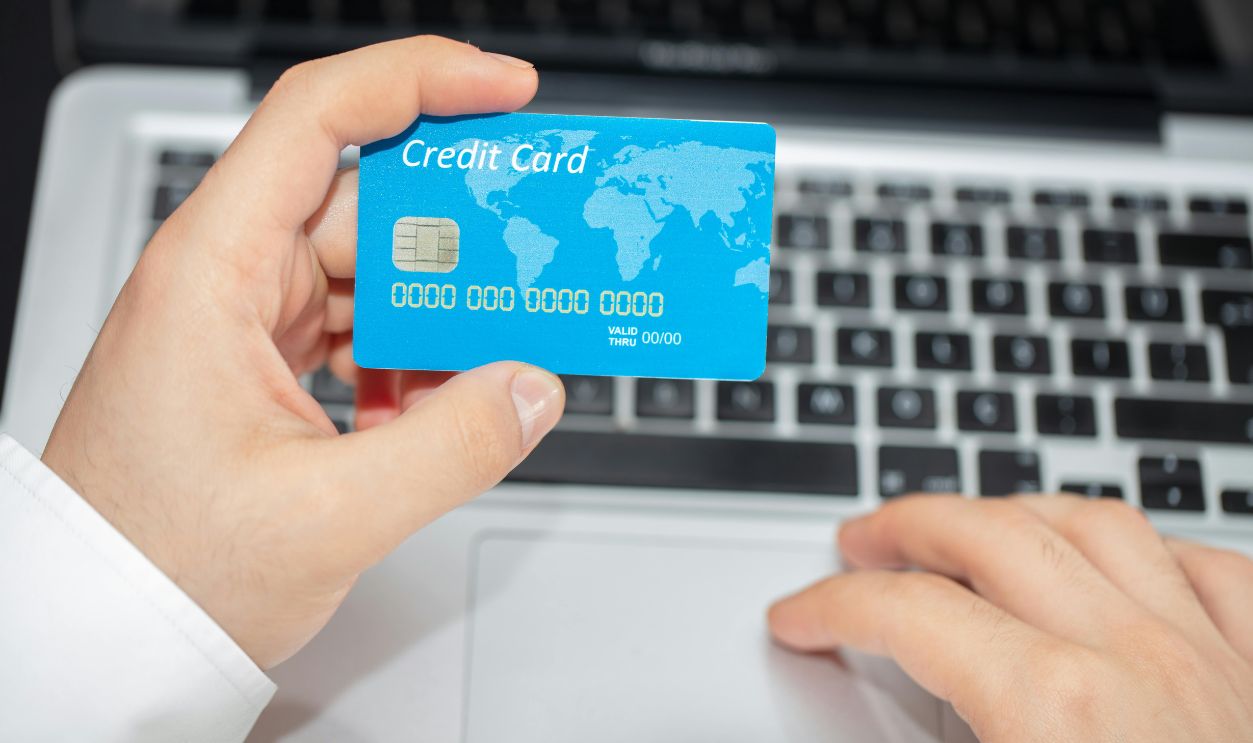
Maxed Credit CardErcan Şenkaya, Pexels

Advertisement

Closing Doesn’t Erase History Overnight

If you close a card in good standing, it can remain on your credit report for up to 10 years. It continues contributing to your credit history during that time. The immediate impact usually comes from utilization—not age.

Teenage girl sitting in a cafe shopping onlineAndrea Piacquadio, Pexels

Advertisement

Average Age Still Shifts Over Time

Even though closed accounts can stay on your report for years, once they eventually fall off, your average age can drop. If that card was your oldest account, losing it later could gradually weaken your history profile.

Busy freelancer working on laptop at homeGeorge Milton, Pexels

Advertisement

Utilization Is A Bigger Deal Than Most People Realize

Credit utilization measures how much of your available credit you’re using. Experts recommend keeping it under 30%, but people with FICO scores above 800 often keep it under 10%. Closing a card reduces your total credit limit instantly.

Never Getting Back TogetherAntoni Shkraba Studio, Pexels

Advertisement

The Math Changes—Even If You Don’t

Imagine you have $10,000 in total credit and carry a $1,000 balance. That’s 10% utilization. Close a card with a $5,000 limit and suddenly you only have $5,000 available. Now that same $1,000 balance equals 20%.

A Woman using a LaptopNataliya Vaitkevich, Pexels

Advertisement

Same Spending, Different Optics

You didn’t swipe more. You didn’t miss a payment. But mathematically, you now look riskier. Credit scoring models care about ratios and patterns. Lower available credit can quietly nudge your score downward.

Woman is paying at store with credit card.Andrea Piacquadio, Pexels

Advertisement

Payment History Is Still King

On-time payments remain the biggest factor at 35% of your score. But utilization and credit age together account for nearly half of the formula. Closing an old account can weaken both—even if you’re financially responsible.

Photo of a Woman Holding a Paper with Charts Near Her LaptopKampus Production, Pexels

Advertisement

What If The Card Has No Annual Fee?

If the card costs nothing to keep open, it may be doing more good than harm. Its available limit helps your utilization ratio, and its age strengthens your credit profile—even if it rarely leaves your drawer.

Woman Studying Bank StatementsMikhail Nilov, Pexels

Advertisement

Inactive Cards Don’t Stay Open Forever

Many issuers close accounts after 12–24 months of inactivity. If that happens, your available credit disappears overnight. That sudden drop in total credit can spike your utilization without you changing your spending at all.

Scam victimsShutterstock

Advertisement

A Small Charge Solves The Problem

A simple fix? Put a small recurring charge on the card—like a streaming service—and set up automatic payment. That keeps the account active, preserves your credit history, and prevents surprise closures.

Woman working at homeVlada Karpovich, Pexels

Advertisement

You Don’t Need To Carry A Balance

There’s a persistent myth that carrying a balance helps your credit score. It doesn’t. You just need activity and on-time payments. Paying interest doesn’t improve your score—it just costs you money.

Person looking over Credit ReportLIGHTFIELD STUDIOS, Adobe Stock

Advertisement

Zero Balance Still Helps You

card with a zero balance still contributes to your total available credit. That lowers your utilization percentage overall. Even unused, it’s quietly helping your credit profile look stronger to lenders.

Chelsea Handler factsShutterstock

Advertisement

Timing Matters Before Big Loans

Planning to apply for a mortgage or auto loan? Even a 20–40 point drop in your credit score can move you into a different interest rate tier. Over time, that difference can cost thousands—sometimes much more.

LoanRDNE Stock project, Pexels

Advertisement

Credit Mix Plays A Role Too

FICO scoring also considers credit mix, which makes up about 10% of your score. Maintaining older revolving accounts can slightly strengthen your overall profile, especially if you don’t have many open credit lines.

An Accountant's WorkspaceTima Miroshnichenko, Pexels

Advertisement

When Closing Might Make Sense

If the card carries a high annual fee and you’re not getting value from it, paying to preserve credit age may not be worth it. The math changes when real money leaves your pocket each year.

Female person or freelancer with paperwork on computer in financial planRene L, Adobe Stock

Advertisement

Another Exception: Overspending Risk

If keeping the card open tempts you into overspending or accumulating debt, closing it might be the safer move. A slightly lower credit score is far better than carrying high-interest balances.

Your Credit Report Takes A HitLukas, Pexels

Advertisement

Credit Is About Patterns

Credit scoring models measure consistency, history, and risk patterns. Longer history and lower utilization signal stability. Closing an old account changes those patterns immediately—even if your habits stay the same.

A person budgeting with a calculatorKittiphan, Adobe Stock

Think Before You “Clean Up”

It feels productive to close unused accounts. But sometimes the smartest move is doing nothing. Letting an old, fee-free card sit quietly can be one of the easiest ways to protect your score.

A Woman examining billsNataliya Vaitkevich, Pexels

Advertisement

The Bottom Line

If the card has no annual fee and doesn’t encourage debt, keeping it open is usually the smarter play. That old piece of plastic might be quietly strengthening your credit score—without costing you a dime.

Shot of a smiling teenage girl holding a credit card and using a laptop at home.VioletaStoimenova, Getty Images

Advertisement

You Might Also Like:

I was going to pay my rent with my tax rebates as direct deposits. Now there's an issue. Rent is due and checks take two weeks. Help?

Useless Items Collectors Still Pay Good Money For

Sources:  123


READ MORE

Upgrades You Should Implement To Increase Your Property Value

The housing market is competitive, to say the least. If you want your home to stand out on the market, here are some things you can do to make it seem brand new.
December 19, 2024 Ethan Vestby
Last Will

Things You Need In Your Will That Too Many People Forget

Think your will is complete? Even the most carefully crafted ones often miss necessary elements that could leave your family in limbo. If you want it to be a peaceful ride, continue reading.
January 15, 2026 Miles Brucker

Simple Career Changes To Make More Money In 2025

If you're looking to change tracks in 2025 and jump into a new career but aren't looking to go back to school or spend time and money retraining in an entirely new profession, here are some career changes you can make to make more money next year.
January 1, 2025 Jack Hawkins

My husband hid over $100K in gambling debts while I thought he had the money invested. At 55, our retirement is off-track. What happens next?

It can be devastating to discover hidden debt if you're in your 50s, but there are steps you can take to protect your future and your retirement.
October 29, 2025 Sammy Tran

Laid Off In Your 50s: Strategies For Moving Forward

Losing your job is bad enough, but being laid off in your 50s hits especially hard. We look at strategies for getting back on track.
October 30, 2025 Alex Summers

My Lease Is Ending And I’m Over The Mileage Limit. Should I Buy It Out Or Turn It In?

You’re cruising toward the end of your lease, feeling pretty good… until you check the odometer and your contract. You’re thousands of miles over the limit, and those little extra miles are about to cost real money. Do you pay the mileage fees and turn it in, or buy out the car and keep it? The good news is that you actually have more control here than it feels like.
December 3, 2025 Peter Kinney


Disclaimer

The information on MoneyMade.com is intended to support financial literacy and should not be considered tax or legal advice. It is not meant to serve as a forecast, research report, or investment recommendation, nor should it be taken as an offer or solicitation to buy or sell any securities or adopt any particular investment strategy. All financial, tax, and legal decisions should be made with the help of a qualified professional. We do not guarantee the accuracy, timeliness, or outcomes associated with the use of this content.


Dear reader,


It’s true what they say: money makes the world go round. In order to succeed in this life, you need to have a good grasp of key financial concepts. That’s where Moneymade comes in. Our mission is to provide you with the best financial advice and information to help you navigate this ever-changing world. Sometimes, generating wealth just requires common sense. Don’t max out your credit card if you can’t afford the interest payments. Don’t overspend on Christmas shopping. When ordering gifts on Amazon, make sure you factor in taxes and shipping costs. If you need a new car, consider a model that’s easy to repair instead of an expensive BMW or Mercedes. Sometimes you dream vacation to Hawaii or the Bahamas just isn’t in the budget, but there may be more affordable all-inclusive hotels if you know where to look.


Looking for a new home? Make sure you get a mortgage rate that works for you. That means understanding the difference between fixed and variable interest rates. Whether you’re looking to learn how to make money, save money, or invest your money, our well-researched and insightful content will set you on the path to financial success. Passionate about mortgage rates, real estate, investing, saving, or anything money-related? Looking to learn how to generate wealth? Improve your life today with Moneymade. If you have any feedback for the MoneyMade team, please reach out to [email protected]. Thanks for your help!


Warmest regards,

The Moneymade team