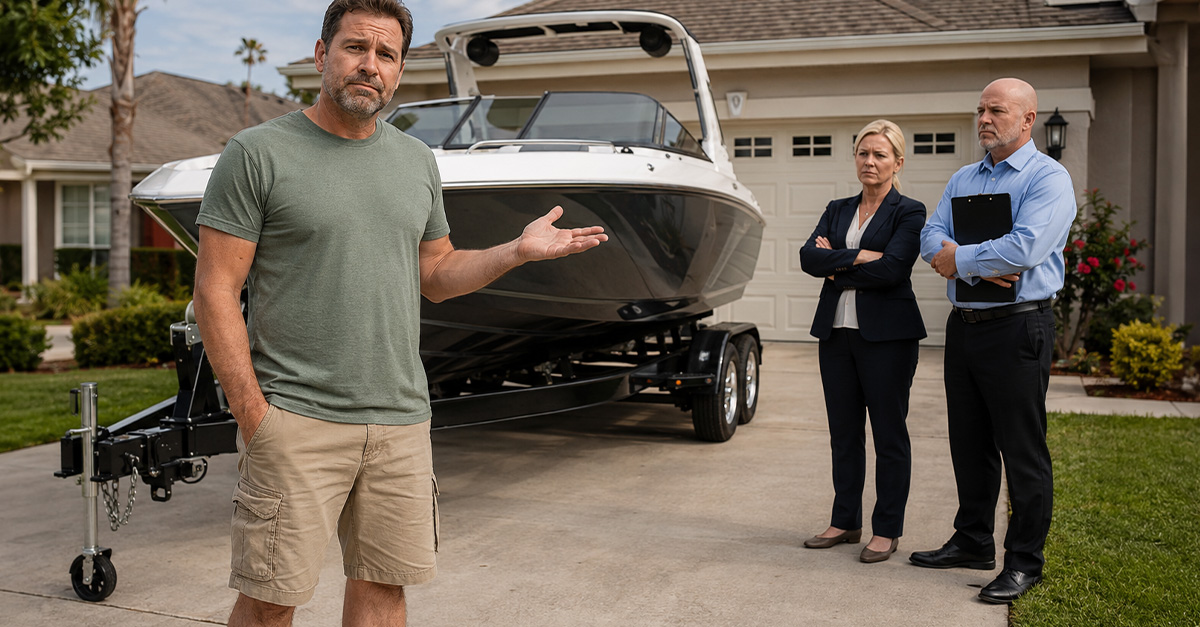
When The Driveway Drama Begins
You finally did it. You bought the boat. Maybe it’s shiny, maybe it’s used, maybe it smells faintly like lake weekends and questionable sunscreen. Either way, it’s yours. Then you parked it in your own driveway, admired it for five glorious minutes, and got the HOA email: “Please remove the boat.”
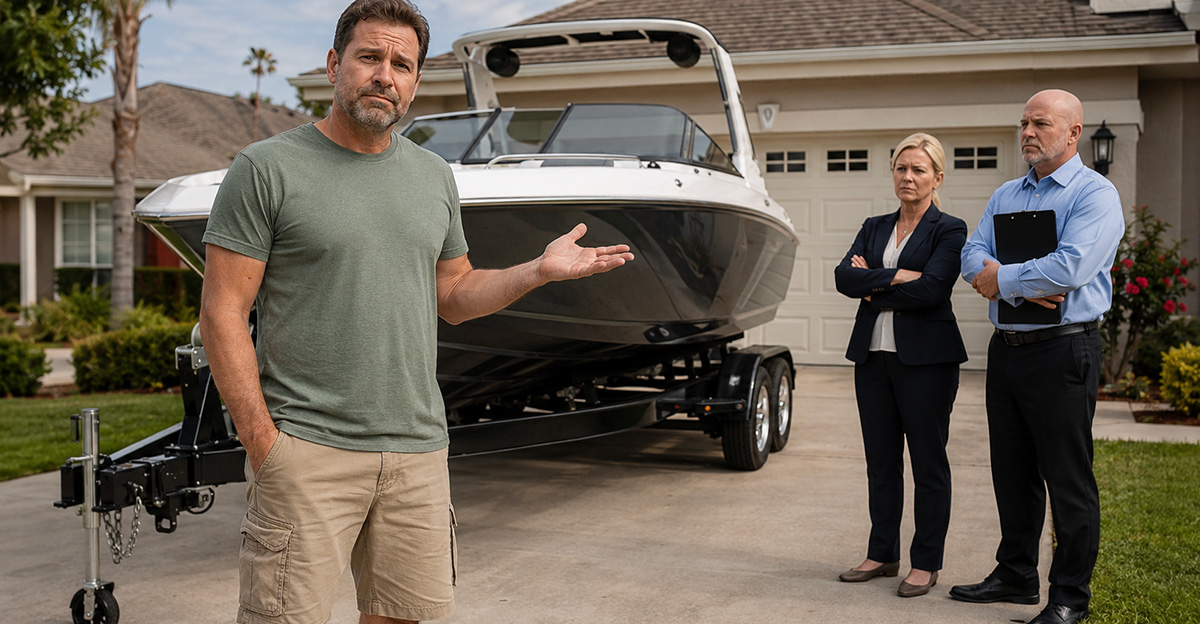
Your Driveway Is Yours, But Not Always Fully Yours
This is the part that feels unfair. You bought the house, pay the mortgage, maintain the lawn, and somehow a neighborhood committee can still tell you what can sit in your driveway. That’s because many HOA communities come with rules that homeowners agree to when they buy in.

Start With The Documents, Not The Drama
Before firing off an angry reply, find your HOA documents. Look for the CC&Rs, bylaws, architectural rules, parking rules, and community guidelines. The boat rule may be hidden under “recreational vehicles,” “trailers,” “visible storage,” or “temporary parking,” so do not stop after one quick skim.

Find The Exact Rule They Say You Broke
Ask the HOA to identify the specific rule you violated. Not a vague “community standards” statement. Not a “we’ve always done it this way” shrug. You want the rule number, wording, and enforcement policy. That gives you something real to work with instead of arguing against fog.

Check Whether Boats Are Actually Banned
Some HOAs ban boats completely from driveways. Others allow them for a limited time, like 24 or 48 hours, for loading, cleaning, or maintenance. Some only ban boats if they are visible from the street. The details matter, because “no boat storage” and “no boat ever” are different things.
Measure The Difference Between Parking And Storage
Your HOA may care less about space and more about duration. A boat parked overnight while you prep for a weekend trip may be treated differently from a boat sitting there all summer. If the rule says “storage,” you may have room to argue that short-term parking should be allowed.

Look For Exceptions And Permits
Many HOA rules include exceptions, even when the warning letter makes it sound hopeless. There may be temporary parking permits, seasonal allowances, hardship exceptions, or architectural review requests. If you only read the scary paragraph, you may miss the tiny sentence that gives you a path forward.

Take Photos Before Moving Anything
Document everything. Take clear photos showing the boat in the driveway, the amount of space around it, whether it blocks sidewalks, sightlines, mailboxes, or neighboring driveways, and whether it creates any safety issue. Good photos can turn “eyesore” complaints into a much more practical conversation.

Check If The Rule Is Being Enforced Fairly
Walk the neighborhood, politely and quietly. Are other people parking campers, trailers, work vans, jet skis, or boats? If the HOA is allowing similar violations but targeting only you, that may be selective enforcement. Do not turn it into gossip. Turn it into calm, dated documentation.

Keep Your First Response Friendly
Your first reply should not sound like a courtroom explosion. Try something simple: “Thanks for letting me know. Could you please send the specific rule and any available permit or appeal process?” This shows you are cooperative while making it clear you expect the HOA to follow its own rules.

Ask For A Hearing Or Appeal
Most HOAs have a process for homeowners to challenge a violation or request a hearing before fines pile up. Use it. Even if you think the rule is silly, showing up calmly with photos, measurements, and a reasonable proposal often works better than ignoring the letter.

Offer A Practical Compromise
HOAs love rules, but they also love solutions. You might propose keeping the boat there only during boating season, parking it behind a gate, using a fitted cover, moving it after 48 hours, or screening it from street view. A compromise can save everyone time and irritation.

Consider Whether Visibility Is The Real Issue
Sometimes the boat is not the problem. The view of the boat is the problem. If your community rules focus on curb appeal, adding a fence, hedge, side-yard parking pad, or approved screen may solve the issue. Of course, get approval before building anything new.

Watch The Fine Print On Trailers
Your HOA may technically allow boats but ban trailers, or allow vehicles but not recreational equipment. Since most driveway boats sit on trailers, this detail can matter. Read the language closely. A rule about “commercial trailers” may not apply the same way as a rule about recreational trailers.

Check Local And State Law
HOA rules are powerful, but they are not magic. Some states or municipalities limit what HOAs can regulate, especially around parking, vehicles, and property use. Local ordinances may also affect boats, trailers, street parking, and sightline safety. This is where a local attorney or housing office can help.

Do Not Ignore The Warning Letter
Ignoring the HOA may feel satisfying for about three days. Then come fines, late fees, legal notices, and possibly a lien depending on your state and documents. Even if you think the HOA is wrong, respond in writing and keep records. Silence rarely helps your case.

Avoid The “But It’s My Property” Trap
You are not wrong to feel that way. But in an HOA, ownership comes with private community restrictions. The stronger argument is not “I can do whatever I want.” It is “Here is what the rules actually say, and here is a reasonable way for me to comply or request approval.”

Talk To Your Neighbors Carefully
If neighbors support you, that can help. Maybe they do not mind the boat, or maybe several people want the rule changed. Keep the tone friendly. Do not frame it as a war against the board. Frame it as a practical update for a community where people own outdoor toys.

Look Into Changing The Rule
If the rule is outdated or overly strict, you may be able to push for a change. Many communities require a board vote or homeowner vote. This takes patience, but if enough residents have boats, trailers, campers, or similar issues, the board may be more flexible than expected.

Know When To Move The Boat Temporarily
Sometimes the smartest move is temporary retreat. Moving the boat to a marina, storage lot, friend’s property, or side yard while you appeal can stop fines from growing. It does not mean you lost. It means you are buying time and keeping the dispute from getting expensive.
Calculate The True Cost Of Fighting
Being right can still be pricey. HOA disputes can involve filing fees, attorney letters, missed time, and emotional energy. Before digging in, compare the cost of legal action with the cost of off-site storage or a negotiated compromise. The most satisfying answer is not always the cheapest one.

Get Everything In Writing
Phone calls are fine for tone, but written records are your safety net. After any conversation, send a brief follow-up email summarizing what was discussed. Save letters, photos, rule excerpts, permit applications, and board responses. If things escalate, your paper trail becomes your best friend.

Consider A Lawyer For Serious Pushback
If fines are mounting, the HOA is threatening legal action, or you believe the rule is being applied unfairly, talk to an attorney who handles HOA or real estate disputes in your area. A short consultation may clarify your options and help you avoid making things worse.

Stay Calm At Board Meetings
Board meetings can get weirdly intense. Someone mentions a boat, and suddenly everyone has an opinion about property values, neighborhood charm, and “what this community is becoming.” Stay calm. Bring facts. Speak briefly. Thank people for their time. You want to look reasonable, not like the villain of the marina.

Think About Future Buyers Too
Even if you win permission, remember resale. Some buyers love a boat-friendly driveway. Others see it as clutter. If you plan to sell soon, a neat, screened, rule-compliant setup will be easier to defend than a driveway that looks like a dock exploded onto the suburbs.

The Best Outcome Is Usually A Paper Trail And A Plan
Your goal is not to defeat the HOA in glorious battle. Your goal is to keep your boat, avoid fines, and preserve peace with the people who live around you. That usually means reading the rules, asking smart questions, proposing a solution, and documenting every step.

Final Thoughts For Boat Owners In HOA Land
So, can the HOA make you move your boat? Maybe. But “maybe” is not the same as “automatically.” Read the rules, check the exact language, ask about permits or appeals, and stay polite but firm. Your driveway may have room for the boat, but your best tool is the rulebook.

You May Also Like: