
How To Make A Personal Budget

How To Make A Personal Budget


April 7, 2025 | Penelope Singh

How To Make A Personal Budget


Tough Times Call For Tough Measures

With all the uncertainty in the economy and job market these days, we need a reliable strategy to keep some money in our pocket at the end of each week. The challenges of unexpected expenses and rising prices require planning and smart spending. This is where making a personal budget can help you through the tough times.

Personal Budget Basics

At its most basic level, a personal budget is a statement showing how much money you’re bringing in, how much you’re spending, and how much you have left over at the end of a set time period. You can choose what time period you want to budget for. Since many utility bills, rent, mortgage payments etc. are paid out monthly, it may make more sense to go month-to-month. If things are tighter, a weekly budget can help you really exercise control.

person holding paper near pen and calculatorKelly Sikkema, Unsplash

Advertisement

What To Use

Any sort of spreadsheet software will work for a personal budget. There are also all sorts of apps you can download to make the process easier. The math isn’t complicated, but you will have to keep or have access to accurate financial records, receipts and statements. You probably have a rough idea of your financial situation, especially if you’re having trouble paying your bills, but a proper budget will give you better insight on what’s going on.

Income

Start by adding up all the money you have coming in from every source. Look at how much money you’re bringing in from jobs, side hustles, garage sales, etc. Consider how much money you’re making. Are there other part-time job opportunities or side hustles you could take on?
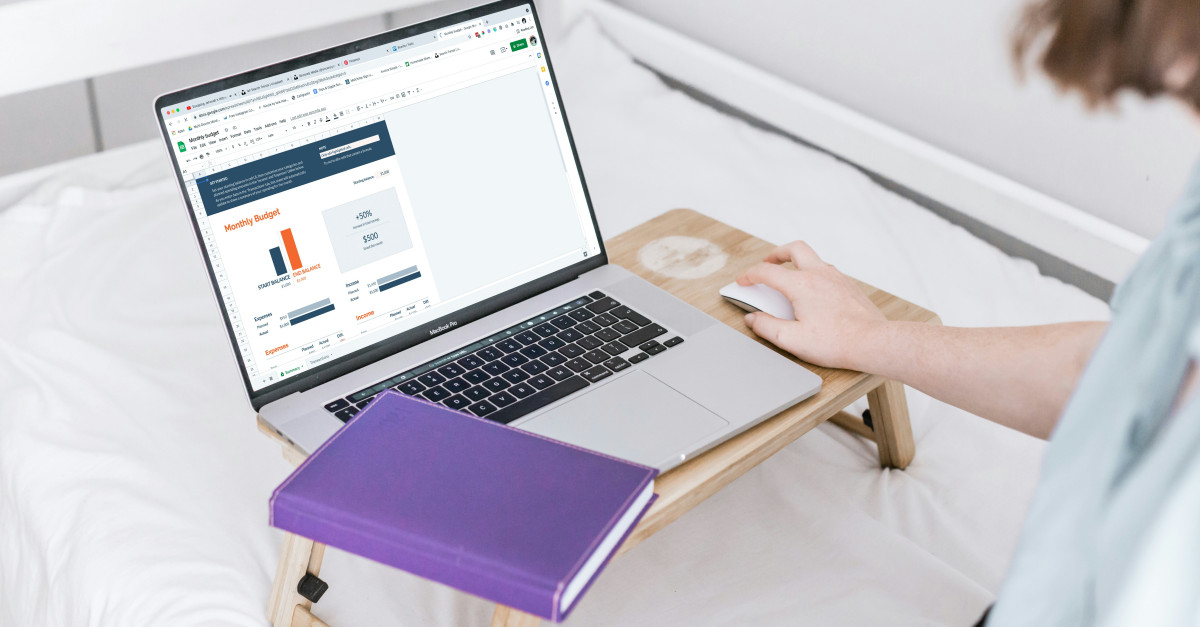
a person using a laptop on a bedSincerely Media, Unsplash

Advertisement

Expenses

Here is where things get interesting. You’ll want to keep receipts of all the money you spent in stores, restaurants, etc. and examine bank and credit card statements to find service fees, interest charges, etc. If your expenses are higher than your income, you need to take action so you don’t start sinking into debt.

Things You Need Vs Things You Want

Take a long, hard look at your receipts and credit card statements to see where you’ve been spending your money. Ask yourself if some of the things you paid for over the month were really necessary or worth it. There are many strategies you can take to reduce expenses, whether it’s eating out less, or making your home more energy-efficient.

Photo By: Kaboompics.comPhoto By: Kaboompics.com, Pexels

Advertisement

Where To Put Your Money

If you have money left over at the end of the month, you’re already on the right track. Whether your goal is to save for a big-ticket item like a car or vacation, or just put money away for the long term, sound budgeting is the way to get ahead of the game. You can investigate different strategies of budgeting if you want to adjust your approach. Zero-based budgeting is one popular method to get the most out of your money

Get In The Habit

Now that you’ve successfully budgeted for one month, don’t stop there. Start again on the first of the following month, using your last month's budget as a template. Knowing where you’re spending too much is the first step to getting your financial house in order. Over time, the work you’ve put in on your personal budgeting will put your finances on the right track and make you an active agent in your own financial success.

You May Also Like:

15 Ways To Put More Money Aside For Your Future In 2025

The Most Expensive Habits We Have—And How To Break Them

Top 10 Things People Waste Their Money On

Sources: 1, 2, 3


READ MORE

A concerned man with a woman standing behind him.

I buy gift cards with cash and use them instead of my debit card so the bank can’t track me. My wife thinks they’re still traceable. Is she right?

Are gift cards really untraceable? Learn how banks track spending, what gift cards hide, and why they still leave a trail.
April 16, 2026 Allison Robertson
A young man with a credit card and his concerned father behind him.

I started using prepaid credit cards so I can’t be tracked, but my dad says they’re still traceable. Is he right?

Are prepaid credit cards really untraceable? Here’s how they work, what can be tracked, and why they aren’t as anonymous as you think.
April 17, 2026 Allison Robertson

I'm about to turn 80. I've lived a good life and want to invest the rest of my money. My grandson says I should choose cryptocurrency. Is he right?

Turning 80 and wondering whether to invest in cryptocurrency? Here’s a simple, engaging guide to whether crypto makes sense for older investors, and what safer alternatives may fit retirement better.
April 17, 2026 Jack Hawkins

I legally changed my name last month, but my boss still issues my paychecks in my old name and my bank is refusing them. What can I do?

Legally changed your name but your employer still issues paychecks in your old name? Here’s what to do when your bank refuses the check, from payroll fixes to legal options.
April 17, 2026 Jack Hawkins

I found a safe in my dad's house filled to the brim with old American coins. The bank said I can't deposit them. Why not?

Found a safe full of old American coins and the bank refused to deposit them? Here is why banks say no, what old coins may be worth, and the smartest next steps to take.
April 17, 2026 Jack Hawkins
close-up-of-a-sad-woman

I found out my coworker is recording conversations at work. Is that allowed?

You’re just having a normal conversation at work—maybe venting a little, maybe joking around—when you suddenly find out a coworker has been recording chats. That’s the kind of thing that instantly makes you second-guess everything you’ve said. It’s not just awkward, it’s uncomfortable. And naturally, the first thing you wonder is whether they’re even allowed to do that.
April 16, 2026 J. Clarke


Disclaimer

The information on MoneyMade.com is intended to support financial literacy and should not be considered tax or legal advice. It is not meant to serve as a forecast, research report, or investment recommendation, nor should it be taken as an offer or solicitation to buy or sell any securities or adopt any particular investment strategy. All financial, tax, and legal decisions should be made with the help of a qualified professional. We do not guarantee the accuracy, timeliness, or outcomes associated with the use of this content.


Dear reader,


It’s true what they say: money makes the world go round. In order to succeed in this life, you need to have a good grasp of key financial concepts. That’s where Moneymade comes in. Our mission is to provide you with the best financial advice and information to help you navigate this ever-changing world. Sometimes, generating wealth just requires common sense. Don’t max out your credit card if you can’t afford the interest payments. Don’t overspend on Christmas shopping. When ordering gifts on Amazon, make sure you factor in taxes and shipping costs. If you need a new car, consider a model that’s easy to repair instead of an expensive BMW or Mercedes. Sometimes you dream vacation to Hawaii or the Bahamas just isn’t in the budget, but there may be more affordable all-inclusive hotels if you know where to look.


Looking for a new home? Make sure you get a mortgage rate that works for you. That means understanding the difference between fixed and variable interest rates. Whether you’re looking to learn how to make money, save money, or invest your money, our well-researched and insightful content will set you on the path to financial success. Passionate about mortgage rates, real estate, investing, saving, or anything money-related? Looking to learn how to generate wealth? Improve your life today with Moneymade. If you have any feedback for the MoneyMade team, please reach out to [email protected]. Thanks for your help!


Warmest regards,

The Moneymade team