
Highway To Home Sweet Home
So you’ve done the math, stared at your savings account, and asked the big question: could $250,000 bankroll a full-time RV retirement? The idea is tempting—sunsets in Arizona, summers in the Rockies, no lawn to mow, and your backyard changing whenever you feel like it. But as dreamy as the open road sounds, retirement math still applies—even if your house has wheels.
Using retirement planning guidance and real-world RV living insights, let’s break down whether $250k can realistically support you and your husband on the road full time.

The First Question: How Much Do You Actually Need To Retire?
Retirement planners often suggest aiming to replace about 70% to 80% of your pre-retirement income to maintain a similar lifestyle. The exact number depends on your expenses, debt, and goals. Some people need less because they’re no longer saving for retirement or paying a mortgage. Others need more—especially if travel is a priority.

The 4% Rule And What It Means For $250k
A commonly cited guideline is the 4% rule. It suggests you can withdraw about 4% of your retirement savings per year, adjusted for inflation, with a reasonable chance of not running out of money over 30 years.
On $250,000, that’s roughly $10,000 per year—or about $833 per month. That number alone likely won’t fund a full-time RV lifestyle unless you have additional income streams.

Social Security Changes The Equation
If you and your husband are eligible for Social Security, your benefits become a major piece of the puzzle. For many retirees, Social Security replaces around 40% of pre-retirement income. If combined benefits total, say, $3,000 per month, and you add the $833 from savings withdrawals, suddenly your income looks closer to $3,800 per month. That’s a very different scenario than relying on savings alone.

Timing Your Retirement Matters
The age at which you claim Social Security affects your monthly benefit. Claiming early reduces payments, while delaying increases them. If your $250k needs to bridge a gap before Social Security kicks in, that changes the math significantly. The fewer years you need to draw from savings alone, the more realistic the plan becomes.

RV Living Isn’t Automatically Cheap
There’s a myth that living in an RV is dramatically cheaper than traditional housing. It can be—but it isn’t automatically. Campground fees, fuel, maintenance, insurance, and repairs all add up. Unlike a stationary home, your entire house vibrates down the highway regularly. Things break.

Campground Fees Add Up
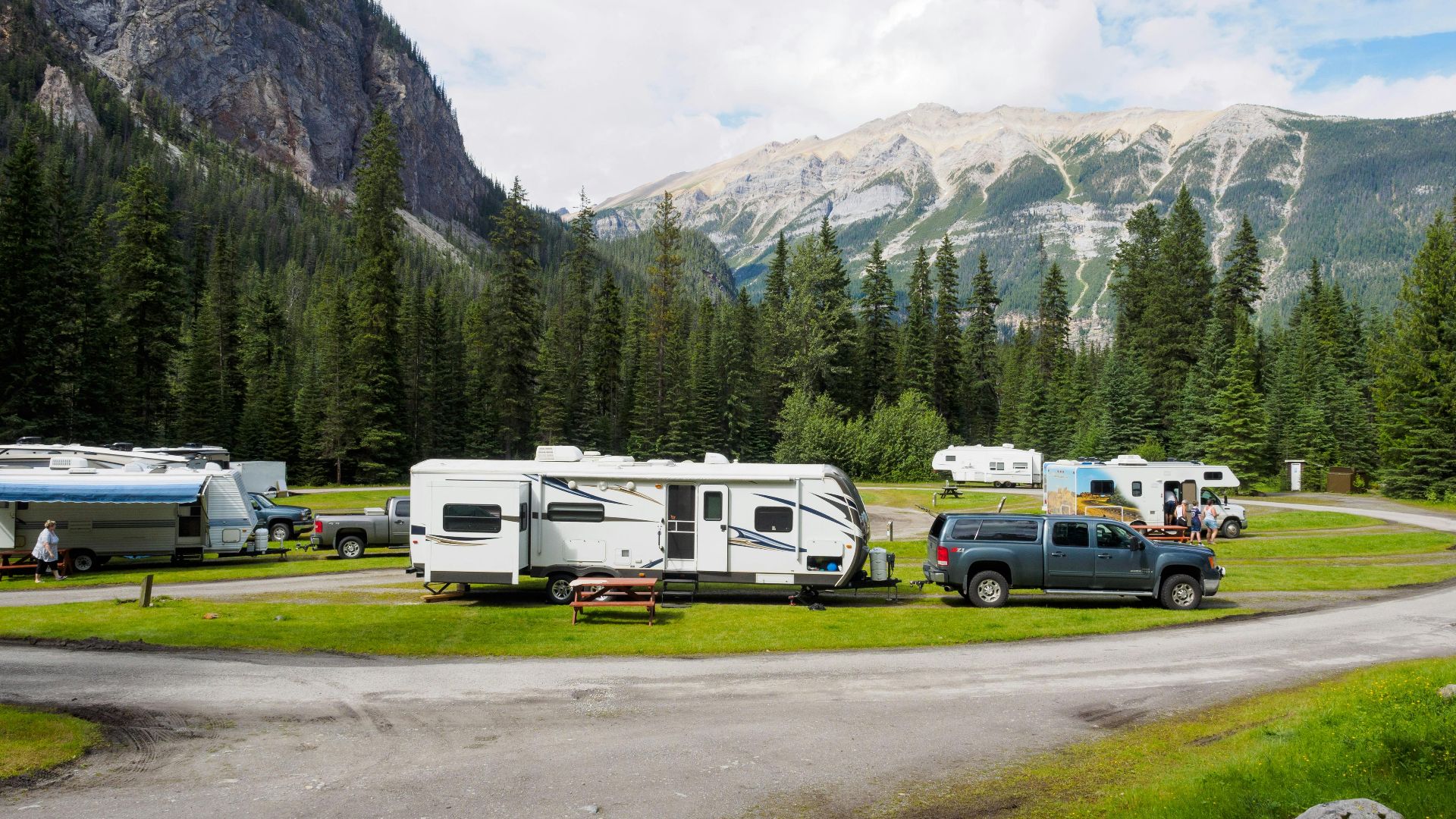
Nightly campground stays can range from $25 to over $100 depending on location and amenities. Many full-timers cut costs by staying monthly, joining campground membership programs, or boondocking. If you average $800 to $1,500 per month for campsites, that becomes one of your biggest recurring expenses.
Fuel Costs Fluctuate
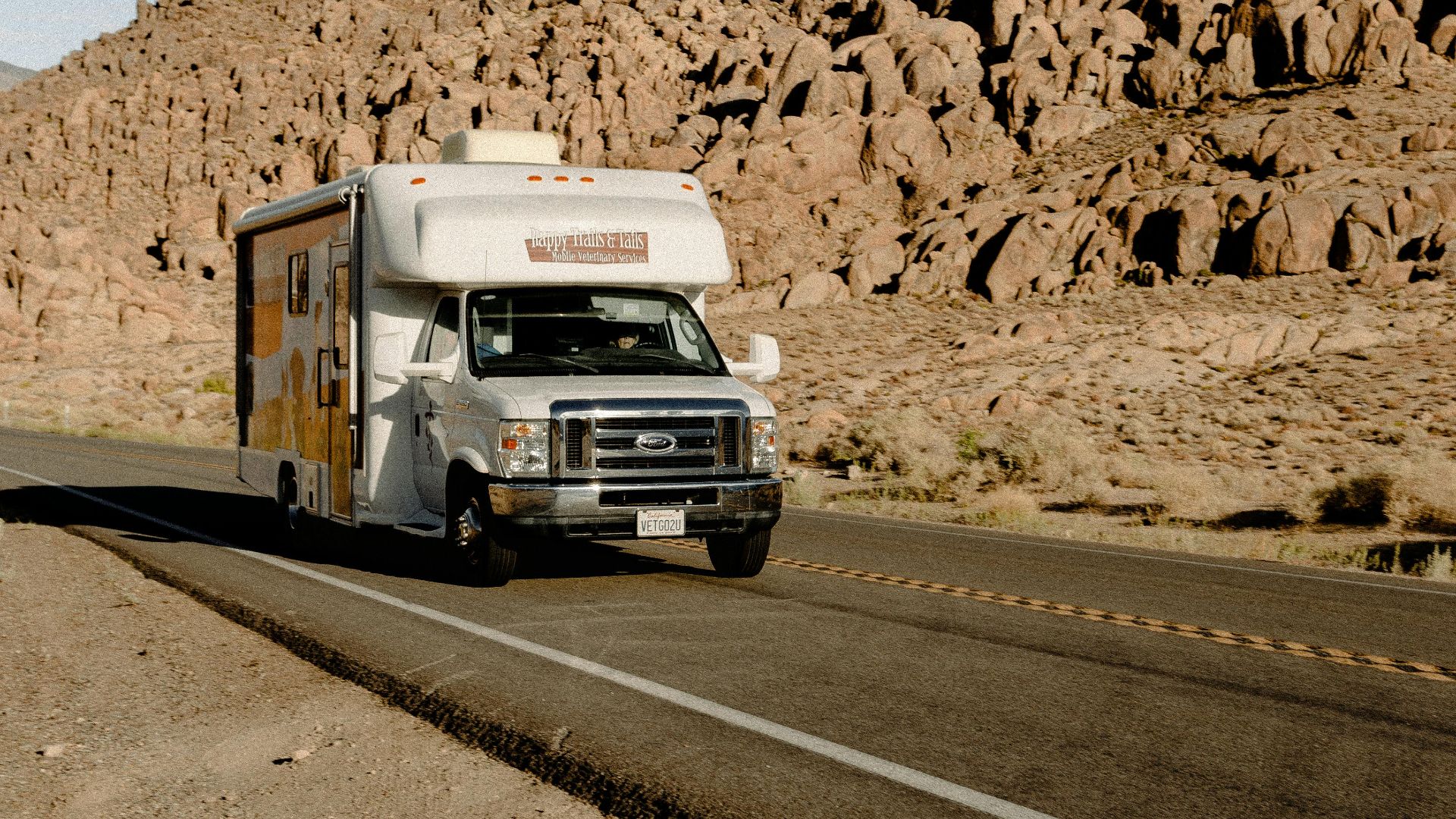
Driving a large motorhome or towing a trailer isn’t exactly fuel-efficient. Travel style matters. If you move every few days, your gas bill will look very different than if you stay put for a month at a time. Slower travel equals lower fuel costs—and less wear and tear.
Maintenance Is Non-Negotiable
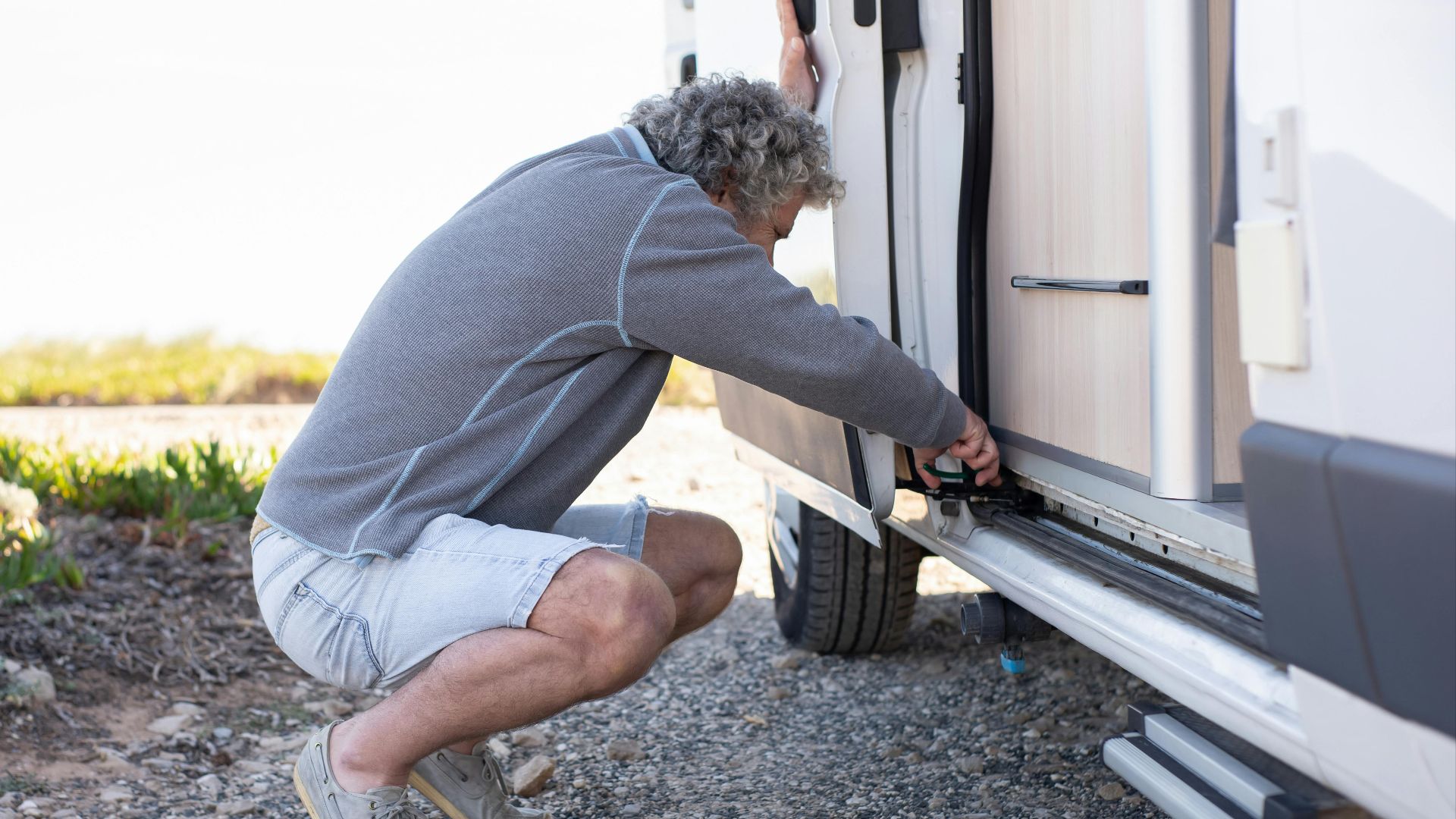
RVs require consistent maintenance. Tires, brakes, roof sealing, slide-outs, plumbing—there’s always something to service. Budgeting at least a few thousand dollars annually for maintenance and repairs is wise. Unexpected breakdowns can cost significantly more.
Insurance And Registration
You’ll need RV insurance, possibly vehicle insurance if you tow, and registration costs. Insurance premiums vary widely based on RV type and coverage levels. These expenses aren’t massive compared to housing in many cities, but they’re not trivial either.

Healthcare Is The Wild Card
Healthcare is often the biggest retirement wildcard. If you’re not yet Medicare-eligible, private insurance premiums can be steep. Even with Medicare, supplemental coverage, prescriptions, and out-of-pocket costs require budgeting. Underestimating healthcare expenses is one of the most common retirement mistakes.

Your RV Purchase Strategy Matters
Will you buy the RV outright with part of the $250k? Or finance it? If you spend $100,000 on an RV in cash, your remaining investable assets drop to $150,000. Using the 4% rule, that shrinks annual withdrawals to about $6,000 per year. That’s a meaningful difference.

Depreciation Is Real
Unlike traditional homes, RVs typically depreciate over time. They are vehicles, not appreciating real estate. Buying used can reduce depreciation impact, but it’s still something to factor into long-term planning.
Downsizing Can Free Up Cash
If you’re selling a home and adding proceeds to your savings, your situation may be much stronger than $250k alone suggests. For some couples, RV living is part of a broader downsizing strategy that eliminates property taxes, utilities, and home maintenance costs.

Lifestyle Choices Drive Costs
Do you plan to dine out often? Visit national parks? Take excursions and tours? Or live simply and cook most meals inside your rig? Your spending habits will determine whether $250k feels tight or manageable.

Emergency Fund Is Essential
Retirement planning guidance emphasizes having cash reserves for emergencies. On the road, that might mean a blown transmission or medical emergency. Keeping a portion of your savings liquid—rather than fully invested—provides flexibility.

Inflation Still Exists On The Road
Even if your home has wheels, inflation doesn’t disappear. Campground fees, fuel, groceries, and healthcare costs rise over time. Any retirement plan needs to account for rising expenses, especially over a 20- to 30-year horizon.
Part-Time Work Is An Option
Many RV retirees take on seasonal or remote work. Campground hosting, freelance work, consulting, or temporary gigs can supplement income. Even earning an extra $1,000 per month can dramatically extend the life of your savings.

Geographic Flexibility Is Your Superpower
One major advantage of RV living is the ability to move to lower-cost areas. You can avoid high-tax states and expensive cities. This flexibility can help stretch a modest retirement budget further than a fixed location might allow.

Taxes Still Matter
Depending on your state residency, taxes on Social Security and retirement withdrawals vary. Choosing a tax-friendly domicile state can improve your overall financial picture. Small differences in taxation compound over years of retirement.

Longevity Risk Is Real
One of the biggest concerns in retirement planning is outliving your savings. If you retire in your early 60s, you could need income for 25 to 35 years. With only $250k, the margin for error is smaller—especially without significant guaranteed income sources.

The Comfort Test
Beyond math, there’s the emotional side. Would you feel secure withdrawing from savings during a market downturn? Could you handle a $15,000 engine repair without panic? If the answer is no, you may need a larger cushion before committing to full-time RV life.

So—Is $250k Enough?
On its own, $250,000 likely isn’t enough to fund a full-time RV retirement for two people over decades. Using standard withdrawal guidelines, it generates roughly $10,000 per year—hardly enough to cover core expenses.
However, when combined with Social Security, a paid-off RV, controlled travel habits, modest lifestyle choices, and possibly part-time income, it can become realistic—especially if you’re disciplined and flexible.
The open road can be surprisingly affordable—but it rewards careful planners, not impulsive dreamers.
You May Also Like: