
Apparently, Your Work Shirt Has A Payment Plan
Every paycheck arrives with another uniform deduction. It may not seem like much, but after months of paying for shirts, pants, replacements, and other required clothing, the total starts adding up. If your employer requires the uniform, how much can they legally make you pay?

Start Adding Those Deductions Up
A $12 deduction sounds harmless until it appears 26 times a year. That's $312 gone from your pay. A $20 deduction every two weeks costs $520 annually. At $30, you're losing $780 a year just to dress for work.

There Isn't One Nationwide Dollar Cap
Federal law doesn't simply say an employer can deduct no more than $20 per paycheck for uniforms. Instead, the Fair Labor Standards Act limits deductions based partly on your wages. Required uniform expenses cannot cut into the federal minimum wage or required overtime.

Required Uniforms Are A Business Expense
The U.S. Department of Labor says that when a uniform is required by law, an employer, or the nature of the business, its cost and maintenance are considered a business expense of the employer. Federal law can still allow employees to bear some of that expense, but important restrictions apply.

Minimum Wage Creates A Financial Floor
The federal minimum wage remains $7.25 per hour for covered nonexempt workers. If you earn exactly that amount, your employer generally can't deduct required uniform expenses if the deduction would push your wages below the federal minimum.

The Labor Department Gives A Useful Example
The Department of Labor gives an example involving an employee earning $7.75 per hour and working 30 hours. That's 50 cents per hour above the federal minimum. Under that example, the employer could deduct no more than $15 for the uniform that week.

Earn Exactly $7.25? The Math Changes
If you earn $7.25 per hour, there's no cushion above the federal minimum. The Labor Department says an employer can't deduct required uniform expenses or make you purchase the uniform if doing so would reduce your wages below the required federal minimum.
 Nicoleta Ionescu, Shutterstock
What If You Make $15 An Hour?
Workers earning well above the federal minimum give employers more room under federal law. At $15 per hour, there's a much larger gap between your wage and the $7.25 federal floor. But that doesn't automatically make every uniform deduction legal.

Your State Minimum Wage Matters Too
Many states have minimum wages above the federal rate and additional rules governing uniforms, business expenses, and payroll deductions. Employers must comply with applicable federal and state requirements. A deduction allowed in one state may be prohibited in another.
 🇻🇳🇻🇳 Viet Anh Nguyen 🇻🇳🇻🇳, Pexels
Overtime Creates Another Limit
Required uniform costs can't cut into overtime compensation required by the FLSA. That's important because simply looking at your total paycheck may not reveal the problem. If you worked overtime during the week, the wage calculation becomes more complicated.

The Workweek Can Matter
Federal uniform rules focus on whether the expense reduces required wages during the affected workweek. Spreading a large uniform charge across several paychecks doesn't automatically make it legal. Each deduction still has to comply with applicable wage protections.

Uniform Costs Can Be Spread Across Paychecks
Federal guidance allows employers to prorate permissible uniform costs over multiple paydays. So a $10 charge appearing repeatedly isn't automatically illegal. But those deductions still can't violate federal minimum-wage or overtime requirements.

That Could Explain The Recurring Charges
Suppose your uniform package costs $240. Instead of deducting $240 immediately, your employer takes $20 over 12 pay periods. That may be permissible under federal law if wage requirements are satisfied. But you should still know what you're paying for and when the deductions end.

Ask What The Uniform Actually Costs
If money disappears every paycheck, request an itemized explanation. How many uniforms did you receive? What does each item cost? Are you buying or renting them? Are cleaning fees included? When will the deductions stop?
Those are reasonable questions when money is leaving your paycheck.

Check Your Pay Stubs
Pull several months of wage statements and total every uniform-related charge. You may discover you've paid $150. You may discover you've paid $700. Before challenging the policy, determine exactly how much has been deducted.

What Counts As A Uniform?
Not every dress requirement is necessarily treated the same way. A branded polo bearing the company's logo looks much more like a traditional uniform than ordinary black pants you choose yourself. State laws can also define required uniforms differently.

California Goes Much Further
California provides a good example of why state law matters. The California Division of Labor Standards Enforcement says that when an employer requires an employee to wear a uniform, the employer must pay its cost. California wage orders also generally require employers to provide and maintain required uniforms.

California Defines Uniforms Broadly
California wage orders define a uniform to include apparel and accessories of a distinctive design or color. Workers shouldn't assume a payroll deduction is legal simply because the employer labels it a "uniform fee." State protections can go considerably further than federal law.

New York Has Strong Protections Too
New York's Department of Labor identifies deductions for uniform costs and maintenance as illegal wage deductions. It also restricts employers from shifting certain business expenses onto workers through payroll deductions.
Again, location can completely change the answer.
 ORION PRODUCTION, Shutterstock
New York May Require Uniform-Maintenance Pay
In certain circumstances, New York employers can also have obligations involving uniform-maintenance pay. Exceptions can apply, including situations involving qualifying wash-and-wear uniforms or employer-provided laundering.
In other words, sometimes the uniform money may be supposed to flow toward the employee rather than away from them.

Signing A Form Doesn't Necessarily Settle It
You may have signed paperwork authorizing uniform deductions when you were hired. That doesn't automatically make every deduction lawful. State laws can restrict what employers may deduct even with authorization, while federal minimum-wage and overtime protections still apply.

Calling It A Rental Fee May Not Help
Suppose your employer says you aren't purchasing the uniform. Instead, you're paying $8 every week to rent it. That label doesn't automatically eliminate wage-law concerns. Federal protections can still apply, and state law may impose additional restrictions.

Laundry Charges Count Too
Uniform expenses aren't necessarily limited to the purchase price. Federal guidance addresses both the cost and maintenance of required uniforms. If you're charged separately for laundering, cleaning, replacements, or uniform service, include those amounts when calculating what the job is costing you.

What About A Shirt You Damaged?
That can create a different legal question. Normal wear isn't necessarily treated the same as intentionally damaging or failing to return employer property. State rules can be very specific about deductions for lost or damaged equipment.
Don't assume your employer can simply choose a price and remove it from your paycheck.
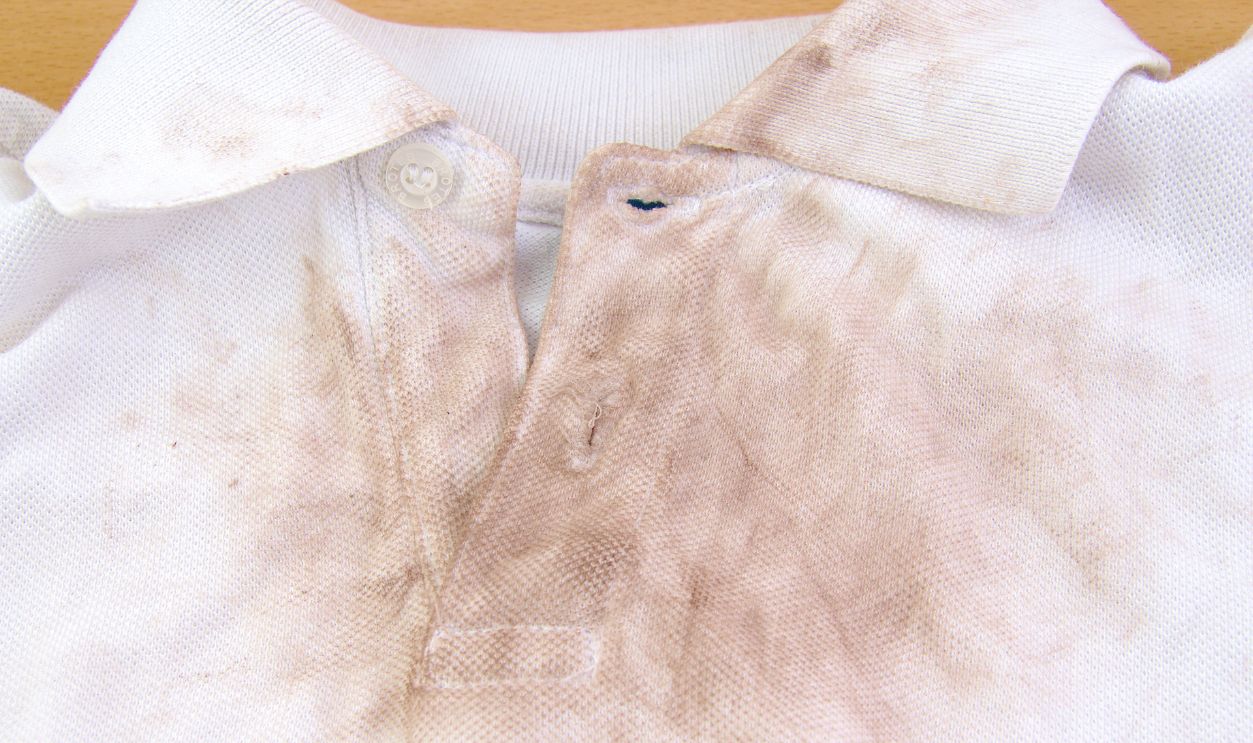
California Addresses Normal Wear And Tear
California wage rules specifically restrict deductions involving normal wear and tear on employer-provided items. That's important if an employer tries to charge you because a work shirt became faded, stained, or worn after months of normal use.

Safety Equipment Can Be Different
Hard hats, respirators, protective footwear, gloves, and other safety equipment may be covered by separate workplace-safety requirements. If your deduction is actually for protective equipment rather than an ordinary uniform, identify exactly what you're paying for before applying general uniform rules.

Tipped Workers Should Pay Extra Attention
Uniform deductions can become especially important for restaurant and hospitality employees. If an employer relies on a tip credit toward minimum-wage obligations, even a relatively small uniform expense can affect an already complicated wage calculation.

Small Deductions Can Hide A Big Annual Cost
A $400 uniform charge taken all at once would immediately get your attention. Ten or twenty dollars disappearing every payday feels much smaller. Over an entire year, however, recurring deductions can quietly become a significant employment expense.

Here's What It Costs Over A Year
If you're paid every two weeks, $5 per paycheck equals $130 annually. At $10, it's $260. At $20, it's $520. A $30 deduction becomes $780, while $40 every paycheck adds up to $1,040 a year.
That's no longer pocket change.

Ask When The Deductions End
If you received three shirts and two pairs of pants six months ago but you're still paying the same amount every paycheck, ask why. There should be an understandable basis for recurring charges and an explanation of what you're currently paying for.

Compare Your Pay And Hours
Gather pay stubs showing your gross wages, regular hours, overtime hours, and uniform deductions. Don't focus only on the amount deposited into your bank account because taxes and other deductions affect net pay.
You need to see what the uniform charge did to your wages.

Keep Your Pay Stubs
Save wage statements showing each deduction, along with uniform policies, employment agreements, receipts, onboarding paperwork, and relevant emails. A year of recurring charges is much easier to question when you can document every one.

Ask Payroll In Writing
Send a short email asking what each uniform deduction covers, the total amount you're expected to pay, how long the charges will continue, and what policy authorizes them. You don't have to accuse anyone of wrongdoing to ask where your money is going.

Check Your State Labor Department
Federal law is only part of the answer. Search your state labor department's guidance for terms such as "uniform deductions," "required uniforms," "payroll deductions," and "business expenses."
California and New York show how dramatically state rules can change the outcome.

What If The Deductions Were Illegal?
Depending on the law and circumstances, workers may be able to seek repayment of improperly deducted wages through a state labor agency, the U.S. Department of Labor, or another wage-claim process. Remedies and filing deadlines vary, so recurring questionable deductions shouldn't be ignored indefinitely.

So... Is There A Legal Limit?
Yes, but there isn't one nationwide dollar amount. Under federal law, employer-required uniform expenses generally can't reduce a covered employee's wages below the FLSA minimum wage or cut into required overtime. Uniform costs can be prorated across paydays only when those protections remain intact.
State law may be much stricter.

In Some States, The Limit Could Effectively Be $0
California generally requires employers to provide and maintain required uniforms. New York prohibits certain deductions for uniform costs and maintenance.
Depending on where you work, the real question may not be, "Is my employer deducting too much?"
It may be, "Why am I paying for this required uniform at all?"

The Bottom Line
Add up your uniform deductions, find out exactly what you're paying for, compare the charges with your wages and hours, and check your state's rules.
A $10 charge may look insignificant on one paycheck. Repeat it all year and suddenly you're spending hundreds of dollars just to show up dressed for work.

You May Also Like: My insurance company viewed my property on Google Earth, then immediately canceled my policy because I have shipping containers. Can they do that?