

The Praise Doesn’t Pay The Bills
Nurses get called dedicated, essential, and the backbone of healthcare. Lovely. But for a family that has spent generations doing the work, those compliments can start sounding a little cheap when payday arrives. Why does being indispensable seem to come with such a different price tag?
 San Francisco Chronicle/Hearst Newspapers, Getty Images
The Frustration Comes From Somewhere
A nurse can spend a shift assessing patients, administering treatments, monitoring changes, explaining instructions, and supporting worried families. That is skilled clinical work, with emotional demands piled on top. It is easy to understand why someone doing it might question how the hospital decides whose work deserves the bigger paycheck.

Yes, The Pay Gap Is Real
In the United States, the median annual wage for registered nurses was $97,550 in May 2025, compared with $275,930 for physicians and surgeons. Those are national figures across different workplaces and specialties, rather than a comparison of two employees on the same ward. Still, that is a substantial difference.
 Contributor gpointstudio, Shutterstock
Those Numbers Aren’t The Whole Paycheck
Those wage estimates exclude overtime pay, shift differentials, and employer benefits. They also do not establish that everyone works the same hours. They are useful benchmarks for the earnings gap, but they cannot show exactly what two particular workers take home—or what each sacrifices to earn it.
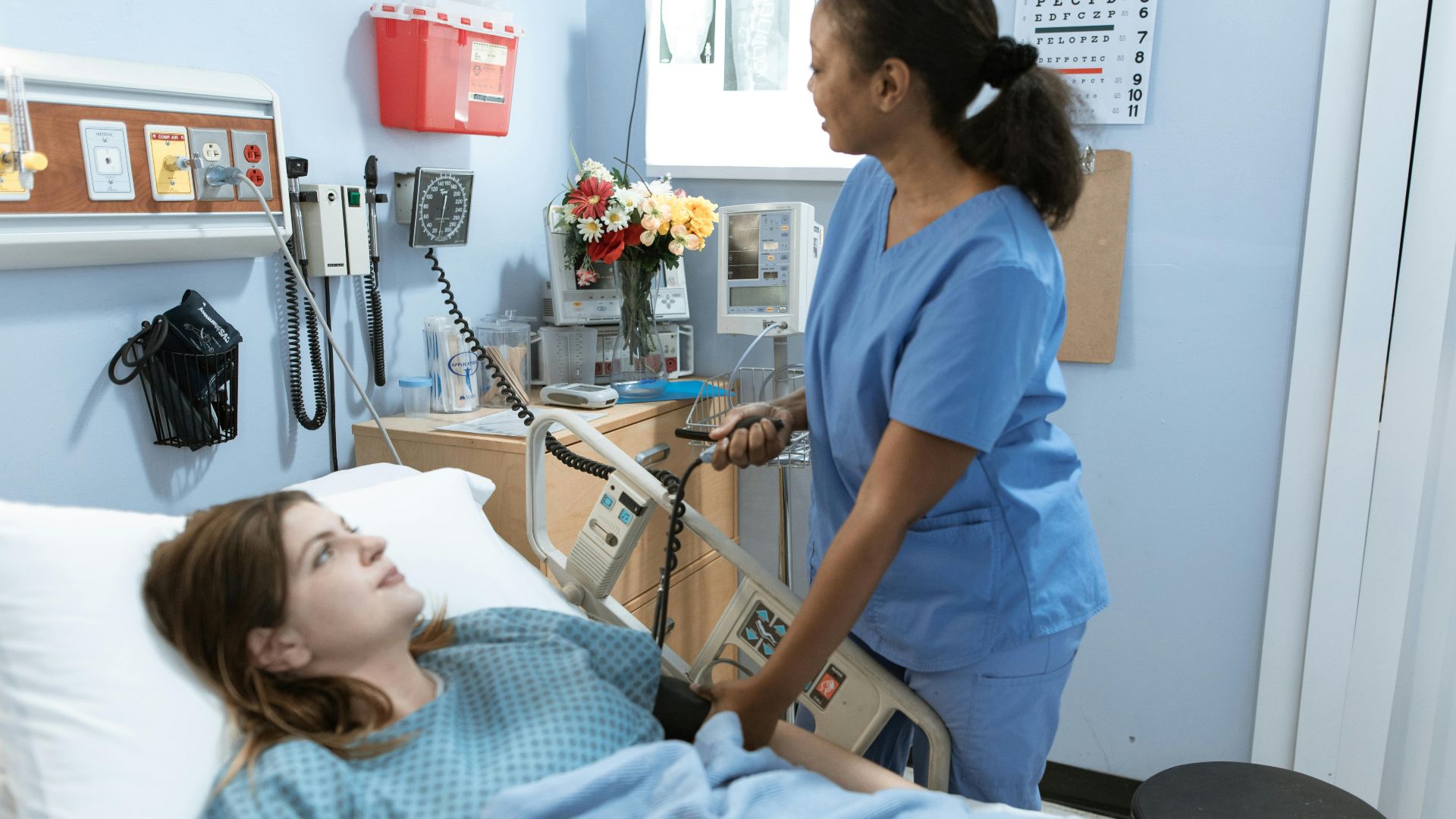
Paychecks Don’t Measure Exhaustion
There is no hospital payroll formula that counts steps walked, difficult conversations handled, or how desperately someone needs to sit down. Pay reflects a combination of qualifications, responsibilities, payment systems, and bargaining power. That helps explain why doing more visible, continuous work does not automatically produce a higher salary.

Now Follow The Billing
Under Medicare’s main inpatient hospital payment system, hospitals generally receive a payment for each admission, while physicians’ professional services are paid separately. Bedside nursing services fall within the hospital’s inpatient services. That is a difference in how care is funded, rather than a rule setting either profession’s salary.

Essential Care Can Become A Budget Line
That structure helps explain why bedside nursing’s financial contribution can be harder to isolate. A separate professional payment makes a service’s revenue more visible, although it may go to a practice or employer. Nursing care remains essential even when its value does not arrive with a separate payment attached.

Nurses Have Their Own Professional Responsibility
Nurses do not borrow a doctor’s license for the afternoon. They are accountable for their own nursing judgments, decisions, and actions. That matters when comparing responsibilities: different training does not mean only one profession has serious professional obligations attached to the work.
 Monkey Business Images, Shutterstock
Medical Training Takes Years—And Often Serious Money
Physicians typically complete a bachelor’s degree, four years of medical school, and three to nine years of internship and residency, depending on specialty. Among indebted medical graduates in the class of 2025, median education debt was $215,000, including premedical borrowing. That investment helps explain higher expected earnings. It does not establish what nurses should earn.

The Responsibilities Are Different
Physicians diagnose conditions and direct medical treatment, with duties varying considerably by specialty. Registered nurses assess patients, coordinate nursing care, deliver treatments, and monitor responses. Both require judgment. Comparing how many tasks each person completes misses differences in the decisions being made and the expertise those decisions require.

Leaving The Room Doesn’t Mean Leaving Work
A doctor’s brief bedside visit does not reveal the whole working day. Physicians may also work long shifts, cover overnight hours, and remain on call. That does not make a nurse’s workload any lighter. It does mean bedside visibility alone cannot establish which professional works more overall.

That Still Doesn’t Settle The Fairness Question
Those are reasonable explanations for why doctors generally earn more. They do not establish that every pay gap is fair, or that nurses already earn enough. “These jobs have different requirements” and “this nurse deserves a raise” can both be true. Somehow, that second point gets lost surprisingly often.

Better Staffing Has Measurable Value
Research involving Pennsylvania hospitals found that heavier patient assignments per nurse were associated with worse outcomes, including higher mortality and readmission risks. The observational study cannot establish cause and effect. But it strengthens the case that nursing investment belongs in discussions about quality and costs, rather than simply payroll reductions.

A Shortage Doesn’t Solve Everything
It seems logical that a shortage should mean employers simply pay more. But nursing shortages also involve limits on training capacity. Nursing schools report turning away qualified applications because of constraints involving faculty, clinical placements, facilities, and budgets. Higher wages alone cannot immediately produce more trained nurses or fix every staffing problem.

The Number Of Employers Matters
A nurse’s negotiating position also depends on the local job market. Research on hospital mergers found slower wage growth when mergers substantially increased employer concentration for workers with industry-specific skills. The effect did not appear after every merger. Still, fewer competing employers can matter when someone asks for better pay.
 Sean Locke Photography, Shutterstock
Bargaining Power Can Change The Equation
That same research found that wage-growth slowdowns were weaker in markets with strong labor unions. It does not promise that every union contract produces the same result. It does show why compensation cannot be explained entirely by education or effort. Workers’ ability to negotiate collectively can influence what employers pay.

Nurses Don’t All Earn The Same Salary
“Nurse” covers different careers. In May 2025, nurse practitioners had median annual wages of $132,300, while nurse anesthetists had median wages of $236,590. Those advanced practice roles involve additional education and different responsibilities. Combining every nursing role into one salary comparison can hide some very large differences within the profession itself.

Going Back To School Isn’t A Simple Answer
Advanced practice can offer higher earnings, but it requires further education, licensing, and certification. That makes it an option to evaluate carefully, including tuition and time commitments. It also leaves an obvious question: if every dissatisfied bedside nurse must move into another role to earn more, who is supposed to provide bedside care?

What Would Actually Improve Nurses’ Pay?
A serious proposal should address base pay, transparent wage scales, recognition of experience, and nurses’ ability to negotiate. It should also identify how the increases would be funded. Praising nursing while avoiding those decisions does not move the discussion very far. Appreciation is lovely. A clear compensation plan is more useful.

A Raise Cannot Carry The Whole Ward
Compensation matters, but so does the work attached to it. National nursing workforce research continues to identify burnout, insufficient staffing, and high workloads as concerns. Better compensation should be considered alongside staffing, support, and scheduling. A higher paycheck should not become an excuse to expect one person to carry an unsustainable workload.

Nurses Don’t Have To Prove Doctors Deserve Less
Doctors’ training and responsibilities help explain their higher earnings. That does not close the discussion about nurses’ pay. The strongest case for better compensation focuses on nursing skill, responsibility, working conditions, and patient care. Nurses should not have to win an argument about who works hardest before their own work gets taken seriously.

You Might Also Like:
Forgotten Childhood Toys From The 80s That Are Now Worth A Fortune