
When The Office Starts Looking Like A Dorm
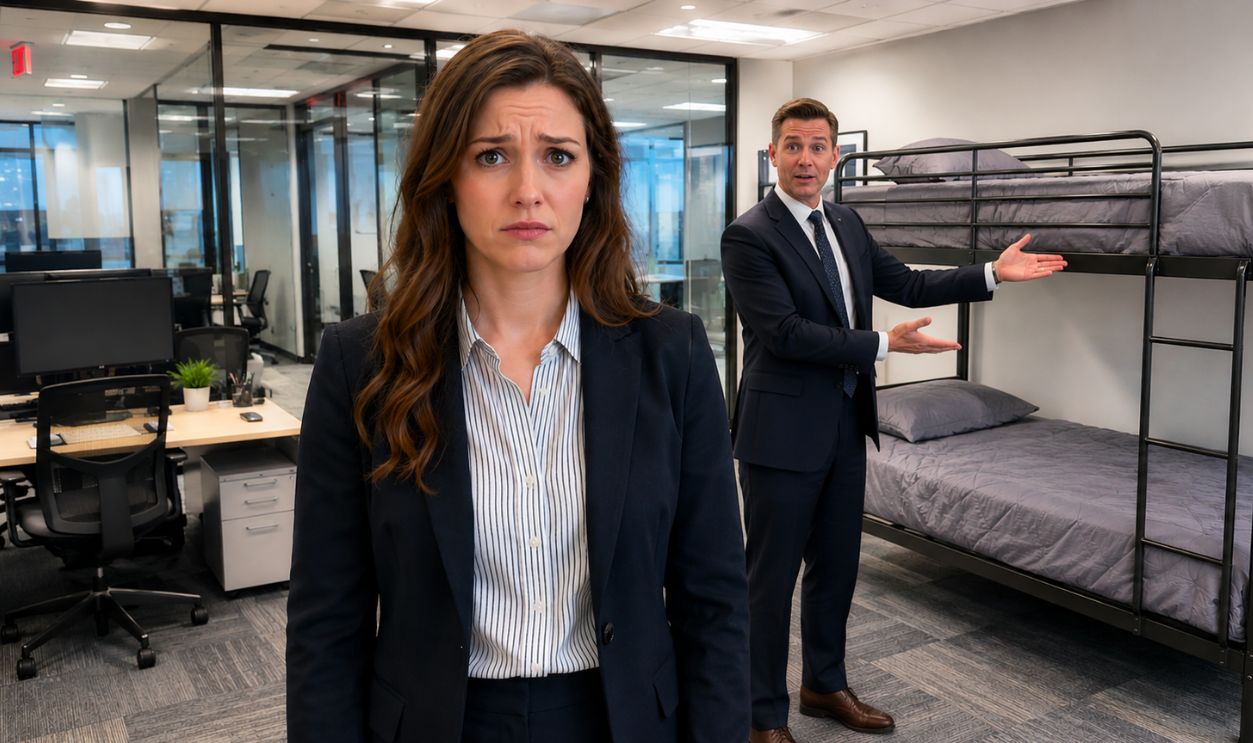
Crunch time is one of the most controversial issues in business. Some teams have a culture of crunch, regularly burning the midnight oil and sleeping at the office to get projects done. Crunch raises real questions about pay, overtime, and working conditions. In the United States, employers cannot just treat overnight time however they want. In particular, federal and state labor rules may kick in fast when an employee is told to stay on site.
The First Big Question Is Your Job Status
Your rights often depend on whether you are classified as exempt or nonexempt under the Fair Labor Standards Act, or FLSA. Nonexempt workers are usually entitled to minimum wage and overtime pay. Exempt workers are generally not entitled to overtime under federal law, though state law can still matter. A lot of the strongest protections here apply to nonexempt employees.

Why That Classification Matters So Much
If you are nonexempt, your employer has to count and pay for all compensable hours worked. That includes more than just the hours you spend actively typing, answering calls, or attending meetings. Time your employer controls can still count as work time. If your boss is telling you where to sleep and when to stay, that level of control matters.

Hours Worked Is A Bigger Category Than People Think
The basic federal rule is that employees must be paid for time spent primarily for the employer’s benefit. That can include waiting time, on-call time, and required time on the premises. Employers cannot avoid pay obligations just by labeling extra time as crunch time or dedication. If they know you are working or required to stay, that time may need to be counted.

If Your Shift Is Under 24 Hours, Sleep Time Usually Counts
Federal guidance is pretty clear on this point. If you are required to be on duty for less than 24 hours, any time you are permitted to sleep still counts as hours worked. The fact that a bunk bed is provided does not change that rule. So if your boss expects you to stay 16 or 18 hours and crash in the office, that sleep time is generally still paid time for a nonexempt worker.

The Rule Changes When Duty Lasts 24 Hours Or More
Once a duty period lasts 24 hours or longer, federal law allows an employer to exclude up to eight hours of sleep time in limited cases. That does not happen automatically. The employer generally needs adequate sleeping facilities and an agreement with the employee to exclude the sleep period. Even then, the conditions have to be real, not just written on paper.

A Bunk Bed Alone Does Not Solve The Problem
Your boss cannot just throw a mattress in the office and call it compliant. For sleep time to be excluded during a 24-hour shift, the sleeping setup has to be adequate. You also must usually be able to get at least five hours of uninterrupted sleep. If the arrangement is noisy, chaotic, or constantly interrupted, the employer may have to count that entire period as work time.

Interrupted Sleep Can Become Fully Paid Time
If you are called back to work during a sleep period, that interruption is compensable time. If interruptions are so frequent that you cannot get a reasonable night’s sleep, the full sleep period may have to be paid. Federal guidance often uses five hours as the rough minimum for a meaningful sleep period. So if crunch time means being woken up over and over, the employer may not be able to deduct that time.

On-Premises On-Call Time Is A Huge Red Flag
There is a big legal difference between being on call at home and being required to stay at work. If you must remain on the employer’s premises or so close that you cannot use the time for yourself, that time is often considered hours worked. Sleeping in your boss’s office usually looks a lot more like controlled on-premises time than free personal time. That matters a lot for pay.

Crunch Time Does Not Cancel Overtime Law
If you are nonexempt, federal law generally requires overtime pay at one and a half times your regular rate for hours over 40 in a workweek. Long days, overnight stays, and weekend pushes can stack up quickly. Your employer cannot dodge overtime by calling it team spirit or a temporary emergency. If the hours count as work, they count toward overtime.

Your Employer Has To Keep Accurate Time Records
The FLSA requires covered employers to maintain accurate records of hours worked and wages paid for nonexempt employees. That means overnight stays and extended crunch periods should not vanish from the time sheet. If your company is not tracking that time properly, that can become part of a wage claim. Recordkeeping is their job, though keeping your own notes is still smart.

Keep Your Own Paper Trail Anyway
If this is happening to you, save texts, emails, chat messages, and calendar invites that show what your boss expected. Write down when you arrived, when you were told to stay, when you tried to sleep, and when you were called back to work. Personal documentation can be very useful if there is later a dispute over hours or pay. It is often the difference between a vague complaint and a strong one.

State Law Might Give You Even More Protection
Federal law is only the baseline. States can provide stricter wage and hour protections, including stronger rules on overtime, waiting time, or days of rest. Some states are more worker-friendly when it comes to employer control during on-call periods. So the final answer is not always the same in Texas, California, New York, or Illinois.

Some State Rules Echo Federal Sleep-Time Standards
Many states follow the same basic sleep-time framework used under federal law. Less than 24 hours on duty usually means sleep time is paid. More than 24 hours can allow limited deductions if there is a real agreement, adequate facilities, and enough uninterrupted sleep. The details can vary, which is why state labor agencies can be especially helpful.

Exempt Workers Are In A Tougher Spot On Overtime
If you are properly classified as exempt, federal overtime law may not help much with the extra hours. That said, exempt status does not erase all rights. Safety rules, internal company policy, contract terms, and state labor law may still matter. It also means your employer should not assume they can do anything they want just because you are salaried.

Safety Is Not Just A Wage Issue
OSHA requires employers to provide a workplace free from recognized serious hazards. An office that starts doubling as a sleeping space can raise concerns if the setup is unsafe, unsanitary, or contributes to dangerous fatigue. The risk is even greater if people are expected to work long hours with little real rest. Workplace safety law does not disappear when the pressure is on.

Sanitation And Basic Conditions Still Matter
If your employer expects people to remain at work overnight, restroom access and sanitary conditions are not optional niceties. OSHA has rules requiring employers to provide sanitary restroom facilities and maintain them. While not every uncomfortable office setup becomes an OSHA violation, bad conditions can become a real problem fast. A makeshift bunk arrangement in a cramped office may deserve a closer look.

Fatigue Can Be More Than Just Annoying
Extreme work hours can lead to mistakes, injuries, and serious health strain. That is one reason overnight expectations can trigger broader workplace concerns, especially in jobs involving driving, machinery, or critical decisions. Even in an office setting, chronic fatigue can create safety and health issues. If the crunch never ends, that can matter legally as well as practically.
You Do Not Have To Stay Silent About Pay Concerns
Workers who raise wage and hour concerns are protected from retaliation under federal law. That means an employer generally cannot lawfully punish you for asking about unpaid overtime or improper timekeeping. Retaliation can include firing, cutting hours, demoting you, or otherwise penalizing you. If you speak up and the company lashes out, that can become a separate legal issue.

HR Is Often The First Internal Stop
If your workplace has an HR department, that is usually the first place to raise concerns about overnight expectations, unpaid time, or unsafe conditions. Keep your message factual and calm. You do not need a dramatic speech. A simple explanation that you are concerned about compliance with wage, overtime, and safety rules can be enough to start the process.

Your State Labor Agency Can Clarify The Rules
If internal reporting goes nowhere, your state labor department or workforce agency may be able to explain the rules that apply where you live. These agencies often handle wage complaints and can explain state-specific overtime or hours-worked standards. In some states, that can make a very big difference. You do not always need to guess your rights on your own.

The U.S. Department Of Labor Is Another Option
The Wage and Hour Division of the U.S. Department of Labor enforces federal minimum wage and overtime law. It also publishes guidance on hours worked, sleep time, and on-call time. If you are being required to sleep at work without proper pay, that agency may be one place to ask questions or file a complaint. Federal rules are not vague on the basic framework here.

OSHA May Matter If The Setup Is Unsafe
If the office sleeping arrangement creates serious safety or sanitation concerns, OSHA may be relevant too. That could include blocked exits, unsanitary facilities, unsafe electrical conditions, or hazardous fatigue in certain jobs. OSHA complaints can focus on the condition of the workplace rather than just pay. In some situations, both labor and safety issues exist at the same time.

The Bottom Line On Your Rights
Your boss cannot simply decide that crunch time means free overnight labor. If you are nonexempt, being required to stay on site and sleep there may mean that much or all of that time must be paid, with overtime if you go over 40 hours in a week. Even for exempt workers, safety and state-law issues can still come into play. If this happens, document everything, check your classification, and consider talking to HR, your state labor agency, the U.S. Department of Labor, or OSHA.