
The Federal Rules Banks Must Follow
Banks can't hold your check forever, no matter how much that waiting period stings right now. Maximum timeframes exist, though exceptions apply under certain circumstances. We know how frustrating the waiting can be when it's your own money and you need it, but there's a reason these rules exist.

Understanding What A Check Hold Means And Why It Happens
Banks place temporary restrictions on deposited checks because the money hasn't actually arrived yet. Think of it like ordering something online—the transaction processes before the item ships. Your financial institution needs time to collect funds from the check writer's bank through federal clearinghouse systems before crediting your account permanently.
The Expedited Funds Availability Act Of 1987 (Federal Law Governing Holds)
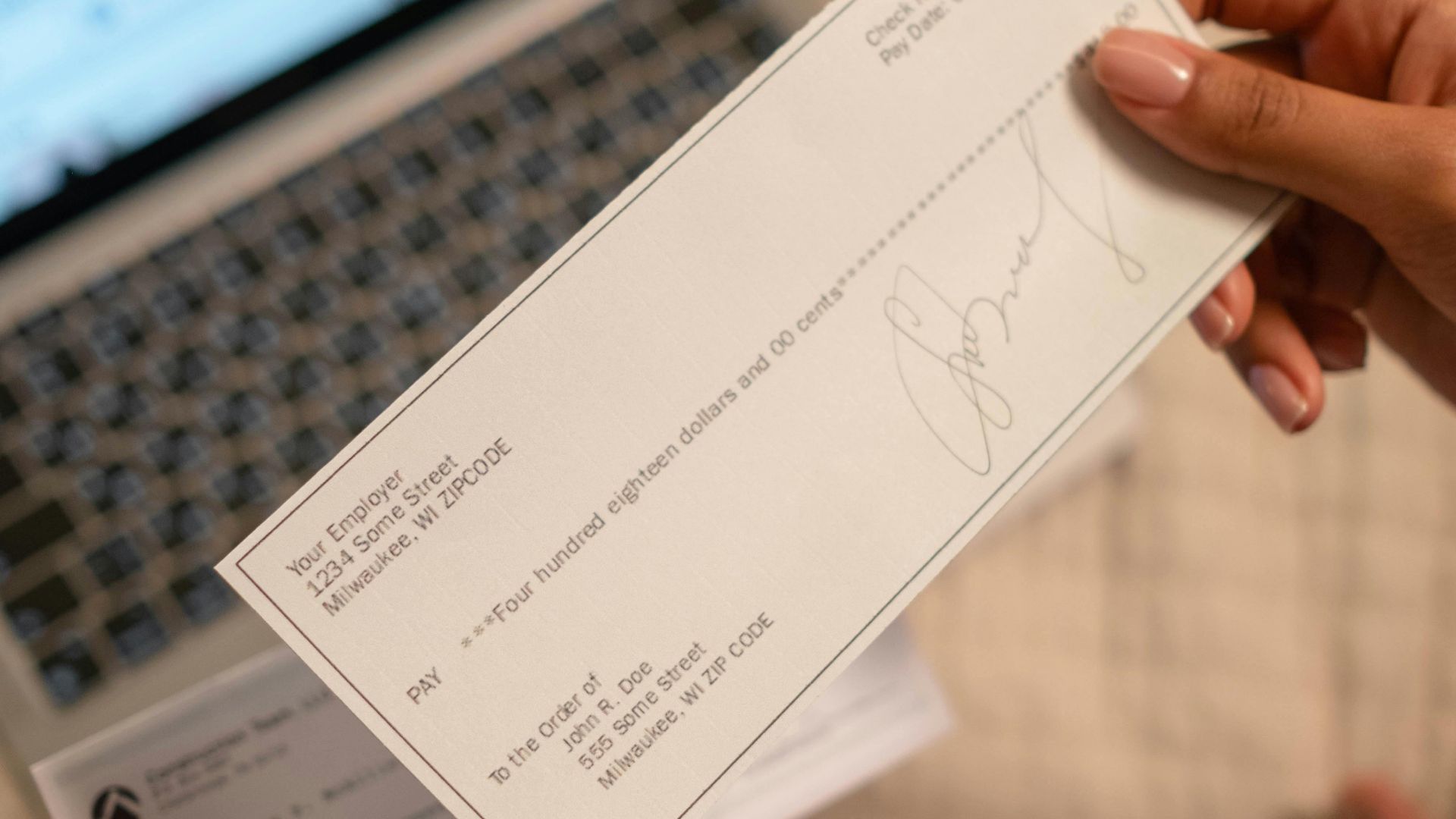
Congress created this legislation after customers complained about banks holding checks for weeks without explanation. The Act forced financial institutions to follow standardized timelines instead of making arbitrary decisions. Before 1987, your bank could theoretically hold a check until it felt comfortable, which sometimes meant a longer waiting time.

Regulation CC: The Federal Regulation Implementing Funds Availability Rules
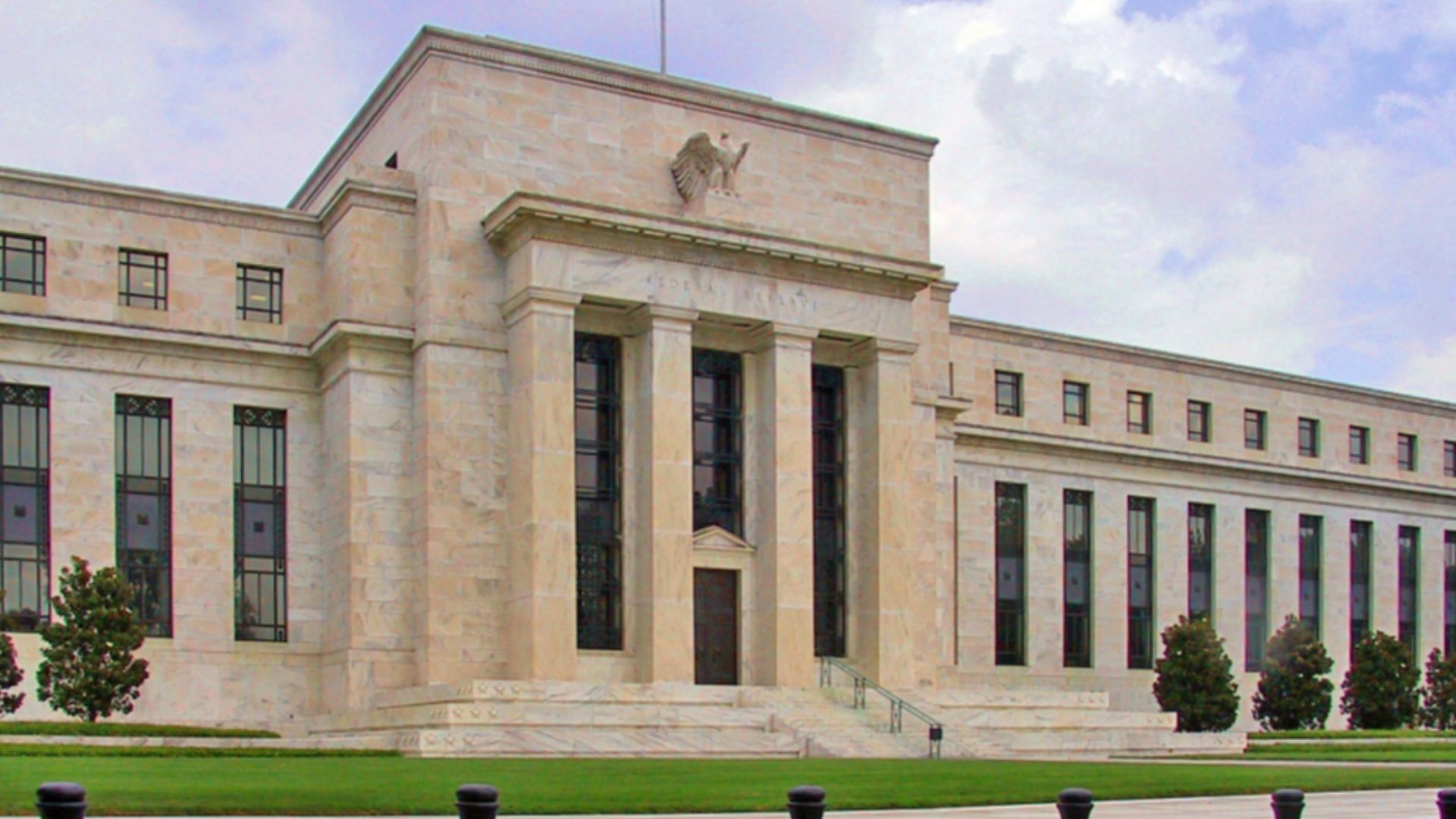
The Federal Reserve Board translated the Expedited Funds Availability Act into Regulation CC, which provides specific operational instructions. Every bank, credit union, and savings institution in America must comply with these detailed provisions. Regulation CC defines a business day and outlines six exceptions that banks may invoke.
First $275 Must Be Available Next Business Day
Banks must make at least $275 available by the next business day after you deposit a check, regardless of the total amount. This guaranteed access helps cover immediate expenses while leaving funds clear. The Federal Reserve raised the minimum from $225 to $275 on July 1, 2025, reflecting inflation.

Amounts $276 To $6,725 Must Be Available By Second Business Day
Funds exceeding $275 must become available within two business days, unless a specific exception applies, such as aggregate deposits over $6,725. Banks cannot extend the timeline without invoking an authorized exception. Many institutions release funds sooner, often providing full availability by the next business day.

How Business Days Are Calculated (Excludes Weekends and Federal Holidays)
Business days include only days when your bank conducts substantially all regular operations. Weekends (Sundays and Saturdays) and federal holidays do not count, even if ATMs stay open. Deposit a check on Friday afternoon, and Monday becomes the first business day, assuming no holiday, with Tuesday counting as the second.

Bank Cutoff Times And How They Affect When Your Deposit Counts
Most banks set a cutoff time that determines which business day your deposit is credited. Arriving after that time, such as after 2:30 PM, means the deposit counts on the next business day. Banks must clearly post cutoff times so customers have a fair chance to meet the deadline.

Next-Day Availability For Government Checks Deposited In Person
US Treasury checks, state government checks, and local government checks get special treatment under Regulation CC. Hand one to a bank teller, and the full amount must be available the next business day. This expedited access recognizes that government checks carry extremely low fraud risk since they're backed by tax revenue.

Next-Day Availability For Cashier's Checks And Certified Checks
Cashier's checks are drawn directly on the bank's own funds, while certified checks have guaranteed money set aside in the account. Both types must clear by the next business day when deposited in person to a teller. Banks can verify these instruments almost instantly, eliminating the need for extended holds.

The Federal Reserve Clearinghouse Process That Delays Fund Availability
Your check travels physically or electronically through a Federal Reserve processing center, where it’s matched to the paying bank’s account. This step confirms sufficient funds before your bank credits you. The Check 21 Act allows electronic image transmission, and this reduces the processing times compared with pre-2004 paper systems.

Why Accounts Under 30 Days Face Longer Holds
During your first 30 days as a customer, banks may treat your account as higher risk. Federal rules allow extended hold periods on checks deposited into newly opened accounts. Without transaction history, the institution cannot assess whether deposits are legitimate or potentially part of a fraud scheme.

Holds On Amounts Exceeding $6,725
Depositing more than $6,725 in checks on a single day triggers special rules that protect banks from major losses. Your bank must still make the first $6,725 available according to standard schedules, but can hold the excess amount for up to seven business days.

When Previously Returned Checks Are Held Longer
Checks bounce for all sorts of reasons—insufficient funds stop payment orders. Redepositing a previously returned check gives your bank the right to place an extended hold because the item already failed once. However, checks returned only for missing endorsements can't be held as redeposits once you've added the signature.

Six Or More Negative Balance Days Trigger Extended Holds
Repeated overdrafts signal financial instability and increase a bank’s risk exposure. If your account shows a negative balance for six or more days within six months, it qualifies as repeated overdrafts. Banks may also apply this exception when balances exceed negative $6,725 for two or more recent days.

Bank Doubts The Check Will Clear
If something about your check raises red flags—maybe the signature looks suspicious. Your financial institution can place an extended hold when it has reasonable cause to believe the check won't be honored. The bank must provide a written notice explaining the specific concern that triggered the hold.

Emergency Conditions Exception: Natural Disasters Or System Failures
Hurricanes, floods, earthquakes, and major computer outages can disrupt the check clearing process beyond anyone's control. Banks may extend holds when emergency conditions prevent them from processing deposits through normal channels. Communications failures between financial institutions also qualify, though these events occur rarely in modern interconnected banking systems.
 Leo 'Jace' Anderson, Wikimedia Commons
Seven Business Days For Most Exception Holds
Even under an exception, banks cannot hold funds indefinitely. For checks drawn on other financial institutions, the maximum hold is seven business days. On-us checks, written from the same bank where you deposit, face only a two-business-day extension since verification occurs internally.

Required Written Notice When Banks Apply Exception Holds
Banks must provide written notice whenever they extend a hold beyond standard availability rules. The notice must list your account number, the reason for the delay, and the date funds will become available. If the deposit was not made in person, the bank must mail notice by the next business day.

On-Us Checks (Same Bank) Versus Checks From Other Banks Timing Differences
Depositing a check drawn on the same institution you bank with simplifies the process. Your bank can instantly verify the account balance and place a hold on those funds, eliminating clearinghouse delays. These on-us checks typically clear faster than the legally required timeframes, often posting the same business day if deposited early.

Mobile Deposit And ATM Deposit Hold Periods
Depositing a check by mobile app or ATM usually adds one business day to standard availability. Banks need extra time to verify the image and confirm it matches the entered amount. Checks that normally qualify for next-day access must instead be available by the second business day.
 Centre for Ageing Better, Pexels
How Direct Deposit Avoids Check Holds Entirely
Direct deposit avoids hold periods because funds move electronically between financial institutions. An employer’s bank transfers money through ACH networks straight into your account, removing the uncertainty tied to paper checks. Setting up direct deposit for wages, tax refunds, or Social Security ensures access immediately when funds arrive.

Contacting Your Bank To Understand Specific Reasons For Holds
Calling customer service or visiting a branch gives clear answers about deposit delays. Bank representatives can review account history and explain which exception applies. Some holds stem from simple issues, such as missing a cutoff time, and staff can confirm the actual release date, so you can plan accordingly.

Escalating A Funds Hold To The CFPB
The CFPB accepts complaints when banks appear to violate Regulation CC by extending holds beyond legal limits. File online at consumerfinance.gov with deposit details and availability dates. The Bureau forwards the complaint to the bank, which must respond within 15 days explaining its actions.

The Bank's Legal Right To Accept Or Reject Check Deposits
Federal law does not require banks to accept every deposited check. Institutions may reject items they consider fraudulent, improperly endorsed, or linked to suspicious accounts. This authority protects banks and customers from check-kiting schemes and potential money laundering activity.

Maximum Civil Penalties Banks Face For Violating Regulation CC
Financial institutions that violate funds availability rules face civil penalties of up to $1,350 per violation for individual complaints, effective 2025. Class actions may reach $672,950 or 1% of net worth, whichever is less, creating strong incentives for compliance.