When Everyone Around You Does It, It Seems Normal
A lot of money habits look “normal” when everyone around you is doing them. So if you're in America, these might not sound out of the ordinary at all. But if you ask someone who lives outside the U.S., they will almost definitely look at you like you're crazy for doing them.
Take their advice, because cutting out these "normal" spending habits will make a serious difference in your financial future.

What “Reckless” Usually Means Abroad
In many peer countries, consumer finance rules are built to reduce surprise fees and repeat borrowing. The U.S. often allows more friction, more optionality, and more ways to pay later.

A Quick Reality Check
Americans are not uniquely bad with money. The systems, incentives, and defaults in place in the American system are simply different from how most of the world does things.

Living On A Credit Card Balance
In the U.S., credit cards are often used as long-term borrowing, not just a payment tool. New York Fed data shows credit card balances at about $1.233 trillion in Q3 2025.
Paying 20%+ Interest Like It Is Normal
U.S. credit card interest rates have stayed high in recent years. Federal Reserve-based tracking puts rates around ~21% in late 2025. For anyone bad at math, that is a lot to pay in interest.
Minimum Payments That Keep You Stuck
Minimum payments might seem like they're helping you, but they're actually designed to keep accounts current, not to eliminate debt quickly. With high APRs, a balance can linger for years unless you pay well above the minimum.

Treating Overdraft Like A “Oops Fee”
Overdraft fees are a uniquely expensive habit in U.S. banking. The Consumer Financial Protection Bureau (CFPB) has framed many common American overdraft practices as a costly form of short-term credit and moved to cut the fees.
What The U.K. Did Instead
In the U.K., regulators pushed banks toward simpler overdraft pricing. Since April 2020, many overdraft charges had to be expressed as a single annual interest rate, rather than layered daily fees.

The “Pay In Four” Trap
Buy Now, Pay Later often feels like budgeting. Regulators have warned it can still behave like credit, especially when people stack multiple plans. But in America, the options for this type of spending are seemingly endless.

The U.S. BNPL Market Is Big And Still Evolving
The CFPB has published market reporting on BNPL based on large-provider data from 2022–2023. The point is not that BNPL is always bad, but that it is not “nothing” and can frequently put consumers into trouble territory.

The U.K. Is Bringing BNPL Under Stricter Rules
The U.K. Financial Conduct Authority plans to regulate “deferred payment credit” (BNPL) starting July 15, 2026. That includes more formal expectations around consumer protections and oversight, something lacking across the Atlantic.

Payday Loans As A Normal Option
In most of the world, short-term payday loans are treated as a serious consumer protection problem first. In most parts of the U.S., it is still widely marketed, and thus heavily used by many of the poorest Americans.
The U.K. Put A Hard Cap On Payday-Style Costs
The FCA introduced a price cap effective January 2, 2015 for high-cost short-term credit. The cap includes an initial cost cap of 0.8% per day of the amount borrowed. No such cap exists in the US.
Medical Debt Is A Very American Risk
In countries with universal coverage, medical bills rarely behave like consumer debt at household scale. In the U.S., medical debt is large enough to show up in national financial health discussions, and it is only growing with each passing year.

The Dollar Amount Is Staggering
KFF, an American non-profit that provides health policy information, estimates that Americans owe at least $220 billion in medical debt. That is not a budgeting issue. It is a system-level exposure. No surprise that the U.S. alone accounts for 66% of all the world's medical bankrupcies.
Student Debt That Follows You For Years
Student loans exist in other countries, but the U.S. scale is unusual to say the least. Recent reporting puts federal student loan debt above $1.6 trillion and tens of millions of borrowers. No other country comes close.

Delinquencies Show The Strain
The New York Fed tracks student loan performance as part of household credit conditions. It has flagged elevated student loan delinquencies as repayment restarted after pandemic-era pauses.

Seven-Year Car Loans Becoming Routine
Long car loans are a quiet budget killer because they normalize “affordable” monthly payments. Edmunds reported that about 1 in 5 new-car loans in Q1 2025 were 84-month terms. Do the math—that is a lot of money wasted on interest.
Why Other Countries Side-Eye This
When loans stretch longer, you grow more and more likely to owe more than the car is worth. That can turn a layoff, repair bill, or accident into an inescapable debt spiral.
 Icomparioimages, Wikimedia Commons
Household Debt Looks Different By Country
Across OECD data, household debt is tracked relative to disposable income, which makes cross-country comparisons easier. Some countries run high, but the U.S. sits in a distinct mix of mortgages, student loans, auto loans, and cards.

Another Lens: Debt As A Share Of GDP
The IMF’s Global Debt Database shows household debt (loans and debt securities) as a percent of GDP across countries. It highlights how debt-heavy daily life can become, depending on local norms and credit structure.

Tipping As A Payroll System
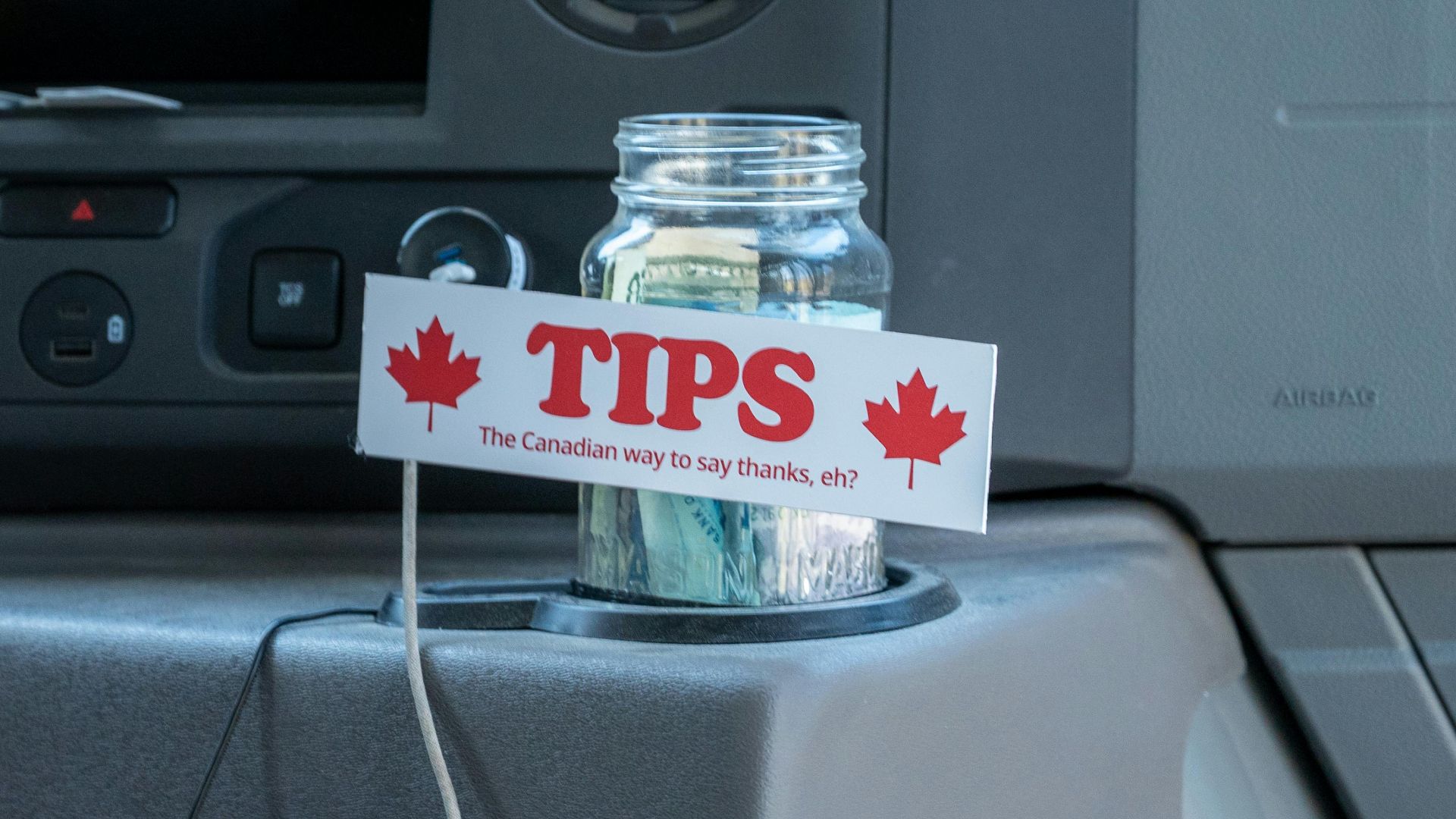
In the U.S., tipping is not just cultural. It is intertwined with wage rules for tipped workers, which can allow a low direct cash wage under federal law if tips make up the difference. But America isn't alone in this regard—the culture of tipping in Canada is largely the same.
Japan: Tipping Is Usually Not A Thing
Japan’s national tourism organization notes that tipping is not common for typical services like restaurants, taxis, and hotels. If you try, it can even create awkwardness rather than gratitude.

France: Service Is Often Built In
In France, “service compris” means service is included in the price, and additional tipping is generally optional and modest. The expectation is that wages are handled through the bill, not the guest’s math.

The Retirement Money “Break Glass” Habit
More and more Americans are being forced to tap into their retirement money early, and the rules around it can be severely punishing. The IRS generally applies an additional 10% tax on early distributions unless an exception applies.

Why It Feels Reckless From The Outside
A lot of countries structure retirement systems to reduce leakage before retirement age. The U.S. gives more access in practice, but this also means more chances to raid the future, and in the modern economy, more and more Americans are taking this chance.

What To Copy From “Cautious” Countries
Make borrowing costs obvious, not sneaky. Treat short-term credit like credit, not like a checkout button. Build buffers so emergencies do not turn into high-interest debt.

A Simple Starter Playbook
Automate an emergency fund contribution, even if it is small. Pay down high-APR revolving debt first. Avoid fees that do nothing for you, especially overdraft and repeat BNPL plans.

The Big Takeaway
A habit can be common and still be expensive. If another country treats a behavior as risky enough to regulate heavily, it is worth asking why.

You May Also Like:
I’m 50 and just started saving. Is $1 million by 65 even possible?
Vintage Postcards That Are Worth Big Money Today
Jobs That Seem Safe, But Are Either Evolving Or Going Obsolete