Parentshidmoneymsn

My parents have thousands of dollars hidden in their house because they don't trust banks. What happens if nobody finds it after they die?


September 16, 2026 | Quinn Mercer

My parents have thousands of dollars hidden in their house because they don't trust banks. What happens if nobody finds it after they die?


A Hidden Problem

Your parents keep thousands of dollars in cash at home because they don't trust banks to handle their money, or survive an economic crisis. As paranoid as this may seem, you now worried about what happens if nobody finds it after they die. Unclaimed cash can cause legal, financial and family complications for an estate.
ParentshidmoneymsnFactinate Ltd

Advertisement

Cash At Home

Many older adults keep cash at home for safety, privacy or peace of mind. They may have lived through bank failures, fees or other financial disruptions. While it is legal to keep currency at home, doing so carries real risks.

Elderly businessman relaxing at desk, counting money notes in a modern office setting.Gustavo Fring, Pexels

Advertisement

Start The Conversation

If possible, talk with your parents now. Ask why they keep cash, where it is stored and what they want you to do with it. A calm, respectful conversation can prevent confusion, family disputes and the loss of their money later.

Family sits together discussing ultrasound images, celebrating new life.RDNE Stock project, Pexels

Advertisement

Look For Clues

After your parents die, the executor or personal representative should look for clues. Check safes, filing cabinets, drawers, closets, basements and other common hiding places. Notes or lists may also reveal where cash is stored.

black and gray control panelImmo Wegmann, Unsplash

Advertisement

Document Everything

If you find cash, document it carefully. Make notes, photos and a count of the money found, including where it was located. This helps the executor keep accurate records and reduces the risk of disagreements among family members.

Person counting cash with a calculator and documents on a wooden desk, representing financial planning.Tima Miroshnichenko, Pexels

Advertisement

It Becomes Estate Property

Money found after death is generally considered part of your parents’ estate, just like bank accounts, investments or personal belongings. That means it should be managed and distributed according to their will or state intestacy law.

Businessman counting cash at a desk with documents and a laptop in an office.Tima Miroshnichenko, Pexels

Advertisement

The Executor’s Job

The executor or personal representative is legally responsible for identifying, collecting and safeguarding all of the deceased person’s assets. That includes cash found in the home. Failing to do so could lead to legal problems or claims from heirs.

Man in an office reviewing financial papers with a calculator on a desk.Mikhail Nilov, Pexels

Advertisement

Follow The Will

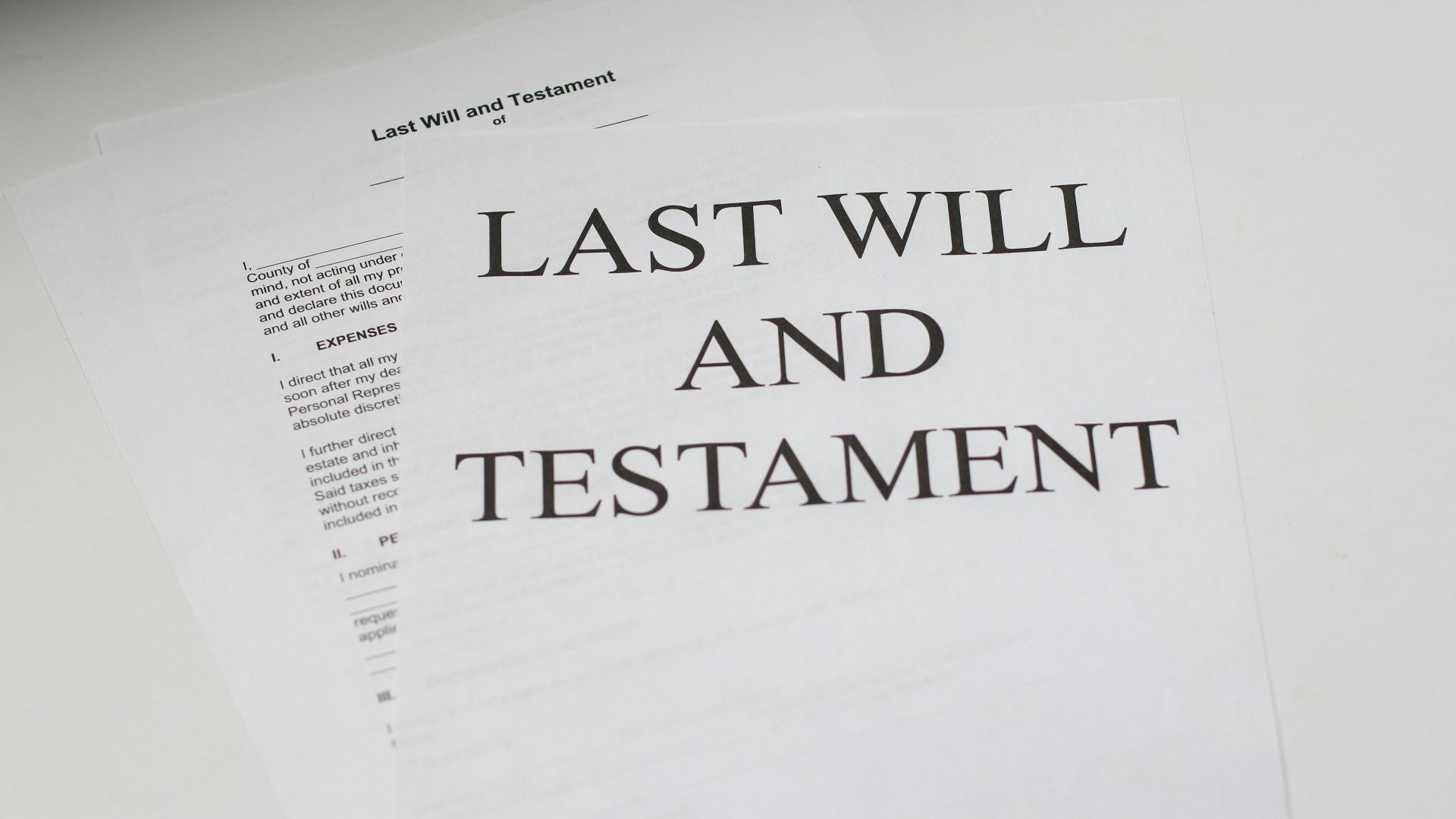
If your parents left a valid will, the cash should be distributed according to its terms. The executor is expected to include it when tallying the estate’s assets, paying any debts or taxes, and making final distributions to beneficiaries.
last will and testament white printer paperMelinda Gimpel, Unsplash

Advertisement

No Will Means State Law

If there is no valid will, state intestacy laws determine who inherits. Typically, a spouse and children share the estate according to a formula set by state law. Each state’s rules are different, so the distribution can vary.

Judge signing documents at desk with focus on gavel, representing law and justice.KATRIN  BOLOVTSOVA, Pexels

Advertisement

What If Nobody Finds It

If nobody finds the hidden cash, it simply remains in the house. It does not go to the government, and there is no automatic process to locate it. The money may sit there indefinitely, lost or discovered years later during a sale or renovation.

Untitled Design - 2026-09-12T112755.789https://kaboompics.com/, Pexels

Advertisement

Unclaimed Property Laws

State unclaimed property laws usually apply to financial accounts, stocks, refunds and similar assets held by third parties. Cash hidden in a home is not turned over to the state as unclaimed property because the state does not know it exists.

sergeitokmakovsergeitokmakov, Pixabay

Advertisement

Risk Of Theft

Keeping large amounts of cash at home increases the risk of theft, loss or damage from fire, flood or other disasters. Once your parents are gone, the house may sit empty for a time, making hidden cash even more vulnerable.
Three people in masks climbing a fence, suggesting trespassing in black and white.Evan Velez Saxer, Pexels

Advertisement

Family Disputes

Hidden cash can create serious conflict. If one sibling finds it and others do not know, accusations of theft can quickly follow. Full disclosure to the executor and all beneficiaries helps protect your relationship with family members.

Untitled Design - 2026-09-12T092636.806Diva Plavalaguna, Pexels

Advertisement

Taxes May Still Apply

Cash itself is not taxed as income to the heirs. However, the estate may need to file a federal estate tax return if the total value of all assets exceeds the federal exempt amount. State estate or inheritance taxes may also apply in some states.

Stack of tax forms and coins with a 'TAX' stamp, symbolizing finance and accounting.Nataliya Vaitkevich, Pexels

Advertisement

The Paper Trail

Large cash deposits made after a parent’s death can raise questions at a bank and may trigger a Currency Transaction Report if the deposit exceeds $10,000. Having documentation showing the source can help avoid delays or scrutiny.

A young man and woman interacting at a modern office reception desk indoors.cottonbro studio, Pexels

Advertisement

Don't Share Prematurely

If you find cash, do not immediately divide it among family members. The executor should control the funds, follow legal requirements, pay any debts or taxes and then distribute what remains according to the will or state law.

A close-up view of hands exchanging dollar bills indoors, symbolizing payment.https://kaboompics.com/, Pexels

Advertisement

Consider Professional Help

An estate attorney can guide you through your responsibilities, especially if there are disputes about the cash or if the estate is complex. Professional advice can help you avoid mistakes and ensure the estate is handled properly.

Business meeting between a lawyer and client in a professional office setting.Pavel Danilyuk, Pexels

Advertisement

Talk About Safer Options

If your parents are still alive, encourage them to consider safer alternatives. Federal Deposit Insurance Corporation (FDIC)  insurance protects bank deposits up to $250,000 per depositor, per bank. Other options include credit union deposits, U.S. Treasury securities or safe deposit boxes.

A financial advisor discussing investment options with an elderly couple in a cozy living room.Kampus Production, Pexels

Advertisement

Respect Their Feelings

Your parents’ distrust of banks likely comes from real experiences or lifelong beliefs. Even if you disagree, approach the topic with respect. Your goal is to understand their wishes and help protect their money, not to criticize their choices.

Shutterstock-2703883219, Young son and elderly father having conversation. White haired old man in his 60s or 70s sitting on sofa at home together with adult son, talking about life and sharing advice. Senior parents conceptStudio Romantic, Shutterstock

Advertisement

Update Estate Plans

Encourage your parents to include information about their cash holdings in their will, a letter of instruction or a trust. Clear documentation can prevent the money from being overlooked and make your job easier later.

Elderly couple reviewing bills and documents at home, focusing on finances and technology.Kampus Production, Pexels

Home Sale Can Reveal It

If the house is sold, the cash may eventually be found by a real estate agent, buyer or contractor. While that can reunite the money with the estate, it may also create awkward or even legal disputes if ownership is unclear.

A real estate agent demonstrates kitchen features in a modern home. Ideal for real estate and lifestyle conceptsRDNE Stock project, Pexels

Advertisement

Recovered Years Later

It is not uncommon for cash to be discovered long after an estate is closed. If that happens, you may need to reopen the estate or follow state procedures to distribute the money. That can be complicated and expensive.

A top view of a sack brimming with US 100 dollar bills, symbolizing wealth and prosperity.RDNE Stock project, Pexels

Advertisement

Plan For The Unexpected

Hidden cash is a reminder that estate planning should cover all assets, even unusual ones. Make a list of everything you know about, keep it with important documents and be prepared for surprises during the settlement process.

Caucasian woman with curly hair working at home office desk, organizing documentswww.kaboompics.com, Pexels

Advertisement

Key Takeaways

If you find the cash, it becomes part of the estate and should be handled according to the will or state law. If nobody finds it, it remains in the house. Open communication now can prevent lost money, legal problems and family conflict.

Business professional consults elderly clients in an office setting. Collaborative discussion, paperwork visible.Kampus Production, Pexels

Advertisement

A Final Thought

Your parents saved that money for a reason. Whether it was for emergencies, family or simply peace of mind, it represents a lifetime of hard work. Taking the time to find, protect and distribute it properly honors their efforts and their legacy.

A person organizing documents in a file box under a green desk lamp on a wooden tableDziana Hasanbekava, Pexels

Advertisement

You May Also Like:

We found a box of valuable coins hidden in the basement of our new house—we moved in 6 months ago, so when do they legally become ours?

I found a safe in my dad's house filled to the brim with old American coins. The bank said I can't deposit them. Why not?

I found $9,800 in an old cookie tin in my late grandmother’s pantry. My uncle says “finders keepers” doesn’t apply. What does the law say?

Sources: 1, 2, 3, 4, 5


READ MORE

Internal - Paying Cash For House

My dad says I should always pay cash for houses. But my financial advisor says I need to get a credit card to apply for a mortgage. Who's right?

My dad says to always pay cash for a house, but my advisor says I need a credit card to get a mortgage. Here’s who’s right, how credit really works, and what future homebuyers should do.
April 1, 2026 Jack Hawkins
Rss Thumb - Family Dispute Inheritance

My sister says she deserves more inheritance because she visited our parents more, but I paid their bills. How do families measure fairness?

My sister says she deserves more inheritance because she visited our parents more, while I paid their bills. Learn how families can evaluate caregiving, financial contributions, estate documents, reimbursements, and fairness without turning an inheritance dispute into a permanent family feud.
September 1, 2026 Jack Hawkins
AI-generated image of a couple that retired at different times.

My spouse and I retired at different times, and planning became way more difficult than expected. Is it always so complicated?

Many couples spend years planning for retirement, imagining the day they'll finally leave work behind together. Then reality arrives, and one spouse retires while the other keeps working for several more years.
July 1, 2026 Quinn Mercer
Internal - Power Bill Hack

Our power company was hacked and they delayed billing by 3 months to fix it. Now, my bill is over $1,000. Are they just guessing how much I owe?

Power bill delayed after a utility hack? Learn whether your electric company is estimating what you owe, how to read a catch-up bill, and what to do if a surprise $1,000 charge lands in your mailbox.
April 1, 2026 Jack Hawkins
Millionaire's Row Historic District, Williamsport, PA, April 2011

Detroit's Millionaire's Row shined like a diamond until it crumbled when the Great Depression decimated auto production.

There lies a Detroit neighborhood where wealthy families once strolled tree-lined streets past sophisticated Victorian homes. Today, you’ll only find scattered buildings that hint at a lost world of prosperity.
September 1, 2026 Alex Summers
Woman worried gold recession

My cousin says buying gold is the only way to protect your money right now. The economy has me worried, does he have a point?

When markets feel shaky, gold suddenly starts sounding like the answer to everything. It has a long history, it feels tangible, and it tends to get attention whenever inflation, recessions, or geopolitical stress are in the news. That’s probably why your friend is so confident about it right now. But “the only way” to protect your money is a much bigger claim than the evidence supports.
April 1, 2026 Miles Brucker


Disclaimer

The information on MoneyMade.com is intended to support financial literacy and should not be considered tax or legal advice. It is not meant to serve as a forecast, research report, or investment recommendation, nor should it be taken as an offer or solicitation to buy or sell any securities or adopt any particular investment strategy. All financial, tax, and legal decisions should be made with the help of a qualified professional. We do not guarantee the accuracy, timeliness, or outcomes associated with the use of this content.


Dear reader,


It’s true what they say: money makes the world go round. In order to succeed in this life, you need to have a good grasp of key financial concepts. That’s where Moneymade comes in. Our mission is to provide you with the best financial advice and information to help you navigate this ever-changing world. Sometimes, generating wealth just requires common sense. Don’t max out your credit card if you can’t afford the interest payments. Don’t overspend on Christmas shopping. When ordering gifts on Amazon, make sure you factor in taxes and shipping costs. If you need a new car, consider a model that’s easy to repair instead of an expensive BMW or Mercedes. Sometimes you dream vacation to Hawaii or the Bahamas just isn’t in the budget, but there may be more affordable all-inclusive hotels if you know where to look.


Looking for a new home? Make sure you get a mortgage rate that works for you. That means understanding the difference between fixed and variable interest rates. Whether you’re looking to learn how to make money, save money, or invest your money, our well-researched and insightful content will set you on the path to financial success. Passionate about mortgage rates, real estate, investing, saving, or anything money-related? Looking to learn how to generate wealth? Improve your life today with Moneymade. If you have any feedback for the MoneyMade team, please reach out to [email protected]. Thanks for your help!


Warmest regards,

The Moneymade team