

Portrait of thoughtful middle-aged man wearing eyeglasses sitting on comfortable sofa

I have a traditional IRA but no current job. Do I still have to take required minimum distributions?


November 28, 2026 | J. Clarke

I have a traditional IRA but no current job. Do I still have to take required minimum distributions?


No Paycheck, Still A Deadline

Leaving the workforce might mean saying goodbye to office meetings, but it doesn't necessarily mean goodbye to retirement-account deadlines. If you own a traditional IRA, required minimum distributions, or RMDs, generally depend on your age rather than whether you're collecting a paycheck.

Portrait of thoughtful middle-aged man wearing eyeglasses sitting on comfortable sofaMigma__Agency, Shutterstock Images

Advertisement

Age Matters More Than Employment

An RMD is the minimum amount you must withdraw from certain retirement accounts each year. The IRS requires traditional IRA owners who have reached the applicable age to take these withdrawals even if they're unemployed, retired, or still working full-time.

Shutterstock-2657976429, A focused elderly woman working with financial papers and a notebook in the living room at home, representing personal finance, retirement planning, or remote work in a calm environment.MIND AND I, Shutterstock

Advertisement

The Current Starting Age

People reaching the applicable starting age during 2023 through 2032 generally begin RMDs at 73. If you turn 73 in 2026, your traditional IRA has a required distribution for 2026, regardless of whether you worked a single day that year.

Shutterstock-1076005355, Confused Senior Man With Dementia Looking At Wall CalendarDaisy Daisy, Shutterstock

Advertisement

The Age-75 Change

Under the SECURE 2.0 rules, the starting age rises to 75 for people born in 1960 or later. Earlier generations may have started at 70½ or 72 under previous rules. Check your birth year rather than assuming every retiree follows today's age-73 threshold.

Concentrated concerned european senior old elderly couple spouses grandparents doing paperworkInside Creative house, Shutterstock

Advertisement

The Still-Working Exception

Some workplace retirement plans, including qualifying 401(k)s, allow eligible employees to postpone RMDs until they retire. That exception does not extend to traditional IRAs. In fact, keeping a job wouldn't exempt an IRA owner who has reached the applicable distribution age.

Senior woman in an office setting reviewing documents with US flag background.RDNE Stock project, Pexels

Advertisement

The First April Deadline

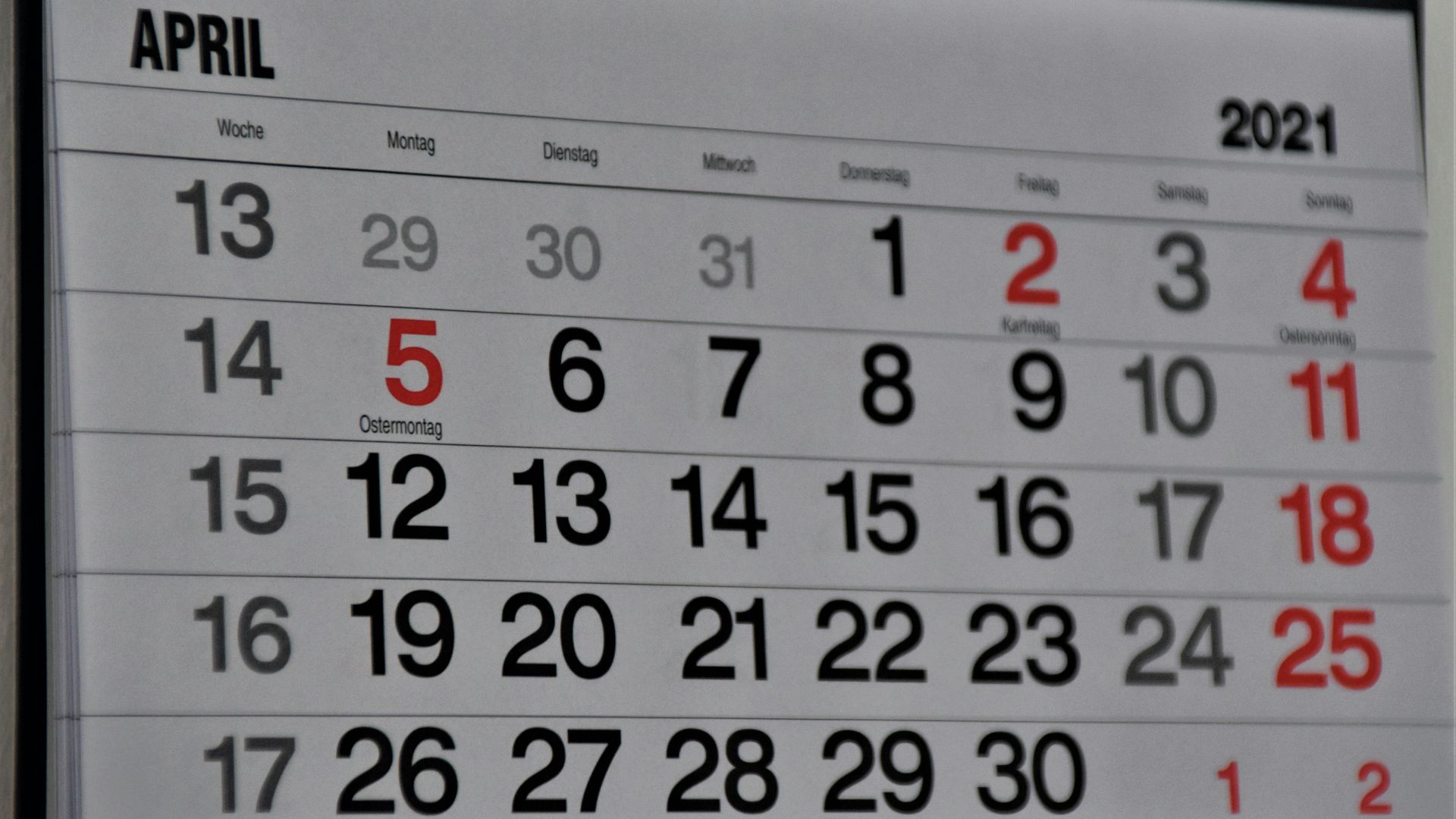
Your first IRA RMD is due for the year you reach the applicable age, but you may take it as late as April 1 of the following year. Someone turning 73 in 2026 can therefore delay that first distribution until April 1, 2027.
black flat screen computer monitorWaldemar Brandt, Unsplash

Advertisement

The Two-Withdrawal Trap

There's a catch to using that April extension. If your first RMD covers 2026 but arrives in early 2027, your separate 2027 RMD is still due by December 31, 2027. That could put two taxable IRA withdrawals in one calendar year.

Elderly woman with gray hair reading papers at a small table indoors, focused and thoughtful.cottonbro studio, Pexels

Advertisement

The Annual December Deadline

After the first distribution year, annual IRA RMDs generally must be completed by December 31. You can withdraw money gradually or in one payment, provided the full required total reaches you by the deadline. No employment-related extension applies to a traditional IRA.

A Long Retirement Magnifies Small MistakesKampus Production, Pexels

Advertisement

Last Year's Account Balance

The IRS generally starts with the account's value on December 31 of the previous calendar year. For a 2026 RMD, that normally means the December 31, 2025 balance. Your current salary, whether zero or substantial, isn't part of this calculation.

Elderly woman in pink shirt reading documents at home workspace.SHVETS production, Pexels

Advertisement

The Life-Expectancy Divisor

Next, divide that year-end balance by the appropriate factor in IRS Publication 590-B. Most original IRA owners use the Uniform Lifetime Table. The factor depends on age, so the withdrawal calculation changes as you grow older, even without new contributions.

A woman calculates on her smartphone while working with documents at a desk.Polina Tankilevitch, Pexels

Advertisement

A $100,000 Example

Suppose you turn 73 in 2026 and your traditional IRA held $100,000 at the end of 2025. The Uniform Lifetime Table's age-73 divisor is 26.5. Divide $100,000 by 26.5 and your 2026 RMD is approximately $3,774.

Senior couple calculating expenses at home office desk with documents and notes.Kampus Production, Pexels

Advertisement

The Younger-Spouse Rule

If your spouse is your IRA's sole beneficiary and more than ten years younger than you, a different IRS table generally applies. The Joint and Last Survivor Table can produce a smaller required withdrawal than the usual Uniform Lifetime Table.

An adult couple sitting together reviewing documents in a modern indoor setting.Pavel Danilyuk, Pexels

Advertisement

Combining Traditional IRA Withdrawals

Have several traditional IRAs? Calculate each account's RMD separately, then add the amounts together. The IRS permits you to take that combined total from one or more of your own traditional IRAs instead of withdrawing separately from every account.

Shutterstock-2008622378, Middle aged mature senior woman holding paper bill or letter at home for making online payments on website, calculating financial taxes fee cost, reviewing bank account.YoloStock, Shutterstock

Advertisement

401(k)s Stay Separate

A required withdrawal from your IRA cannot satisfy an RMD owed on a 401(k). Workplace-plan distributions generally have to be met separately. If you're no longer employed, check any old employer accounts for their own required dates and withdrawal amounts.

Shutterstock-2330079771, Elderly couple checking documents with tax and internal bills, making payments and discussing budget. Family calculating funds for purchase new home or car.brizmaker, Shutterstock

Advertisement

Your Custodian's Reminder

IRA custodians generally must notify affected owners by January 31 that an RMD is due. Depending on the reporting method, the notice includes the amount or offers to calculate it. Check each account's statement instead of assuming silence means nothing is required.

Confident senior woman in yellow jacket reading documents indoors.kaboompics, Pexels

Advertisement

The Responsibility Remains Yours

Even when a bank or brokerage calculates your RMD, the IRS says the account owner remains responsible for withdrawing the correct amount on time. That matters especially if your retirement savings are spread across institutions that don't coordinate their records.

Senior woman reading at a kitchen table, deep in thought.T Leish, Pexels

Advertisement

Withdrawals Without Wages

Unlike contributions, IRA withdrawals don't require earned income or an active employer. You can request a distribution from the financial institution holding your account. Once you've reached RMD age, the withdrawal is required whether you're employed or not.

Elderly man using smartphone for online shopping at home, holding credit card near desk plants.Tima Miroshnichenko, Pexels

Advertisement

Contributions Work Differently

IRA contributions generally require qualifying compensation, which can include wages or self-employment earnings. If you have none, you normally cannot contribute simply because you have savings. A married person filing jointly may qualify based on a spouse's compensation.

Elderly couple planning their budget, reviewing documents in a cozy living room.Vitaly Gariev, Pexels

Advertisement

Taxes Still Apply

Distributions attributable to deductible contributions and investment earnings generally count as ordinary taxable income. Having no job doesn't automatically make them tax-free. Your total annual income determines the tax effect, so consider withholding or estimated payments before making a withdrawal.

Shutterstock-4215628507, Senior Caucasian woman discussing documents with young adult Caucasian woman on sofa. Scene representing legal assistance, insurance planning, and caregivingPressmaster, Shutterstock

Advertisement

Nondeductible Contributions Matter

If you previously made nondeductible traditional IRA contributions, part of your withdrawal may be tax-free. The IRS uses Form 8606 to track that basis and calculate taxable distributions. Don't assume every dollar is taxable without checking your contribution records.

Shutterstock-2277569839, Middle aged senior old couple holding documents reading paper bills paying bank loan online, calculating pension fees, payments, taxes, planning family retirement money finances at home.OPOLJA, Shutterstock

Possible Medicare Effects

Taxable IRA withdrawals can increase the income used to determine Medicare Part B and Part D premiums. Medicare generally looks at tax-return income from two years earlier for income-related adjustments. A double-RMD year may therefore have consequences beyond your income-tax return.

Shutterstock-2469643663, Documents, hospital or medical with doctor and old man in office for consulting appointment. Checkup, insurance or trust with senior patient and medicine professional in clinic for medicare advicePeopleImages, Shutterstock

Advertisement

No RMD Rollovers

An RMD is not eligible for a tax-free rollover into another retirement account. That means withdrawing the required amount and promptly redepositing it into a traditional IRA doesn't undo the distribution. Separate rules may allow rollover treatment for withdrawals above the required minimum.

Shutterstock-2298734047, Financial advisor talking to a senior man with an investment, savings or retirement planning. Discussion, documents and professional accountant helping an elderly male person with finance paperwork.PeopleImages, Shutterstock

Advertisement

Extra Withdrawals Don't Carry Forward

You're allowed to withdraw more than the minimum, but the excess cannot be credited toward next year's RMD. Each year has its own calculation and deadline. A larger withdrawal this year may lower your later account balance, but it doesn't erase future requirements.

Shutterstock-2520695661, Conversation, documents and senior couple with financial advisor for retirement annuity saving account. Meeting, finance paperwork and elderly man and woman with investment banker for pension growth.PeopleImages, Shutterstock

Advertisement

Roth IRAs Are Different

Original owners of Roth IRAs do not have to take lifetime RMDs, and designated Roth accounts in workplace plans likewise have no lifetime RMD requirement. Traditional IRAs remain different. Inherited accounts can be subject to their own distribution rules.

Shutterstock-2773351439, Retirement planning and financial protection — a senior couple is consulting with a professional financial advisor, reviewing paperwork and discussing estate and asset management.Robert Kneschke, Shutterstock

Advertisement

Charitable Transfers May Count

If you're at least 70½, a qualifying charitable distribution made directly from your IRA trustee to an eligible charity can count toward your RMD. It may also be excluded from taxable income, subject to IRS conditions and annual limits.

Shutterstock-2565999541, Gray-haired confident senior couple sitting on sofa in the living room at home and having consultation with a male financial advisor about health insurance. Investment in retirement conceptStudio Romantic, Shutterstock

Advertisement

When You Miss An RMD

A missed RMD can trigger an excise tax of 25% of the shortfall, reduced to 10% if corrected within the permitted period. The IRS may waive the tax for reasonable error when corrective steps are taken. Form 5329 is used to request relief.

Shutterstock-4221404415, Senior man reading a document at home, reviewing important paperwork with a serious expression while considering personal finances, correspondence, or a consequential decisionLucigerma, Shutterstock

Advertisement

You May Also Like:

My Parents Were Never Able To Pay Off Their Home Equity Loan. Does The Estate Have To Pay It Before We Sell The House?

I'm 60 and apparently I should have eight times my salary saved for retirement. What happens if I'm nowhere close?

Sources: 1, 2, 3, 4, 5, 6, 7, 8, 9, 10


READ MORE

Portrait of thoughtful middle-aged man wearing eyeglasses sitting on comfortable sofa

I have a traditional IRA but no current job. Do I still have to take required minimum distributions?

Leaving the workforce might mean saying goodbye to office meetings, but it doesn't necessarily mean goodbye to retirement-account deadlines. If you own a traditional IRA, required minimum distributions, or RMDs, generally depend on your age rather than whether you're collecting a paycheck.
November 28, 2026 J. Clarke
Distracted from work worried young woman sitting on couch with laptop

I inherited an IRA with a ten-year withdrawal deadline. How do the rules apply to me?

Inheriting an IRA comes with instructions. The IRS often gives beneficiaries ten years to empty the account, but that doesn't necessarily mean ten years without required withdrawals. Your relationship to the owner matters.
November 28, 2026 J. Clarke
Inherited House 1200X627

I inherited a house with my siblings, but nobody can afford the upkeep. What happens next?

Inheriting the family home with my siblings initially sounded like a financial blessing. But between property taxes, insurance, utility bills, and necessary repairs, keeping the house suddenly seems more expensive than any of us anticipated. None of us wants to sacrifice our financial stability, but nobody wants to be responsible for losing the family home either. What happens when an inheritance becomes something the entire family struggles to afford?
November 27, 2026 Jane O'Shea
Rss Thumb - Credit Report Loan

My credit report lists a loan I didn’t apply for. What’s the point of a fraud alert if this can still happen?

Discover why fraudulent loans can appear on your credit report despite a fraud alert, how to dispute unauthorized debt, and how a credit freeze can help protect your finances.
November 25, 2026 Jack Hawkins
Woman at pharmacy counter talking to pharmacist. United States, circa 1960s

Things Stores Kept Behind The Counter In The 1960s And 1970s That You Can Buy Right Off The Shelf Today

Discover everyday products stores kept behind the counter in the 1960s and 1970s, and how changing technology, packaging, and retail practices transformed the way Americans shop for these items today.
November 25, 2026 J.D. Blackwell


Disclaimer

The information on MoneyMade.com is intended to support financial literacy and should not be considered tax or legal advice. It is not meant to serve as a forecast, research report, or investment recommendation, nor should it be taken as an offer or solicitation to buy or sell any securities or adopt any particular investment strategy. All financial, tax, and legal decisions should be made with the help of a qualified professional. We do not guarantee the accuracy, timeliness, or outcomes associated with the use of this content.


Dear reader,


It’s true what they say: money makes the world go round. In order to succeed in this life, you need to have a good grasp of key financial concepts. That’s where Moneymade comes in. Our mission is to provide you with the best financial advice and information to help you navigate this ever-changing world. Sometimes, generating wealth just requires common sense. Don’t max out your credit card if you can’t afford the interest payments. Don’t overspend on Christmas shopping. When ordering gifts on Amazon, make sure you factor in taxes and shipping costs. If you need a new car, consider a model that’s easy to repair instead of an expensive BMW or Mercedes. Sometimes you dream vacation to Hawaii or the Bahamas just isn’t in the budget, but there may be more affordable all-inclusive hotels if you know where to look.


Looking for a new home? Make sure you get a mortgage rate that works for you. That means understanding the difference between fixed and variable interest rates. Whether you’re looking to learn how to make money, save money, or invest your money, our well-researched and insightful content will set you on the path to financial success. Passionate about mortgage rates, real estate, investing, saving, or anything money-related? Looking to learn how to generate wealth? Improve your life today with Moneymade. If you have any feedback for the MoneyMade team, please reach out to [email protected]. Thanks for your help!


Warmest regards,

The Moneymade team


✕