
I paid the $96 restaurant bill with a $100 gift card, but they charged a $4 credit card fee. Is it legal to only get $96 worth of stuff for $100?

I paid the $96 restaurant bill with a $100 gift card, but they charged a $4 credit card fee. Is it legal to only get $96 worth of stuff for $100?


April 6, 2026 | Sammy Tran

I paid the $96 restaurant bill with a $100 gift card, but they charged a $4 credit card fee. Is it legal to only get $96 worth of stuff for $100?


A Confusing Checkout Moment

You went to pay a $96 restaurant bill using your $100 gift card for that restaurant, confident that it would cover everything. But you were instead told there’s a credit card surcharge of 3.5%, leaving you effectively getting less value than the face amount listed on the gift card. It feels wrong, and you’re left wondering if this practice is legal or just a sneaky workaround.

RestaurantgiftcardmsnFactinate

Advertisement

Why The Situation Feels Off

Your instinct is not unreasonable. Gift cards are almost always marketed as being the equivalent of cash, meaning a $100 card should translate into $100 in value of goods or services. When a fee reduces that value, it gives you the sense that the business is quietly eroding what the gift card giver already paid for upfront.

StockSnapStockSnap, Pixabay

Advertisement

Understand What A Surcharge Actually Is

A credit card surcharge is a fee businesses add when you pay with a credit card to offset processing costs. These fees are typically a percentage of the transaction, not a flat fee, and they’re used to recover interchange costs charged by payment networks like Visa or Mastercard.

Group of friends having coffee and paying with card in a cozy café setting.Vitaly Gariev, Pexels

Advertisement

Surcharges Are Often Legal

In both Canada and the United States, credit card surcharges are generally legal in many jurisdictions. Businesses are permitted to pass along their processing costs to customers, but they still have to follow strict rules about transparency, limits, and how those fees are applied.
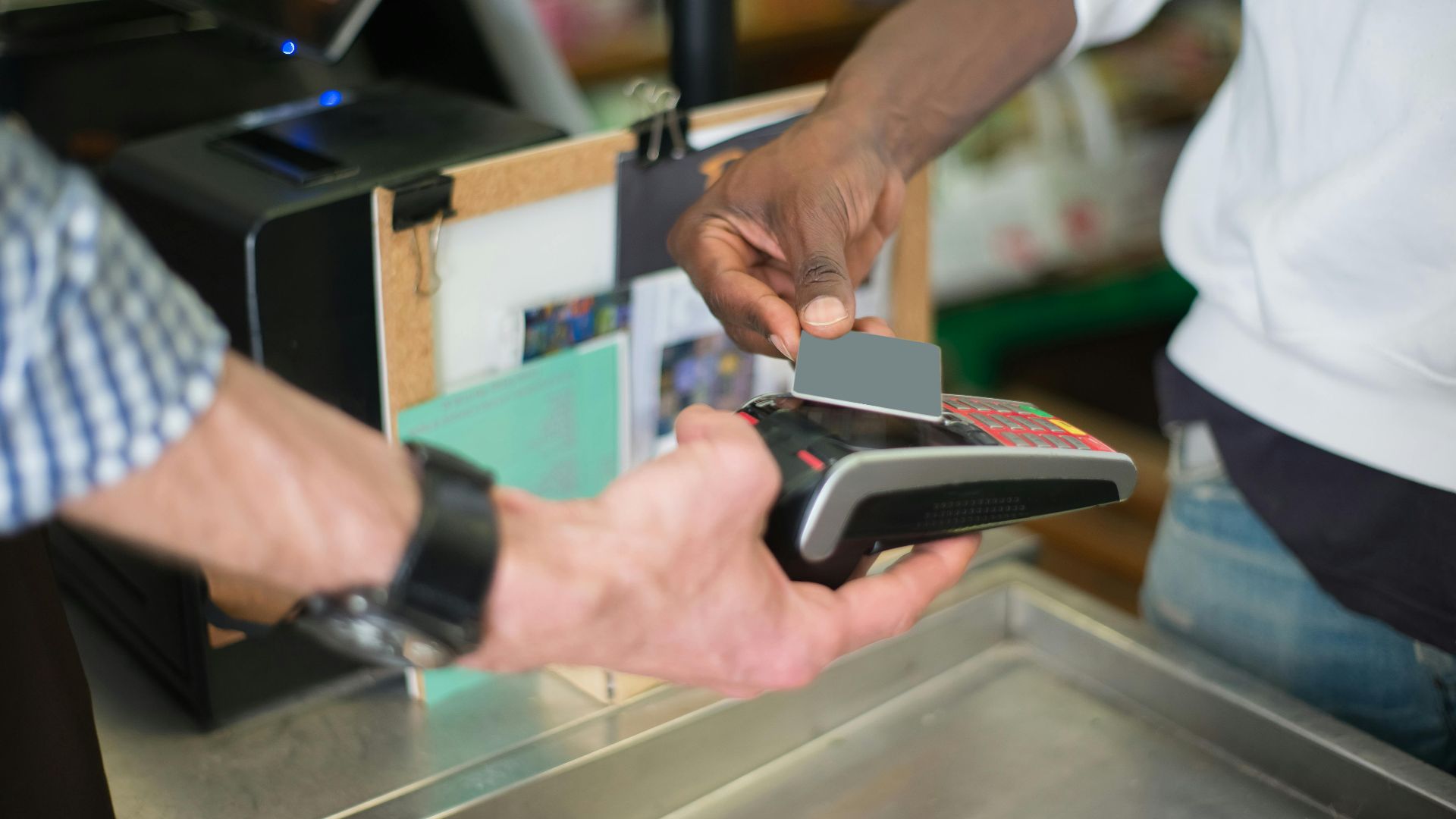
A contactless payment being made using a card reader at a retail store checkout counter.Kampus Production, Pexels

Advertisement

Limits On How Much They Can Charge

Even where surcharges are allowed, they can’t be arbitrary. In Canada, for example, they are typically capped at about 2.4% of the transaction amount, and in the United States they are usually limited to the merchant’s actual processing cost or around 3%.

A concerned adult woman examines a receipt while sitting at her office desk, indicating financial scrutiny.www.kaboompics.com, Pexels

Advertisement

Disclosure Isn’t Optional

One of the most important rules about all this is that businesses have to clearly disclose any surcharge before you pay. This includes signage at the entrance, notices at the point of sale, and itemized receipts. If you weren’t warned in advance, that alone could bring up compliance issues.

Concerned woman in black sweater examining bills on beige sofa indoors.Nataliya Vaitkevich, Pexels

Advertisement

Gift Cards Complicate Things

Here’s where your situation gets a little more complicated. Gift cards are typically treated as prepaid payment instruments, not credit cards. That distinction is important, because many card network rules prohibit applying credit card surcharges to prepaid or gift card transactions.

A woman pays with a card at a store counter to a bearded cashier in a denim vest.MART PRODUCTION, Pexels

Advertisement

Why The Restaurant Might Still Charge A Fee

Some businesses structure transactions so that if a gift card doesn’t cover the full bill or is processed in a certain way, they still treat part of the payment as a credit card transaction. In those cases, they attempt to apply a surcharge to the remaining balance or to the transaction as a whole.

Smiling cashier helping customer with payment at store counter.Andrea Piacquadio, Pexels

Advertisement

The Key Legal Question

The real issue is whether the surcharge is being applied properly. If you’re paying entirely with a gift card, adding a credit card fee could violate card network rules. If part of the payment involves a credit card, the surcharge may be allowed, but only on that portion.

a man reading a newspaperNatalia Makarenko, Unsplash

Advertisement

Flat Fees Can Be A Red Flag

A flat processing fee on a restaurant bill wouldn’t be typical. Most surcharge rules require that fees reflect actual processing costs, which are percentage-based. A flat fee risks going over the allowed limits or looking arbitrary, which could make it noncompliant depending on jurisdiction.

Man in white shirt reading a document at kitchen table with breakfast items.Vitaly Gariev, Pexels

Advertisement

Provinces And States Matter

Your rights depend heavily on where you are. In Canada, surcharging is broadly allowed except in Quebec, while in the United States some states still restrict or regulate this practice a lot more tightly. This patchwork of rules makes it important to consider your specific location.

A woman holds a map while traveling through the scenic desert of California, USA.Leah Newhouse, Pexels

Advertisement

Gift Cards Are Supposed To Retain Their Value

Consumer protection laws in many regions emphasize that gift cards should retain their full value unless any extra fees have been clearly disclosed up front. Charging a surcharge that effectively reduces the face value of the gift card sets off alarm bells about fairness and transparency, especially if the terms weren’t spelled out when the card was first purchased.

Florist smiling while accepting payment in a flower shop.Andrea Piacquadio, Pexels

Advertisement

Watch For Drip Pricing Issues

There’s also a broader legal concept called drip pricing, where a business advertises one price but adds mandatory fees later. This practice has increasingly come under the scrutiny of regulators, especially when fees are unavoidable and not disclosed upfront.

A young woman with blonde hair expresses surprise while reading a newspaper outdoors in daylight.Andrea Piacquadio, Pexels

Advertisement

When The Practice Might Be Allowed

If the restaurant clearly disclosed the surcharge, applied it only to the credit card portion of the payment, and stayed within legal limits, the fee may be allowed. In that case, the issue becomes less about legality and more about whether the business is treating customers fairly.

Two businessmen reviewing documents and smartphone in a restaurant setting with warm lighting.Gustavo Fring, Pexels

Advertisement

When It Likely Crosses The Line

If you paid in full with a gift card and were still charged a credit card fee, that’s where things start to look problematic. Card network rules don’t often allow surcharges on prepaid cards, which could make the practice noncompliant even if surcharging itself is allowed.

A businessman in a black suit experiences stress while reviewing paperwork in a modern office setting.Acan Tami, Pexels

Advertisement

What You Can Do In The Moment

If this happens again, ask how the surcharge is being calculated and whether it applies to gift cards. Sometimes just questioning the charge leads to them cancelling it, especially if staff are unsure or applying the rule inconsistently.

Cheerful young cafeteria worker pointing at paper while speaking with anonymous coworker with smartphone in daytimeTim Douglas, Pexels

Advertisement

Document The Transaction

Keep your receipt and take note of any signage or lack of disclosure. If the fee wasn’t clearly communicated beforehand, that detail could be important if you want to dispute the charge or file a complaint with a consumer protection agency.

Woman in office calculating expenses with documents, calculator, and coffee.www.kaboompics.com, Pexels

Advertisement

Consider Filing A Complaint

If you think the charge was improper, you can contact your provincial or state consumer protection office. You can also report the issue to your credit card network, since Visa and Mastercard have their own enforcement rules around surcharging procedures.

A man in a bright office environment focused on his laptop work.Vitaly Gariev, Pexels

Advertisement

Decide If You Want To Push Back

In a lot of cases, the dollar amount involved may not justify the time and effort you have to make to pursue it. But if you notice a pattern or feel strongly about the principle, pushing back can help clarify the rules and potentially protect other consumers from similar practices.

Young woman intensely focused on reading a menu inside a café, creating an introspective and cozy atmosphere.Bruno Cervera, Pexels

Advertisement

Bottom Line On Your $100 Gift Card

You’re right to question this situation. While credit card surcharges are often legal, applying one in a way that reduces the value of a prepaid gift card is a lot more questionable. Whether it’s legal or not depends on disclosure, structure, and local law, but it’s not as straightforward as the restaurant might suggest.

Side view of woman holding menu in a cozy café setting, wearing a turtleneck and jacket.Tima Miroshnichenko, Pexels

You May Also Like:

I bought my son a $100 gift card at a large chain store, but when he went to use it, the cashier said there was no money on it. What do I do now?

My credit card expired and now I have to update every single subscription—even though the card number didn’t change. Why isn’t this automatic by now?

Don’t Close That Old Credit Card—Even If You Never Use It

Sources: 1, 2, 3, 4, 5, 6


READ MORE

airlinescovidinternal

(How) Will Airlines Survive COVID-19?

As the crisis continues, airlines are hemhorraging money. Will airlines survive this crisis? And if so, how?
January 7, 2021 Eul Basa
hospital_internal

Drama Is The Best Medicine: Doctors And Patients Reveal Their Craziest Cases

There is a reason why shows like Gray's Anatomy and ER are so addictive: Hospital drama is insane, and not just on TV—that stuff happens in real life, too.
February 10, 2021 Eul Basa
cases_internal

Move To Strike: These Lawyers' Cases Unraveled In An Instant

Courtroom cases can take months or even years to go in front of a judge. Then, in the blink of an eye, it can all unravel spectacularly.
February 10, 2021 Eul Basa
customerservice_internal

Customer Service Nightmares: These Awful Moments On The Job Had Us Cringing Hard

There's one unfortunate side of working in customer service that's just unavoidable: customers. If you've ever worked with customers, you'll relate.
March 1, 2021 Eul Basa
teachers_internal

These Cruel Teachers Are The Stuff Of Student Nightmares

While it can seem like teachers don't know much more than their students, these traumatized pupils think the story's a little more complicated.
March 1, 2021 Eul Basa
doctors_internal

Crash Cart: Doctors Reveal The Harrowing Moments They'll Never Forget

From one-in-a-million cases to deranged patients and everything in between, these doctors have shared the medical moments they will never—ever—forget.
March 1, 2021 Eul Basa


Disclaimer

The information on MoneyMade.com is intended to support financial literacy and should not be considered tax or legal advice. It is not meant to serve as a forecast, research report, or investment recommendation, nor should it be taken as an offer or solicitation to buy or sell any securities or adopt any particular investment strategy. All financial, tax, and legal decisions should be made with the help of a qualified professional. We do not guarantee the accuracy, timeliness, or outcomes associated with the use of this content.


Dear reader,


It’s true what they say: money makes the world go round. In order to succeed in this life, you need to have a good grasp of key financial concepts. That’s where Moneymade comes in. Our mission is to provide you with the best financial advice and information to help you navigate this ever-changing world. Sometimes, generating wealth just requires common sense. Don’t max out your credit card if you can’t afford the interest payments. Don’t overspend on Christmas shopping. When ordering gifts on Amazon, make sure you factor in taxes and shipping costs. If you need a new car, consider a model that’s easy to repair instead of an expensive BMW or Mercedes. Sometimes you dream vacation to Hawaii or the Bahamas just isn’t in the budget, but there may be more affordable all-inclusive hotels if you know where to look.


Looking for a new home? Make sure you get a mortgage rate that works for you. That means understanding the difference between fixed and variable interest rates. Whether you’re looking to learn how to make money, save money, or invest your money, our well-researched and insightful content will set you on the path to financial success. Passionate about mortgage rates, real estate, investing, saving, or anything money-related? Looking to learn how to generate wealth? Improve your life today with Moneymade. If you have any feedback for the MoneyMade team, please reach out to [email protected]. Thanks for your help!


Warmest regards,

The Moneymade team