
My neighbor built a treehouse for his kids that looks right into our backyard—now we have no peace or quiet outside. Can I make him take it down?

My neighbor built a treehouse for his kids that looks right into our backyard—now we have no peace or quiet outside. Can I make him take it down?


May 20, 2026 | Jesse Singer

My neighbor built a treehouse for his kids that looks right into our backyard—now we have no peace or quiet outside. Can I make him take it down?


When Your Neighbor’s Treehouse Becomes Your Problem

What started as your neighbor’s cute backyard project can quickly turn into a frustrating situation. A treehouse overlooking your deck can feel like a serious invasion of privacy. So now the question is: what can you actually do about it?

Angry couple, kids in treehouse behind themFactinate

Advertisement

It’s Not Just About the Noise

At first, it might seem like the issue is kids being loud. But often, the bigger concern is the constant feeling of being watched. A structure that looks directly into your private space can change how comfortable your backyard feels, even when no one is actively using it.

A thoughtful man in a leather jacket sits on a bench in an urban setting during fall.RadiCover Danmark, Pexels

Advertisement

Privacy Expectations Matter

Homeowners often expect a reasonable level of privacy in their backyard, but outdoor privacy isn’t absolute. If a structure creates an unusually direct or elevated view into your space, it can raise concerns—especially if it affects how you regularly use and enjoy your property.

Bearded man holding fishing rod in lush greenery by a log cabin.cottonbro studio, Pexels

Advertisement

Check Local Zoning Laws

Before doing anything drastic, look into your city or municipality’s zoning bylaws. These rules regulate height, placement, and types of backyard structures. Treehouses are usually treated as accessory structures or platforms, not as their own special category.

A couple in hoodies focused on work using a laptop and smartphone at homePavel Danilyuk, Pexels

Advertisement

Local vs. State Rules Explained

Most rules about backyard structures are set by your city or municipality, not the state or province. That means something allowed in one town might be restricted in another nearby. Broader laws still apply, particularly around property rights, nuisance, and disputes, but they usually come into play only if things escalate.

Woman works on laptop while sitting on a couch.Zach Wear, Unsplash

Advertisement

U.S. City Examples

In Los Angeles, elevated backyard structures often require permits and must meet height and setback limits. Seattle may allow small treehouses without permits, but elevated builds can fall under deck regulations. Austin is more flexible, but still enforces setbacks, and most disputes end up being handled under nuisance law rather than strict privacy rules.

Angry couple, kids in treehouse behind themFactinate

Advertisement

Canadian Example: Toronto

In Toronto, accessory structures must follow setback and height bylaws, and permits may be required depending on the design. A raised structure that overlooks a neighbor’s yard can raise both compliance questions and potential nuisance concerns, especially if it creates a clear line of sight into commonly used outdoor areas.
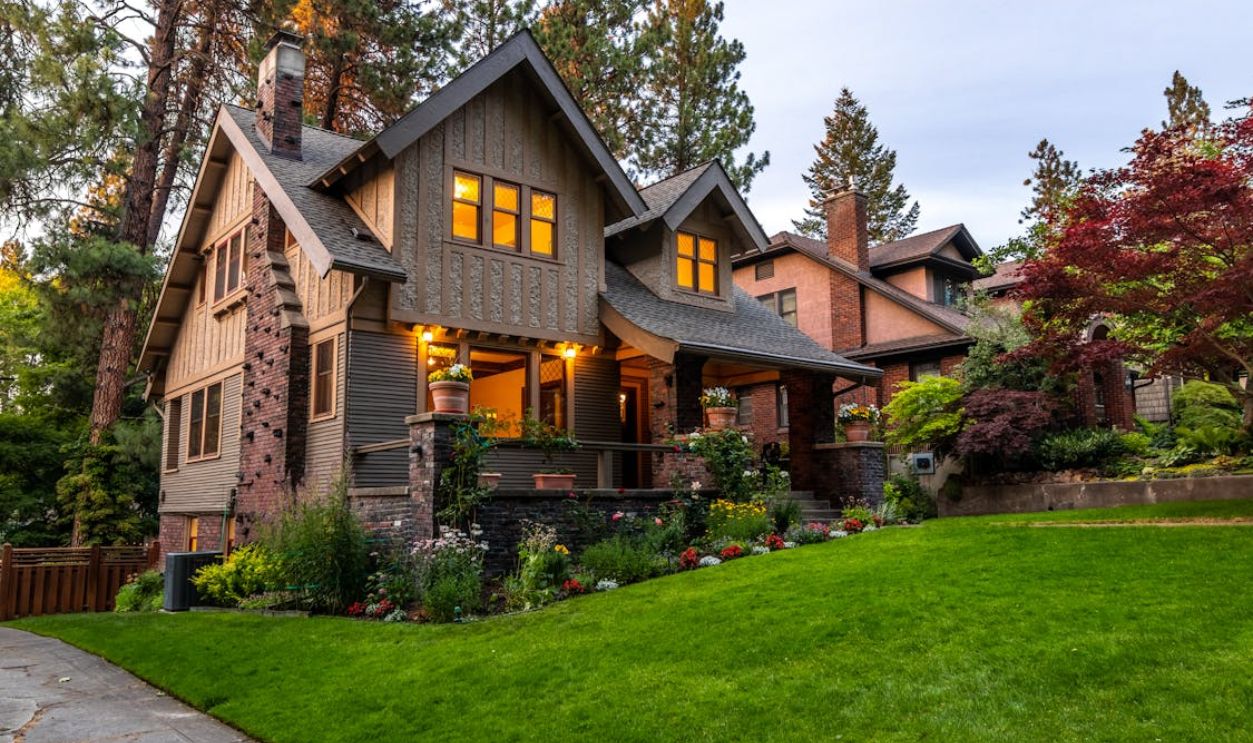
A beautifully lit Victorian-style house surrounded by a lush garden at twilight, showcasing classic architecture.Clay Elliot, Pexels

Advertisement

Setbacks and Height Limits Matter

Two of the most common rules are setback and height restrictions. Structures typically must sit a minimum distance from property lines and stay below a certain height. If the treehouse is too close or too tall, it may already be in violation of local bylaws, even if it looks harmless.
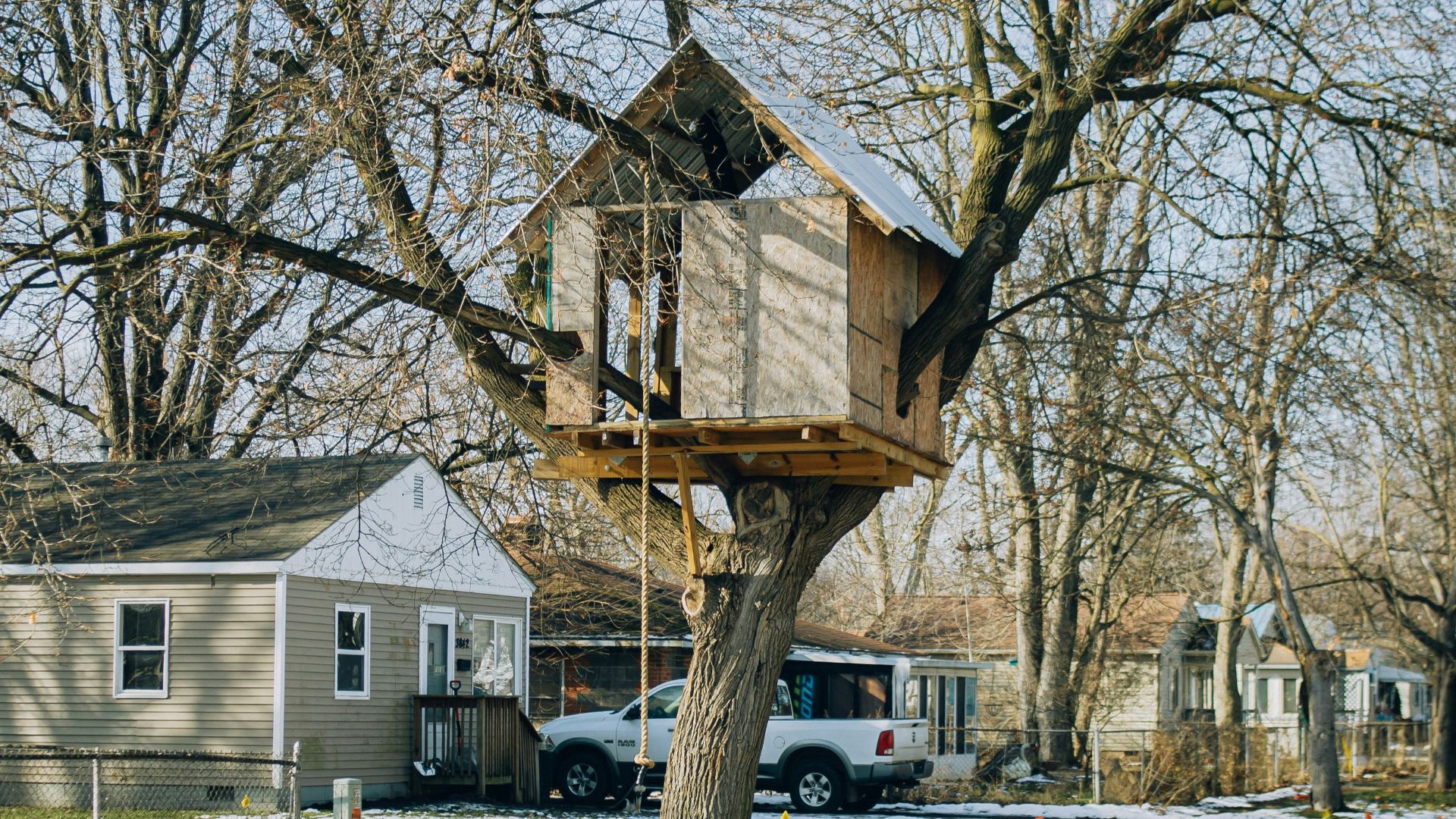
a tree house in the middle of a neighborhoodBruno Guerrero, Unsplash

Advertisement

Permits Are Often Required

In many areas, elevated or permanent structures require permits—even if they’re informal or built for children. If your neighbor didn’t get approval where it was required, that’s often the clearest and most straightforward path for a municipal complaint.

Focused Asian female turning pages of document while sitting on sofa during paperwork in modern workspace with green deciduous plantAlexander Suhorucov, Pexels

Advertisement

Privacy and Nuisance Laws Overlap

Simply being visible to a neighbor isn’t usually illegal on its own. But when visibility combines with noise, frequency, or intrusion, it can cross into nuisance territory—meaning it interferes with your reasonable enjoyment of your property over time.

Two children exploring and playing in a wooden treehouse surrounded by green leaves.RDNE Stock project, Pexels

Advertisement

Start With a Conversation

Before involving officials, try talking to your neighbor. They may not realize how intrusive the setup feels from your side. Keeping the focus on comfort and privacy—not blame—can make the conversation more productive and less confrontational.

Two young men engaging in conversation near a fence outdoors with cars and buildings in the backgroundWilliam Fortunato, Pexels

Advertisement

Suggest Practical Solutions

Instead of demanding removal right away, suggest workable fixes. Privacy screens, repositioning seating areas, or limiting use during certain times can reduce the impact without escalating the situation into a bigger dispute.

Plump woman with pink hair having conversation with faceless African American man while sitting on stones with cans of sodaJohn Diez, Pexels

Advertisement

Document the Situation

If things don’t improve, start documenting. Photos showing the line of sight and notes about frequency of use or noise can help support your position if you need to escalate the issue later.

Woman Taking Photos Using Her SmartphoneGreta Hoffman, Pexels

Advertisement

Contact Your Municipality

If you suspect a bylaw violation, contact your local municipal or bylaw office. They can check whether permits were issued and whether the structure complies with applicable zoning and safety rules.

Businessmen engaged in a professional conversation in a stylish cafe setting.August de Richelieu, Pexels

Advertisement

Filing a Formal Complaint

If informal efforts fail, filing a complaint typically triggers an inspection. If violations are found, the city may require changes, issue fines, or in some cases order the structure to be modified or removed.

Hand filling out paperwork with a pen, showcasing focus on document completion.RDNE Stock project, Pexels

Advertisement

Mediation Is an Option

Some areas offer mediation services for neighbor disputes. This can help both sides reach a compromise with a neutral third party, often avoiding the need for formal enforcement or legal action.

A friendly real estate conversation indoors with smiling agent and clients. Bright and engaging setting.Kampus Production, Pexels

Advertisement

Legal Action Is the Last Resort

If the situation continues, a lawyer can advise whether you have grounds for a nuisance claim. This step is usually reserved for ongoing, significant interference that hasn’t been resolved through conversation or bylaw enforcement.

Business meeting between a lawyer and client in a professional office setting.Pavel Danilyuk, Pexels

Advertisement

Courts Don’t Always Order Removal

Even if a case goes to court, removal isn’t guaranteed. Judges often look for balanced solutions, such as requiring modifications that reduce the impact rather than eliminating the structure entirely.

Lawyer meeting with clients in a formal office setting for legal consultation.www.kaboompics.com, Pexels

Advertisement

Fences and Landscaping Can Help

Adding fencing, trees, or hedges can reduce visibility and restore a sense of privacy. While not always ideal, it’s often one of the fastest ways to improve the situation without relying on enforcement.

File:Tangier Island houses and fences, late afternoon.jpgself, Wikimedia Commons

Advertisement

Think About Long-Term Neighbor Relations

Disputes like this can affect your relationship for years. Even if you’re legally in the right, it’s worth considering whether a practical compromise could resolve the issue more smoothly and avoid ongoing tension.

An elderly couple engaging in conversation on the porch of their suburban home with an American flag displayed.Mike Jones, Pexels

Safety Concerns Are Separate

If the structure appears unsafe or poorly built, that’s a separate issue you can report. Municipalities tend to act more quickly when there’s a potential safety risk, especially when children are involved.

1753959917539599, Pixabay

Advertisement

Kids Will Be Kids

It’s easy to forget the treehouse is meant for play. While your concerns are valid, approaching the situation with some understanding can make it easier to reach a solution that works for both sides.

Happy children enjoying a playful moment indoors, surrounded by wooden beams and warm lighting.cottonbro studio, Pexels

Advertisement

Know Your Rights, But Stay Practical

You may have legal options, but they aren’t always quick or predictable. Understanding your rights is important, but practical solutions often lead to faster and less stressful outcomes in situations like this.

A woman sits indoors, reviewing documents with focused attention near a window.Mikhail Nilov, Pexels

Advertisement

The Bottom Line

You can’t automatically force your neighbor to take down a treehouse. But if it violates local bylaws or creates a serious and ongoing interference with your property, you may have options. Start simple, escalate if needed, and focus on what actually restores your comfort.

An elderly couple sitting affectionately on their porch steps, sipping coffee and enjoying a sunny day.Greta Hoffman, Pexels

Advertisement

You Might Also Like:

My landlord says repairs will only be done if I stop "nagging him." Water is leaking onto my bed. Can they really refuse basic fixes?

My girlfriend is moving into my rental house. She wants to bring her dog and won't move in unless she can. The landlord says no pets. What can I do?

Sources:  123


READ MORE

uncertain and thoughtful man holding documents, standing in front of a house undergoing repairs

My friend insists that in 2026, homeownership is a scam because of taxes, insurance, and repairs. Is renting actually now smarter long term?

Your friend is not wrong to cringe at property taxes, insurance bills, and surprise repair costs. Those expenses are real, and in many markets they have risen sharply in the past few years. But calling homeownership a scam goes too far, because the long term math depends on time, location, financing, and what would happen to your rent if you do not buy.
May 19, 2026 Miles Brucker
AI-generated image of a man worried about the credit card company denying his chargeback.

I tried to dispute a charge, but my credit card company denied it and I'm stuck paying. Is there anything else I can do?

You notice a charge that seems wrong, file a dispute with your credit card company, and assume the issue will get sorted out. Then the denial comes in, and suddenly you’re back on the hook for the money.
May 19, 2026 Quinn Mercer
AI-generated image of a woman trying to use cash at a cashless restaurant.

I tried to pay cash at a restaurant, but they refused to take it. That's so ridiculous, aren't they forced to take it?

You finish your meal, pull out cash to pay, and the restaurant says they don’t accept it. Suddenly you’re standing there confused and wondering how that’s even legal. After all, cash literally says “legal tender” right on it. Doesn’t that mean businesses are forced to accept it?
May 19, 2026 Penelope Singh
AI-generated image of a woman concerned about a missed tax credit.

I found out that I qualified for a tax credit after I had already filed. Do I just miss out on that money?

You already filed your taxes, maybe even got your refund, and then you realize it: you actually qualified for a credit you didn’t claim. That’s the kind of realization that stings. But here’s the good news: in most cases, you don’t miss out. The tax system actually gives you a way to go back and fix this, and plenty of people do it every year.
May 19, 2026 Peter Kinney

Mom’s will named my sister as executor. Her husband is a lawyer who’s disputing my share of the inheritance. Isn’t that a conflict of interest?

A will and a trust may contain conflicting information. It's always the duty of the executor of the estate to act impartially.
May 19, 2026 Marlon Wright


Disclaimer

The information on MoneyMade.com is intended to support financial literacy and should not be considered tax or legal advice. It is not meant to serve as a forecast, research report, or investment recommendation, nor should it be taken as an offer or solicitation to buy or sell any securities or adopt any particular investment strategy. All financial, tax, and legal decisions should be made with the help of a qualified professional. We do not guarantee the accuracy, timeliness, or outcomes associated with the use of this content.


Dear reader,


It’s true what they say: money makes the world go round. In order to succeed in this life, you need to have a good grasp of key financial concepts. That’s where Moneymade comes in. Our mission is to provide you with the best financial advice and information to help you navigate this ever-changing world. Sometimes, generating wealth just requires common sense. Don’t max out your credit card if you can’t afford the interest payments. Don’t overspend on Christmas shopping. When ordering gifts on Amazon, make sure you factor in taxes and shipping costs. If you need a new car, consider a model that’s easy to repair instead of an expensive BMW or Mercedes. Sometimes you dream vacation to Hawaii or the Bahamas just isn’t in the budget, but there may be more affordable all-inclusive hotels if you know where to look.


Looking for a new home? Make sure you get a mortgage rate that works for you. That means understanding the difference between fixed and variable interest rates. Whether you’re looking to learn how to make money, save money, or invest your money, our well-researched and insightful content will set you on the path to financial success. Passionate about mortgage rates, real estate, investing, saving, or anything money-related? Looking to learn how to generate wealth? Improve your life today with Moneymade. If you have any feedback for the MoneyMade team, please reach out to [email protected]. Thanks for your help!


Warmest regards,

The Moneymade team