Water leaked from my condo and caused major damage to my neighbor’s unit. Now they want me to cover the repairs. Do I really have to pay up?

Water leaked from my condo and caused major damage to my neighbor’s unit. Now they want me to cover the repairs. Do I really have to pay up?


May 4, 2026 | Quinn Mercer

Water leaked from my condo and caused major damage to my neighbor’s unit. Now they want me to cover the repairs. Do I really have to pay up?


That Leak Just Got Expensive… Or Did It?

It’s a nightmare scenario: your condo springs a leak, water seeps through the floor, and suddenly your downstairs neighbor’s ceiling looks like a soggy sponge. Now they’re knocking on your door with repair estimates and a not-so-friendly request that you pay for everything. The big question is, are you actually on the hook? Or is this one of those situations where it feels like your fault but legally might not be? Let’s break it down.

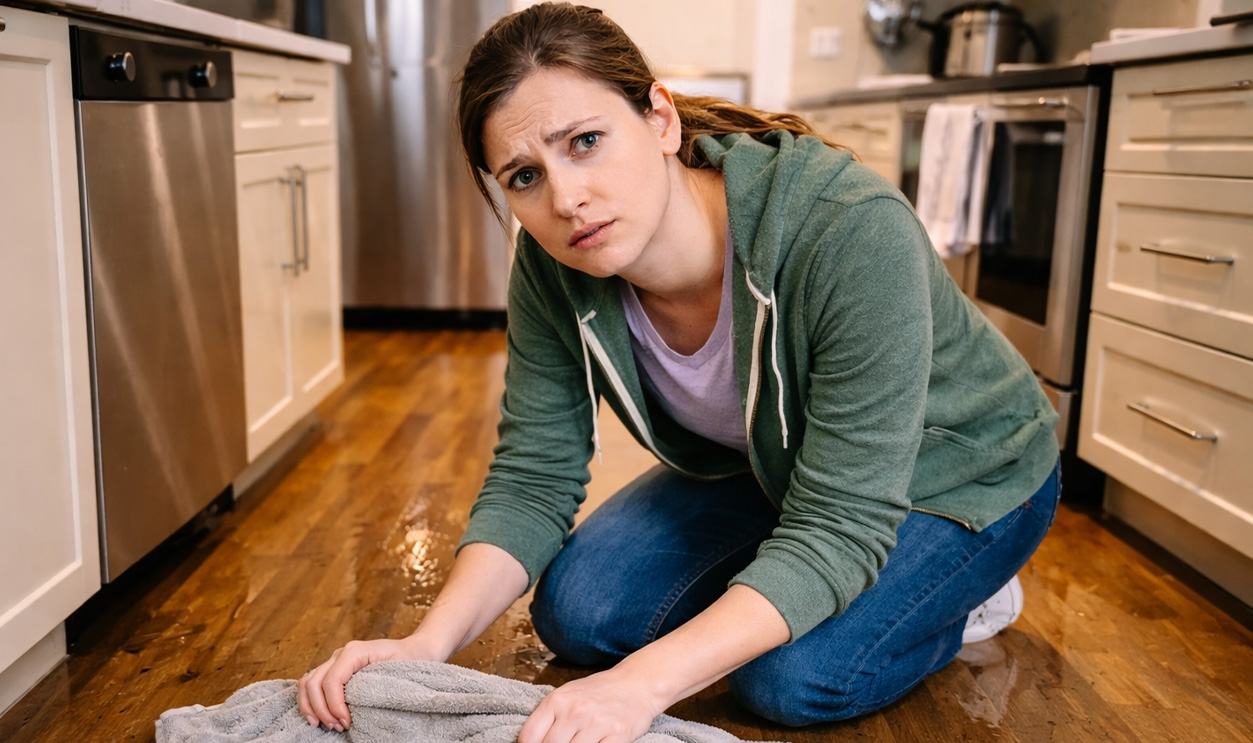
AI-generated image of a woman concerned about a leak in her condo.Factinate

Advertisement

First Things First: Don’t Panic

Water damage always looks dramatic. Stains, bubbling paint, warped floors, the whole deal. But liability is not automatically assigned just because the leak came from your unit. Before you agree to pay anything, take a breath. These situations are more complicated than “your pipe, your problem".

Side view of unrecognizable despaired ethnic male with dreadlocks in white t shirt covering face with hand while standing under shower in bathroomAlex Green, Pexels

Advertisement

Who Owns What Matters A Lot

In condos or apartments, ownership lines can get blurry fast. In many cases, you own everything inside your unit, while the building or association is responsible for shared systems like pipes hidden behind walls. If the leak came from something you don’t actually own, that could completely change who’s responsible.
Construction worker conducting a home inspection indoors, using tools near a vent.RDNE Stock project, Pexels

Advertisement

Was It Negligence Or Just Bad Luck

This is really the heart of the issue. If the damage happened because you ignored a known problem or were careless, then you could be responsible. But if the leak came out of nowhere due to a hidden issue or normal wear and tear, then it’s usually treated as an accident rather than negligence.

a young girl with short hairDaria Trofimova, Unsplash

Advertisement

Your Insurance Is Your Best Friend Here

If you have renters or condo insurance, this is exactly why you pay for it. Many policies include personal liability coverage, which can kick in if you accidentally cause damage to someone else’s property. In a lot of cases, your insurance company will step in and handle the claim, meaning you may only be responsible for your deductible.

Focused young woman reviewing financial documents with a laptop in a home office setting.Mikhail Nilov, Pexels

Advertisement

Your Neighbor’s Insurance Also Plays A Role

Your neighbor shouldn’t be relying solely on you to cover the damage. Their own insurance policy is typically designed to handle damage inside their unit. After paying out, their insurance company might try to recover costs from whoever they believe is responsible, but that’s something handled between insurers, not you directly.

Concentrated young female colleagues in elegant outfits standing near window in light office and discussing projectSHVETS production, Pexels

Advertisement

The Building’s Insurance Can Get Involved Too

In condo buildings, there’s often a master insurance policy that covers structural elements and shared systems. Depending on the situation, the claim might start there and then shift to individual unit owners depending on what caused the issue and how the bylaws are written.

Real estate agent discussing home details with a client in a modern kitchen setting.Ivan S, Pexels

Advertisement

Condo Rules Can Change Everything

If you’re in a condo, the association’s rules and bylaws can play a huge role in determining responsibility. Some buildings require owners to cover certain types of damage regardless of fault, especially when it comes to water damage. It might feel unfair, but those rules can override what you might expect based on common sense.

Group of professionals collaborating in a modern office setting during a strategic meeting.Tima Miroshnichenko, Pexels

Advertisement

Just Because They Ask Doesn’t Mean You Owe

Your neighbor is absolutely allowed to ask you to pay for repairs, but that doesn’t automatically mean you’re legally obligated to do so. Until liability is clearly established, this is just a claim, not a confirmed responsibility.

Two colleagues engaged in a discussion at an office table with documents and coffee.Kampus Production, Pexels

Advertisement

Document Everything Right Away

If something like this happens, start documenting immediately. Take photos of where the leak started, the condition of your unit, and anything relevant in your neighbor’s unit if possible. Keep records of conversations, estimates, and repair work because this kind of paper trail can make a big difference later.

Rear view of a woman with long hair taking a photo with a smartphone in a stylish kitchen.MART PRODUCTION, Pexels

Advertisement

Report The Incident Quickly

Contact your insurance company as soon as you can. Even if you’re unsure whether you’re responsible, reporting the situation early helps protect your coverage and ensures the claims process starts smoothly. Waiting too long can sometimes create complications.

A woman in a white shirt making a phone call inside a modern home or office setting.www.kaboompics.com, Pexels

Advertisement

Don’t Admit Fault Too Quickly

It’s natural to want to smooth things over, especially if you have a decent relationship with your neighbor. But agreeing to pay before understanding the situation can backfire. You can be cooperative and empathetic without accepting legal responsibility on the spot.

Two businesswomen in coats converse outside a modern office building.August de Richelieu, Pexels

Advertisement

Get A Second Opinion On Repairs

Repair costs can vary wildly, especially with water damage. If your neighbor presents a quote, it’s reasonable to ask for additional estimates or clarification on the scope of work. Not every contractor prices things the same, and not every repair needs to be as extensive as it might seem.

A man intently examines papers, seated indoors under warm lighting, focusing on his work.SHVETS production, Pexels

Advertisement

What If You Were Renting

If you’re a tenant rather than an owner, responsibility often shifts. Landlords are typically responsible for maintaining plumbing and structural systems. You would generally only be liable if the damage was caused by something you did, like overflowing a sink or failing to report a known issue.

A young couple consults a real estate agent inside a modern living room, evaluating property options.Vitaly Gariev, Pexels

Advertisement

Landlords Can Also Be Involved

If you own the unit but rent it out, your tenant’s actions could complicate things. Depending on the situation, liability might depend on what happened, what’s outlined in the lease, and who carries which type of insurance. These cases can quickly involve multiple parties.

Couple meeting with advisor for adoption process in a modern office setting.Kindel Media, Pexels

Advertisement

Small Claims Court Is A Possibility

If your neighbor insists that you pay and you disagree, they may decide to take the matter to small claims court. At that point, a judge would look at the evidence, including what caused the leak and whether negligence was involved, rather than just assuming the upstairs unit is automatically at fault.

Female judge in a courtroom setting, focusing on legal documents with a gavel.khezez | Khazaz, Pexels

Advertisement

Proof Is Everything

For your neighbor to win a case, they would generally need to prove that the damage came from your unit and that you were responsible in some meaningful way. Without clear evidence of negligence or responsibility, their claim becomes much weaker.

Business woman focused on paperwork at office desk, reviewing documents.Pavel Danilyuk, Pexels

Advertisement

Deductibles Can Create Tension

Sometimes the biggest conflict isn’t the total repair cost but the insurance deductible. If a policy covers most of the damage but leaves a large deductible, that’s often where disputes begin. Condo rules and insurance agreements usually determine who ultimately pays that portion.

A financial advisor discusses paperwork with a client at a desk in a modern office.RDNE Stock project, Pexels

Advertisement

Prevention Goes A Long Way

Once everything is sorted out, it’s worth taking steps to prevent future problems. Keeping an eye on plumbing, replacing aging fixtures, and addressing small issues early can help you avoid another stressful situation down the line.
A senior man using a device to inspect a bathroom for maintenance or repair.Kathleen Austin Kuhn, Pexels

Advertisement

So Do You Actually Have To Pay

The honest answer is that it depends. You may have to pay if you were negligent, if your condo rules say you’re responsible, or if your insurance determines you’re liable. On the other hand, if the issue was accidental or related to shared systems, you may not owe anything out of pocket.

Serious ethnic mature man in formal outfit working with netbook at table with gavelSora Shimazaki, Pexels

Final Takeaway

This kind of situation feels personal, but it’s really about insurance policies, building rules, and legal definitions of responsibility. Instead of rushing to pay, focus on gathering information, involving your insurance company, and letting the process play out. In many cases, it’s less about you writing a check and more about figuring out which policy covers what.

Professional woman in office setting studying documents with concentration.RDNE Stock project, Pexels

Advertisement

You May Also Like:

My realtor said I don’t need to disclose a minor water issue. My friend says that could turn into a lawsuit. Who’s telling the truth?

My neighbor’s tree roots are damaging my driveway, but they say it’s not their problem. Are they right?

My parents want me to put utilities in my name for their house, but I'm worried about the risk. Should I say no?

Sources: 1, 2, 3, 4


READ MORE

Saving money

Are Canadians Saving More Than Americans? Latest Studies Reveal A Surprising Gap

Curious how your savings stack up? This article compares average savings in the U.S. and Canada, revealing surprising gaps, reasons behind them, and shocking stats about American savings.
January 28, 2026 Allison Robertson
concerned woman holding phone

I just found out about the $600 rule and I’ve been using Venmo and PayPal all year—am I about to owe a huge tax bill?

A growing number of people are suddenly hearing about a $600 rule connected to Venmo and other cash apps, usually in the form of warnings, screenshots, or half-explained posts. There’s rarely context—just the implication that a normal year of payments may have crossed an invisible line with real consequences.
January 28, 2026 Jesse Singer
Adidas X Kanye West Yeezy 750 Boost Light Grey

Who Knew Sneakers Could Cost As Much As Your Mortgage? Here Are The World's Most Expensive Kicks.

Do your sneakers cost more than your dinner payment? That's cute. Some of these kicks could pay your whole house’s mortgage.
January 27, 2025 Miles Brucker
Inheritance

My grandpa just died and my cousins all got a big inheritance, but my mom is keeping my portion. I’m 40 years old. Can she do that?

Your cousins got their inheritance, but your mom is keeping yours—at age 40. Learn what rights you have and how to challenge unfair inheritance issues when a parent blocks your share.
January 20, 2026 Allison Robertson

I anonymously posted a bad online review. The company posted my name and address and sent a cease-and-desist letter. What can I do?

When you posted a negative online review of a company's service, they published your contact information online and sent a cease-and-desist letter. We look at how you can protect yourself.
January 13, 2026 Jane O'Shea

Here’s How To Figure Out If You’re Paying Too Much For Car Insurance

Car insurance has a funny way of becoming invisible. You sign up, set the payment to auto-draft, and then forget about it—until your bank account reminds you every month. The problem is that many drivers end up overpaying not because they’re reckless or unlucky, but because their policy hasn’t kept up with their life. If you’ve ever wondered whether your premium feels a little too spicy for what you’re getting, these signs will help you figure it out.
January 9, 2026 J. Clarke


Disclaimer

The information on MoneyMade.com is intended to support financial literacy and should not be considered tax or legal advice. It is not meant to serve as a forecast, research report, or investment recommendation, nor should it be taken as an offer or solicitation to buy or sell any securities or adopt any particular investment strategy. All financial, tax, and legal decisions should be made with the help of a qualified professional. We do not guarantee the accuracy, timeliness, or outcomes associated with the use of this content.


Dear reader,


It’s true what they say: money makes the world go round. In order to succeed in this life, you need to have a good grasp of key financial concepts. That’s where Moneymade comes in. Our mission is to provide you with the best financial advice and information to help you navigate this ever-changing world. Sometimes, generating wealth just requires common sense. Don’t max out your credit card if you can’t afford the interest payments. Don’t overspend on Christmas shopping. When ordering gifts on Amazon, make sure you factor in taxes and shipping costs. If you need a new car, consider a model that’s easy to repair instead of an expensive BMW or Mercedes. Sometimes you dream vacation to Hawaii or the Bahamas just isn’t in the budget, but there may be more affordable all-inclusive hotels if you know where to look.


Looking for a new home? Make sure you get a mortgage rate that works for you. That means understanding the difference between fixed and variable interest rates. Whether you’re looking to learn how to make money, save money, or invest your money, our well-researched and insightful content will set you on the path to financial success. Passionate about mortgage rates, real estate, investing, saving, or anything money-related? Looking to learn how to generate wealth? Improve your life today with Moneymade. If you have any feedback for the MoneyMade team, please reach out to [email protected]. Thanks for your help!


Warmest regards,

The Moneymade team